What Causes It Around Here
Fairhope holds about 9,315 households, which is a fraction of the households across the whole territory we run from Daphne, but it's enough volume that we see the same failure patterns repeat. Most of the housing here went up around 1997 - noticeably newer than a lot of the wider service area, where builds stretch back to 1963. That later build date means fewer of the old side-mounted torsion setups and more standard two-spring torsion bars rated for mid-size and larger doors, since garages from the mid-90s onward tend to run wider openings than the older stock nearby.
The climate here is mild with occasional freeze nights, not the kind of swing that snaps springs from cold shock the way harder freeze zones see. What wears springs out in Fairhope is mostly cycle count and humidity - coil rust on the inside where you can't see it, tension slowly bleeding off a spring that's been wound and unwound thousands of times over two-plus decades. By the time a door built in the late 90s is pushing 25-plus years old, the spring is past its rated cycle life whether or not it's ever visibly failed.
What the Fix Involves
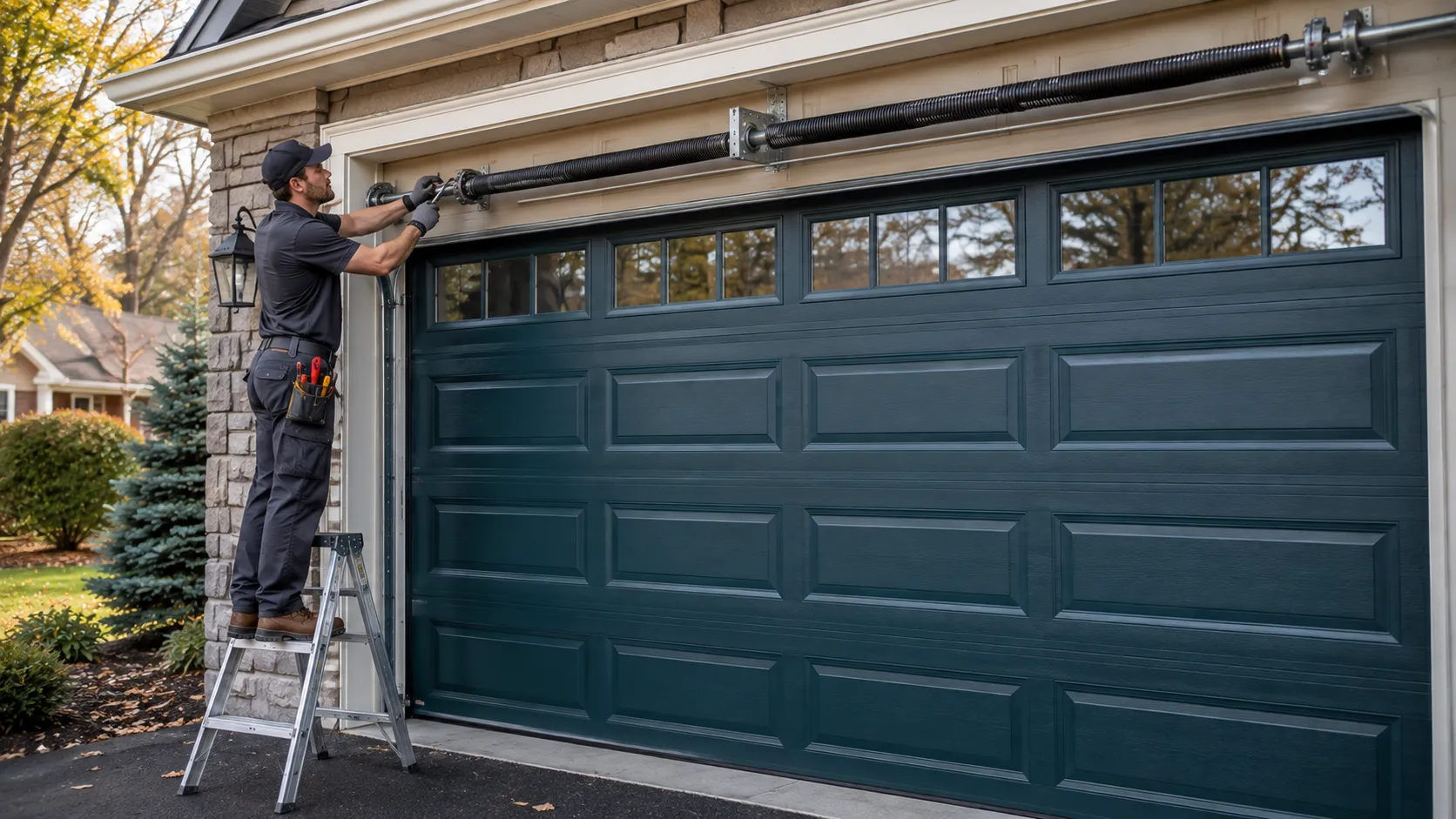
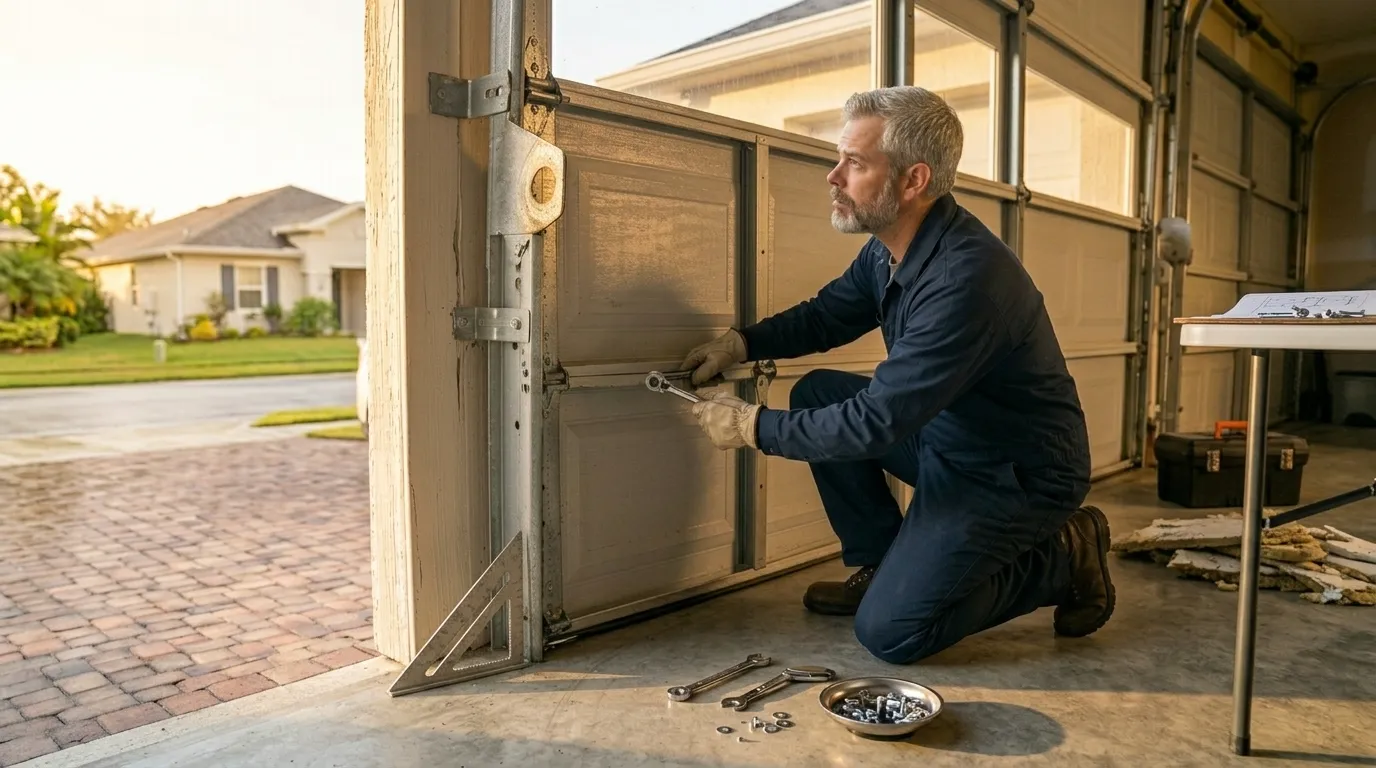
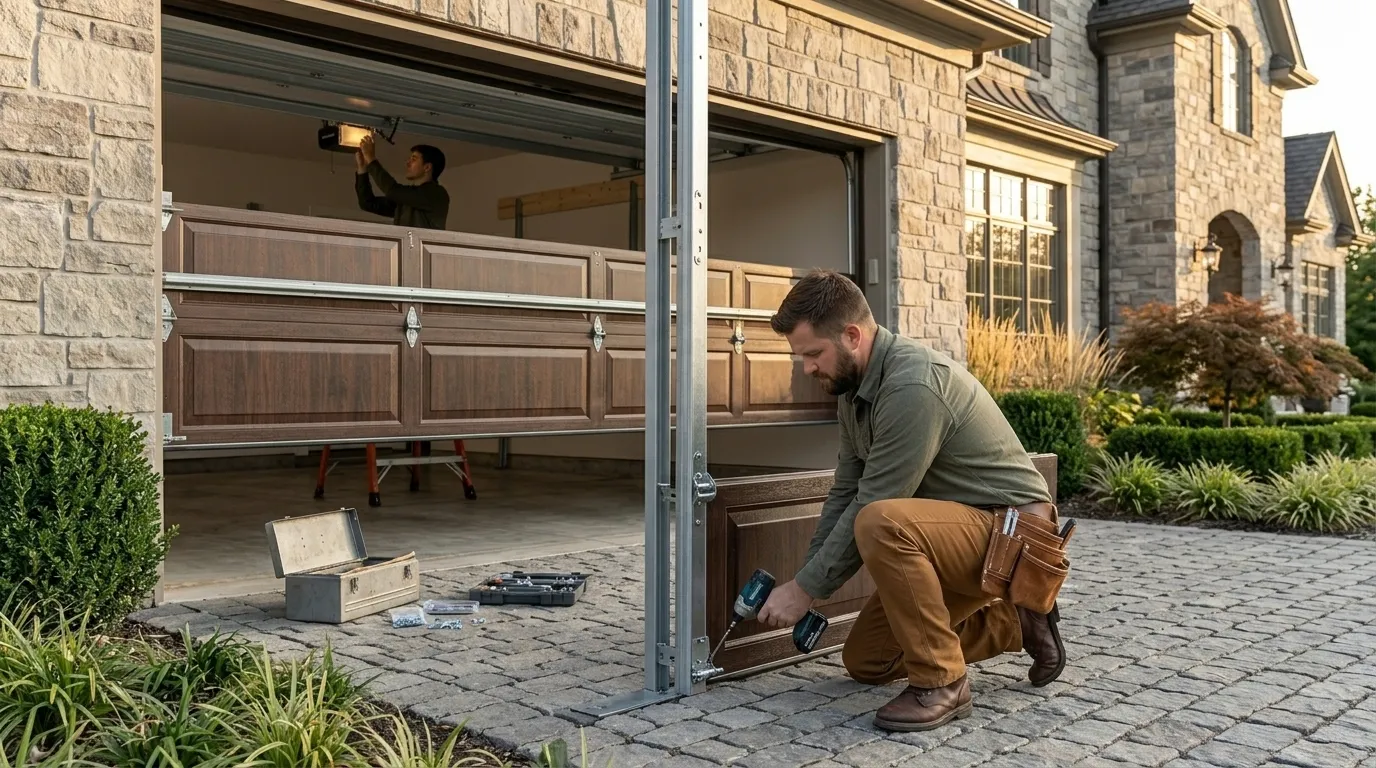
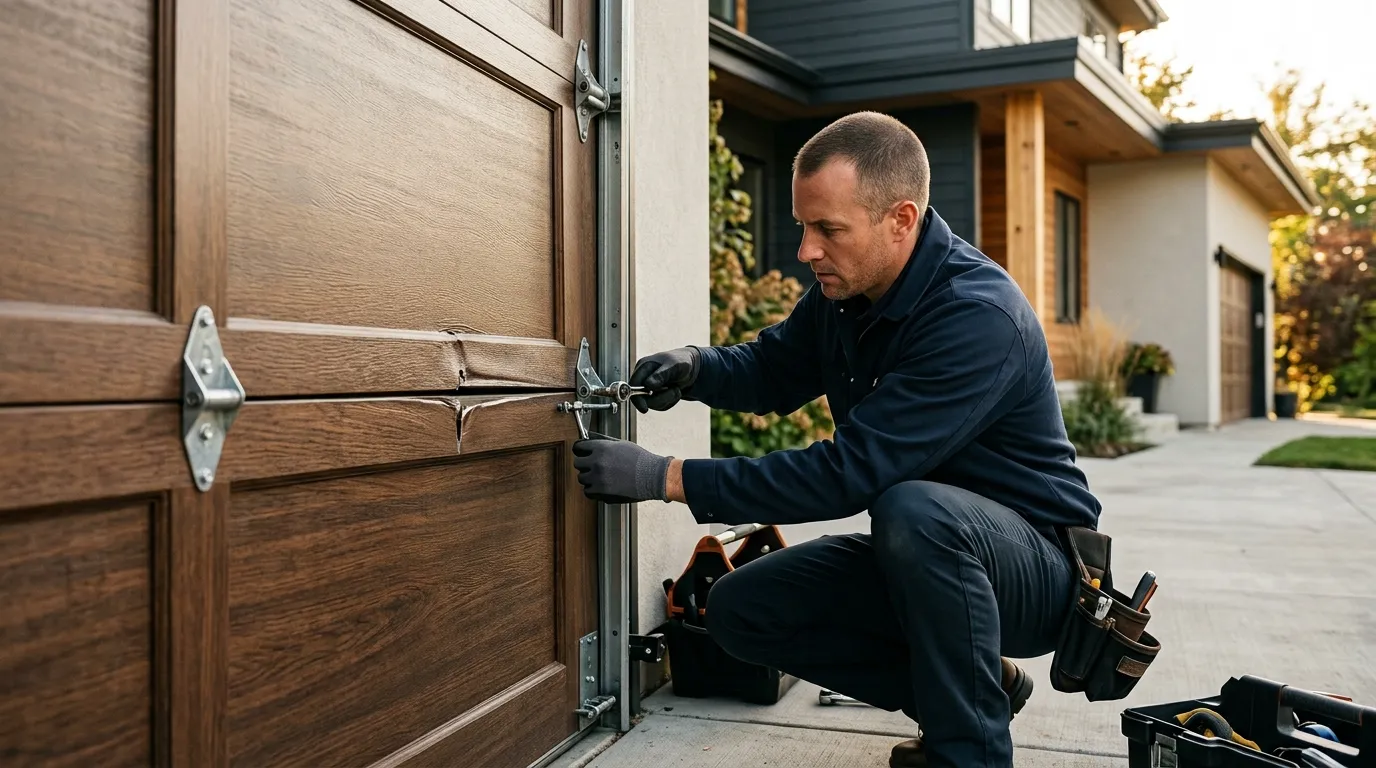
Most Fairhope jobs are a torsion spring swap on a door that's original to a house built in the 1990s or early 2000s - standard two-inch shafts, standard end bearing plates, nothing exotic. We measure wire size, coil diameter and length off the broken spring or the drum, not off a guess, because a spring that's close but not exact will either bind the door or wear out again in a fraction of the normal cycle life.
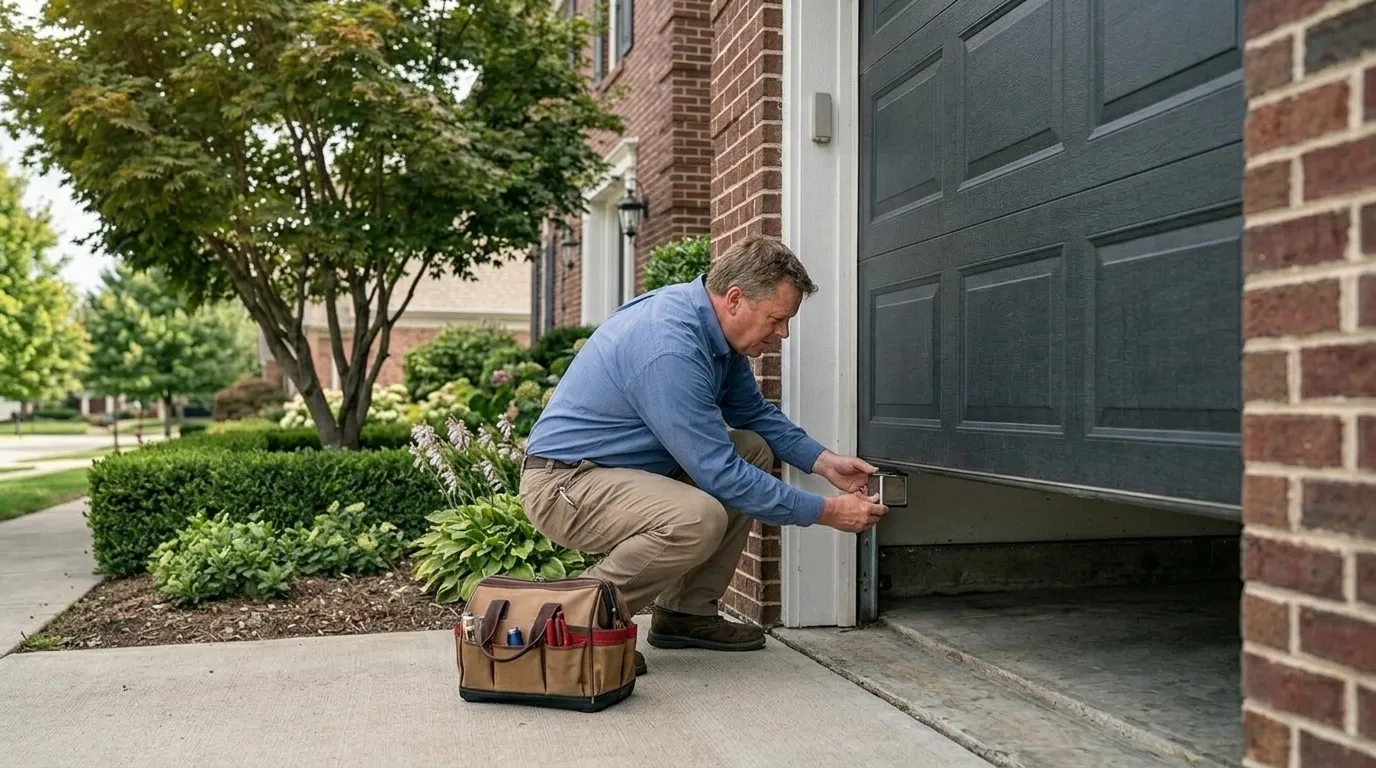
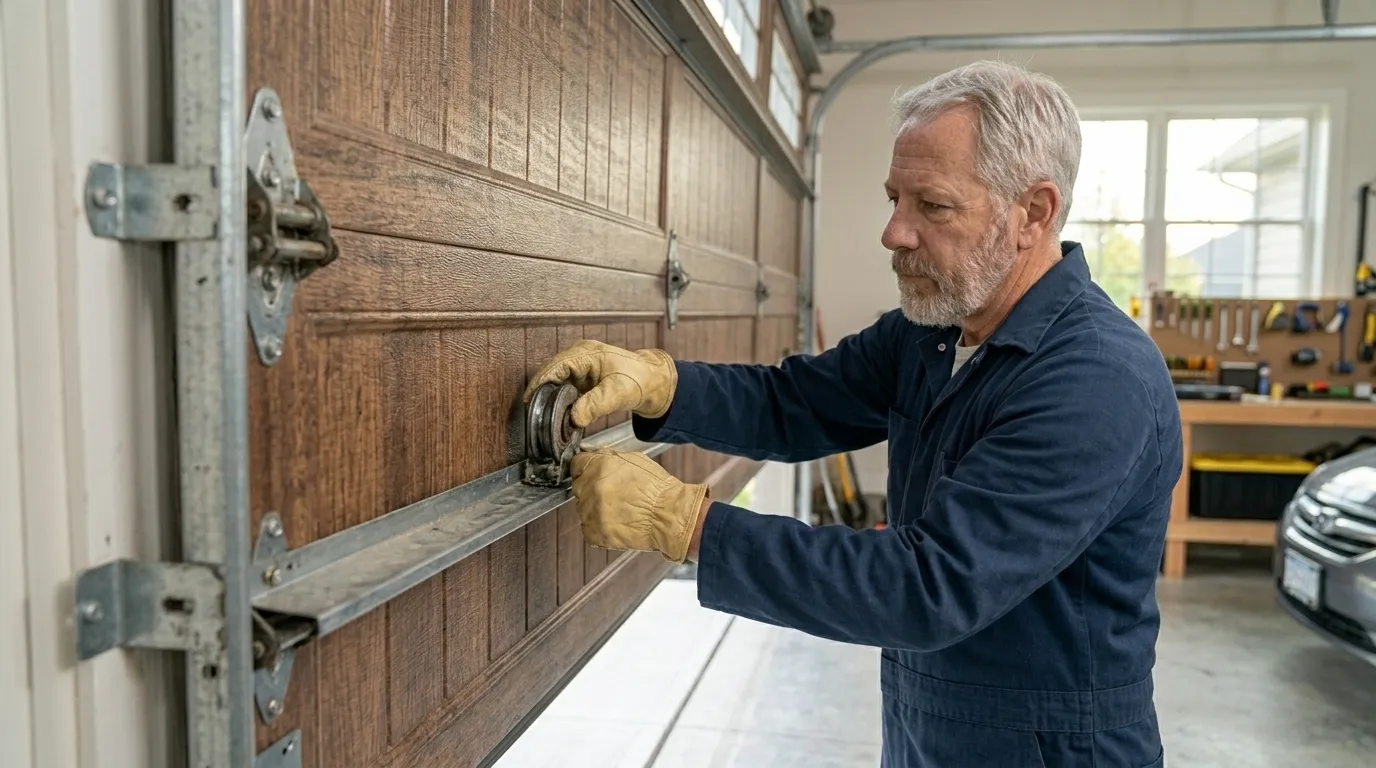
On a double door we replace both springs even if only one broke. A door that age has both springs on the same clock, and running a new spring against a tired one throws the balance off and puts extra load on the opener. We also check the cables, the drums and the bottom brackets while the door is unloaded, since that's the one time you can see wear on those parts without fighting spring tension.
The one limitation worth saying plainly: if the spring size is a less common one - happens sometimes on custom or oversized doors - we may not have it on the truck and need a day to get it in. We'd rather tell you that up front than promise same-day and miss it.
What It Costs
We're not going to put a number here that isn't accurate for your door, and spring cost swings on things we can't know without seeing the door: single versus double, spring wire gauge, whether both springs need replacing, and whether the drums or cables are due at the same time. A single-spring job on a smaller door is a different bill than a double-spring job on a wide, heavier one.
What we can tell you is what drives the number up or down: door size and weight, how many springs, and whether anything else on the torsion assembly needs attention while it's open. Ask for the breakdown when you call - we'll walk through what's included before the truck rolls, not after.
How It Shows Up
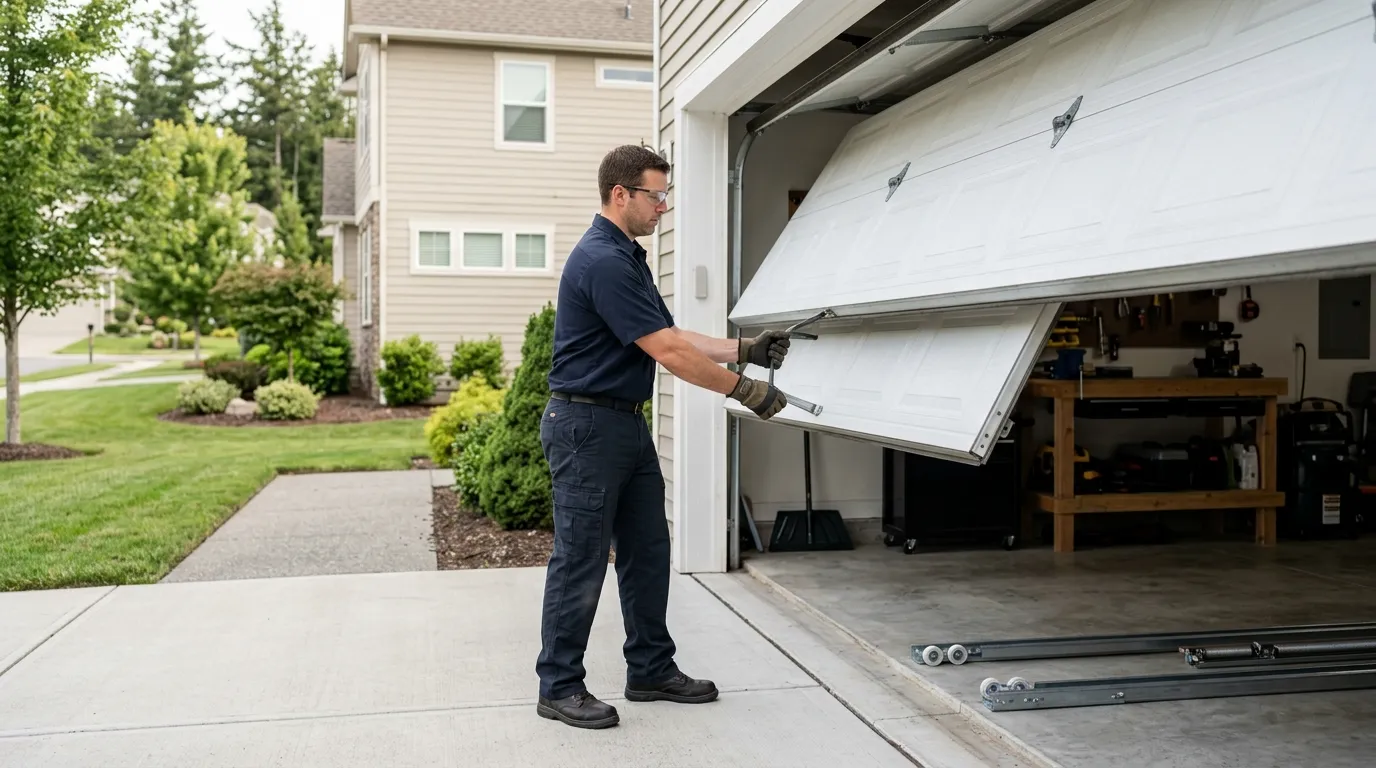
The most common sign is a door that won't stay up - you lift it partway and it drops back down, or the opener strains and reverses because the spring isn't carrying its share of the weight anymore. A loud bang from the garage, often when nobody's touched the door, is usually the spring itself giving out; if you hear that, don't run the opener until someone's looked at it, because the door has nothing holding it up on one side.
Other signs are slower: the door feels heavier to lift by hand each month, the opener runs longer or louder than it used to, or one side of the door looks visibly higher than the other when it's halfway up. On a door built in the late 90s that's never had the spring touched, gradual tension loss like this is normal wear, not a sign anything else is wrong - the spring's just at the end of its cycle life.