What Causes It Around Here
Most houses in Fairhope went up around 1997, a decade later than the region's overall median build year of 1990. That gap matters for openers. A house built in the late 90s almost always shipped with a basic 1/3 HP chain-drive unit and a circuit board with no rolling-code security beyond the first generation, no battery backup, and a photo-eye sensor pair that was an afterthought bolted on rather than designed in. Twenty-five-plus years later, those units are past their working life: the gears inside the drive head strip, the capacitor that pushes the motor on startup weakens, and the logic board starts missing signals from the remote before it fails outright.
The climate here is mild with the occasional freeze, and that matters less for the motor than for the limit switches, which drift out of calibration a little more each winter once they're already worn. A switch that's fine in October can start reversing the door halfway up in January. That's usually the point a homeowner calls, thinking the door itself is broken when it's the opener telling it to stop.
What the Fix Involves
We size the new opener to the door, not the other way around - most doors on Fairhope's 90s-era houses are standard steel sectional, two-car width, and don't need anything beyond a 1/2 HP belt-drive or chain-drive unit. Belt-drive costs a little more up front and runs quieter, which matters more to some households than others.
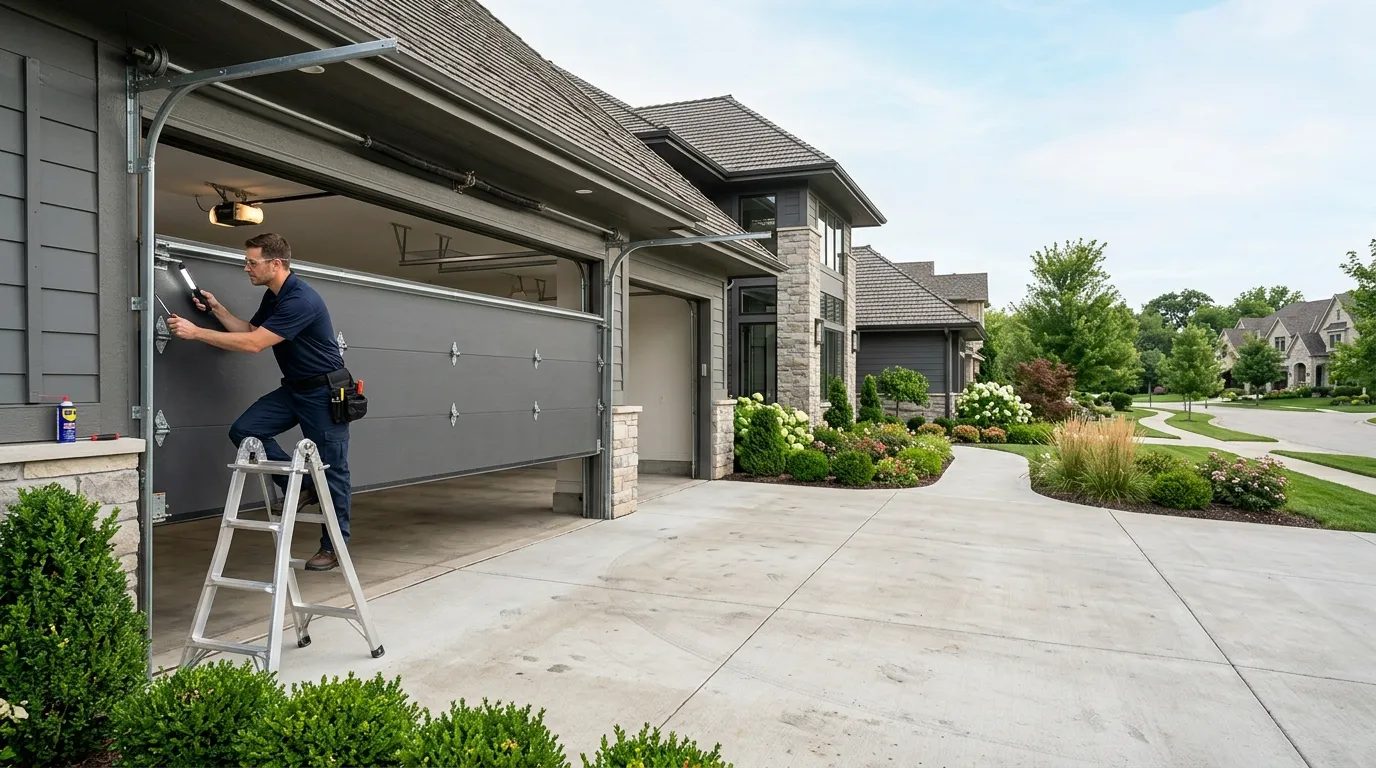
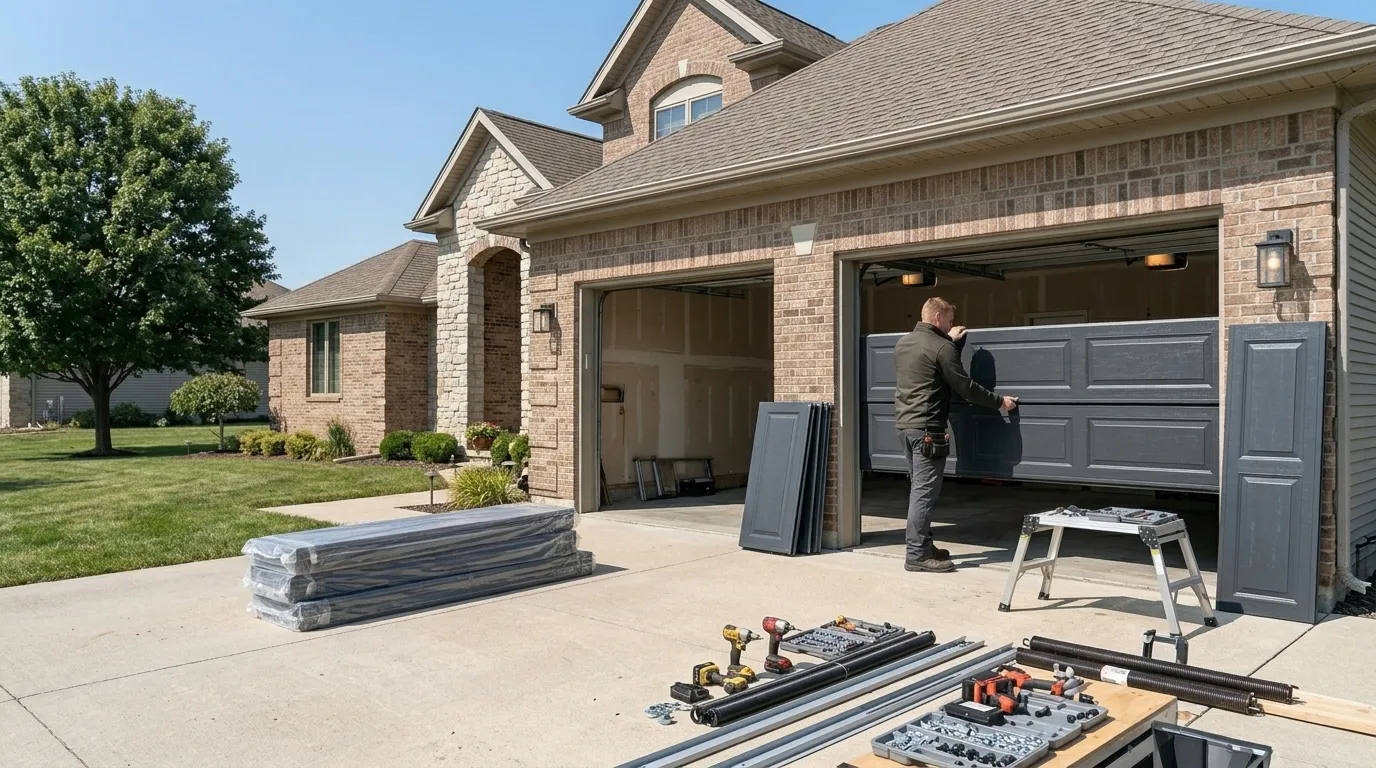
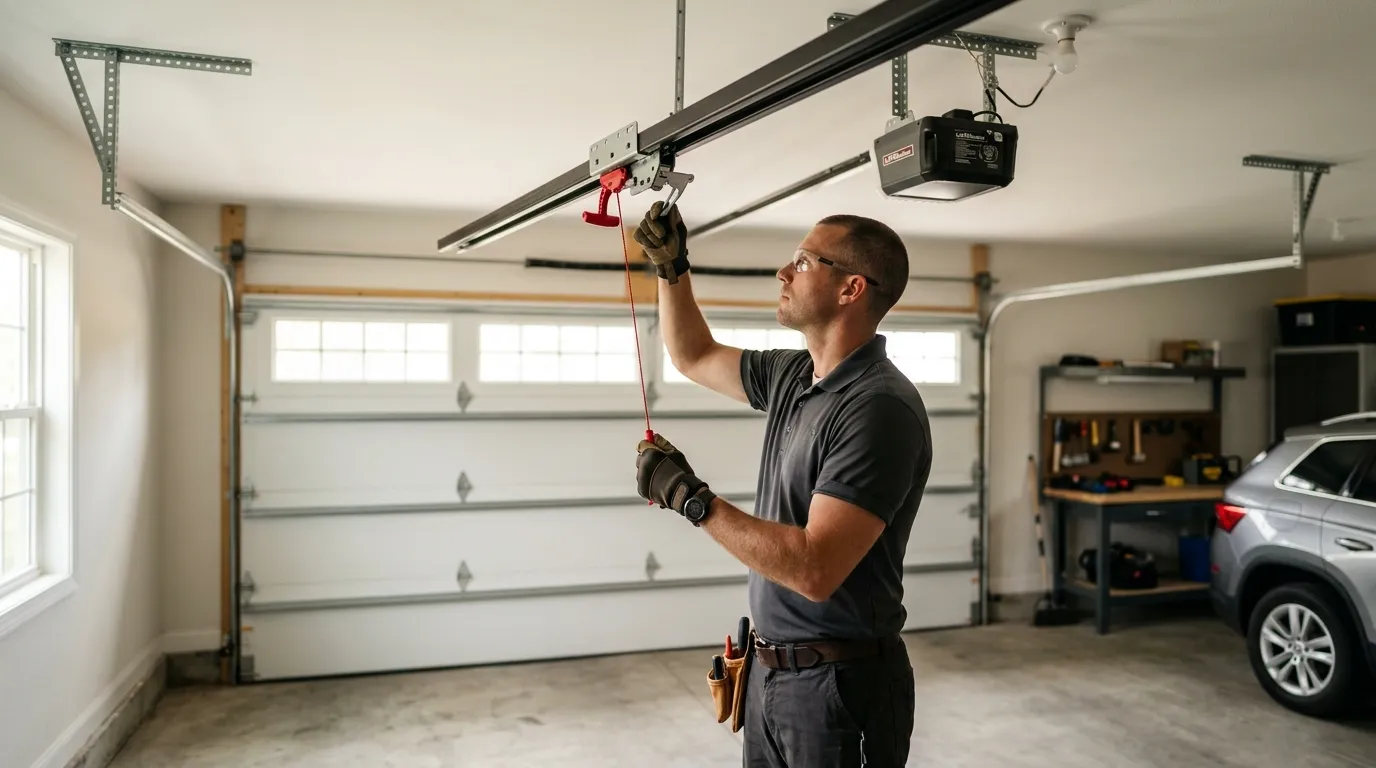
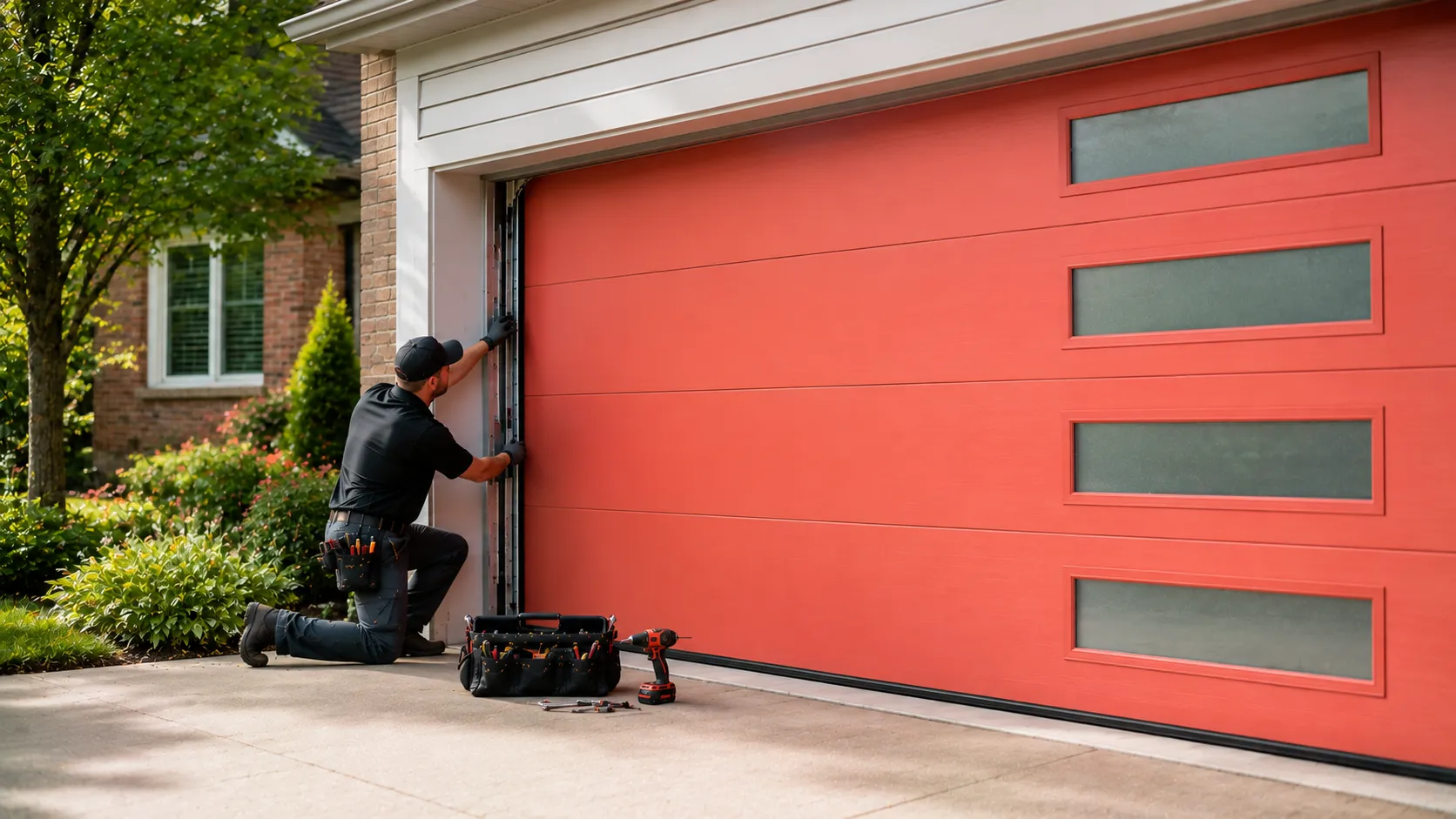
The job itself: disconnect and remove the old drive head and rail, mount the new head to the same or reinforced bracket depending on what the original installer used, run the rail, wire in the wall control and safety sensors, and set the travel limits and force settings from scratch rather than copying over the old numbers. We test the auto-reverse safety function before we leave - that's not optional, it's the part that keeps a door from closing on somebody.
One limitation worth saying plainly: if the existing wiring in the garage doesn't support a dedicated outlet for the opener, we're not doing electrical work beyond the opener circuit itself. That's a separate call to an electrician if the panel needs attention.
What It Costs
We don't post a flat number here because the honest answer depends on horsepower, drive type, and whether you want battery backup - the last one matters more in areas prone to outages than it does here, where the climate is mild with only occasional freeze and power stays on more often than not.
What we can say: Fairhope's median household income runs at $86,509, well above the wider service area's $60,922. In practice that shows up as more requests for the belt-drive and smart-opener upgrades rather than the base chain-drive replacement - homeowners here are more likely to ask what the better option costs rather than default to the cheapest one. That's a pattern, not a rule, and we'll quote either way without pushing one over the other.
How It Shows Up
The opener usually tells you it's failing before it quits outright. Watch for: the door reversing partway up or down for no clear reason, the remote working from the driveway but not from across the yard, a grinding or humming noise from the drive head that wasn't there last month, or the wall button doing nothing while the remote still works (usually a wiring issue at the button, not the head itself).
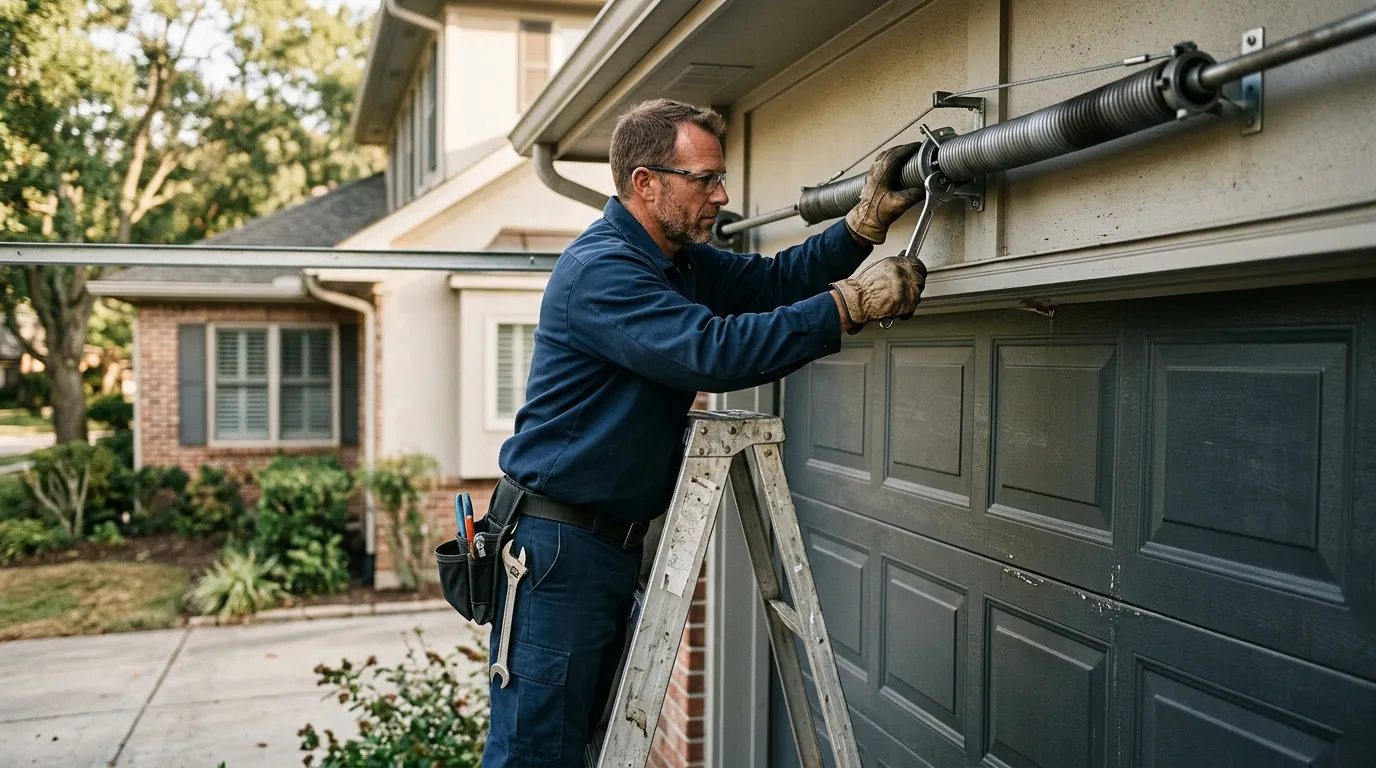
In Fairhope specifically, with houses mostly dating to that 1997 build era, we see a lot of original or first-replacement openers finally giving out now - the math on 25-plus years of duty cycles catches up. If your door drops the last foot with a thud instead of settling down slowly, that's the opener's force setting failing, not the springs, and it's worth a look before it becomes a safety problem.