What It Costs
We're not going to throw a number at you that doesn't hold up once we're standing in your driveway. Panel cost depends on three things: how many sections got hit, whether the door is steel, aluminum, or wood, and whether your model is still in production or needs a custom match. A single-panel repair on a common steel door is a different job than replacing a section on an older wood-panel door where the manufacturer stopped making that profile years ago.
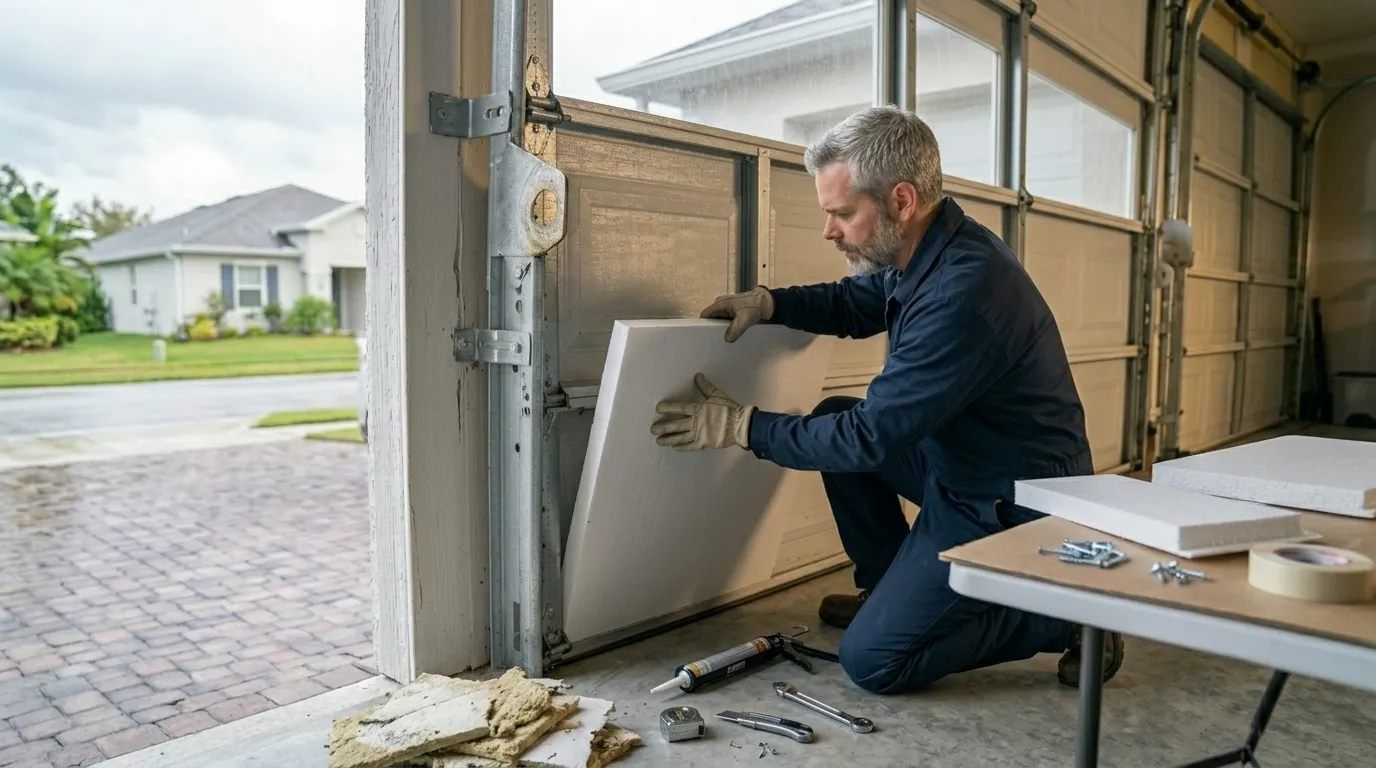
What we can tell you is how the math works. If one panel on a multi-panel door is damaged - a backed-into corner, a hail dent, a section that's rusted through at the bottom where it sits closest to grade - replacing just that panel almost always costs less than replacing the whole door, as long as we can source a matching panel. If the door is old enough that the manufacturer discontinued the line, or if two or more panels are compromised, we'll tell you straight when a full door replacement is the better spend instead of chasing parts for a door that's going to keep failing.
We quote after we see the door and confirm what's actually available for your model. Anything else is a guess.
How It Shows Up
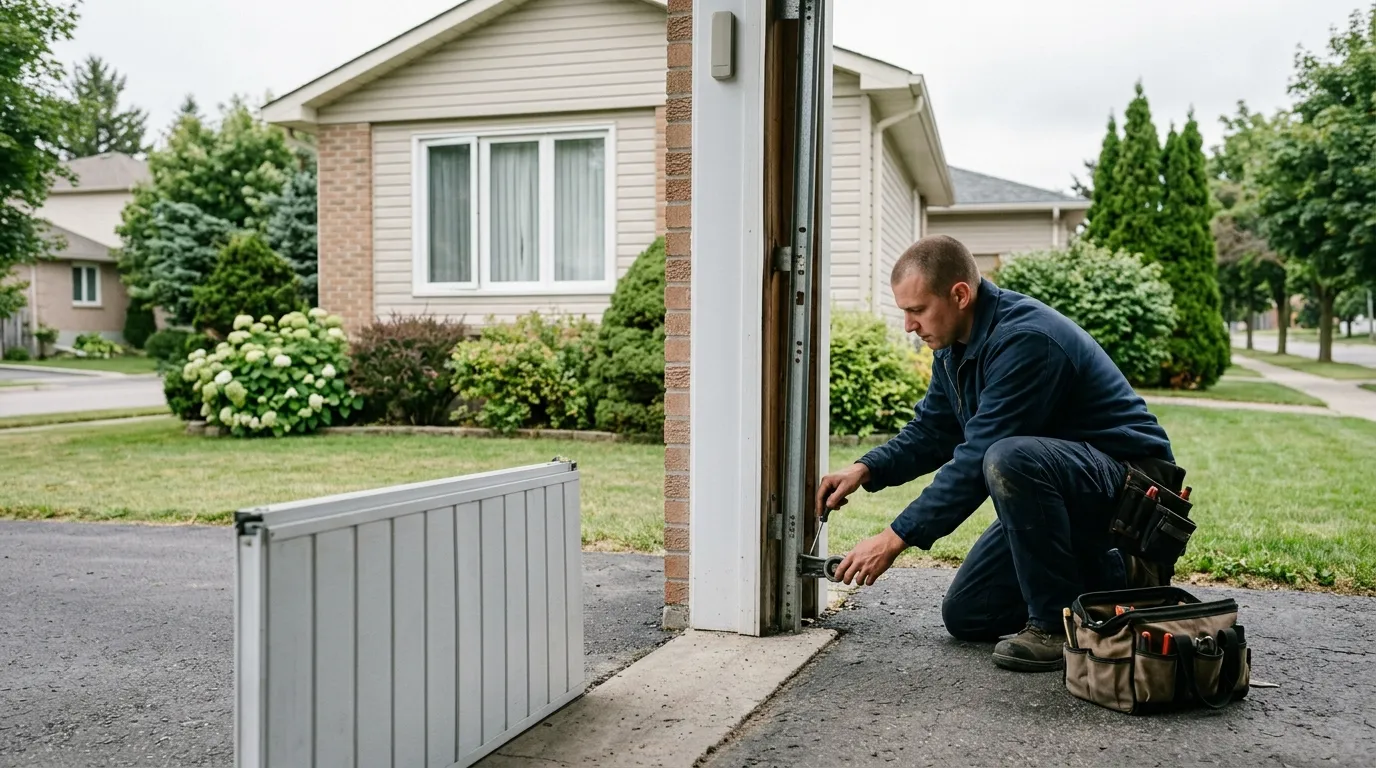
Panel damage on doors in this area usually shows up as one of a few patterns. The most common is a bottom-corner dent or crack from a car bumper or trailer hitch - the panel closest to the ground takes the brunt of everyday driveway mistakes. Second most common is a stress crack running along a panel seam, which happens when a door with worn rollers or a misaligned track starts binding and puts uneven pressure on the panel every time it opens.
On older doors - and across this service area a good share of the housing dates back to the 1960s through the 1990s, per F1 and F2 - you'll also see panels that have simply delaminated or rusted from the inside out. Steel panels from that era used thinner gauge and less insulation backing than what's made now, so moisture gets in at the seams and the panel weakens from the inside before it ever looks bad from the outside. By the time you see a bubble or a soft spot, the steel underneath has already been going for a while.
A third pattern: warping. A single bowed panel, usually on the side that gets the most direct sun, throws off the whole door's alignment even if the other panels look fine.
How Long It Takes
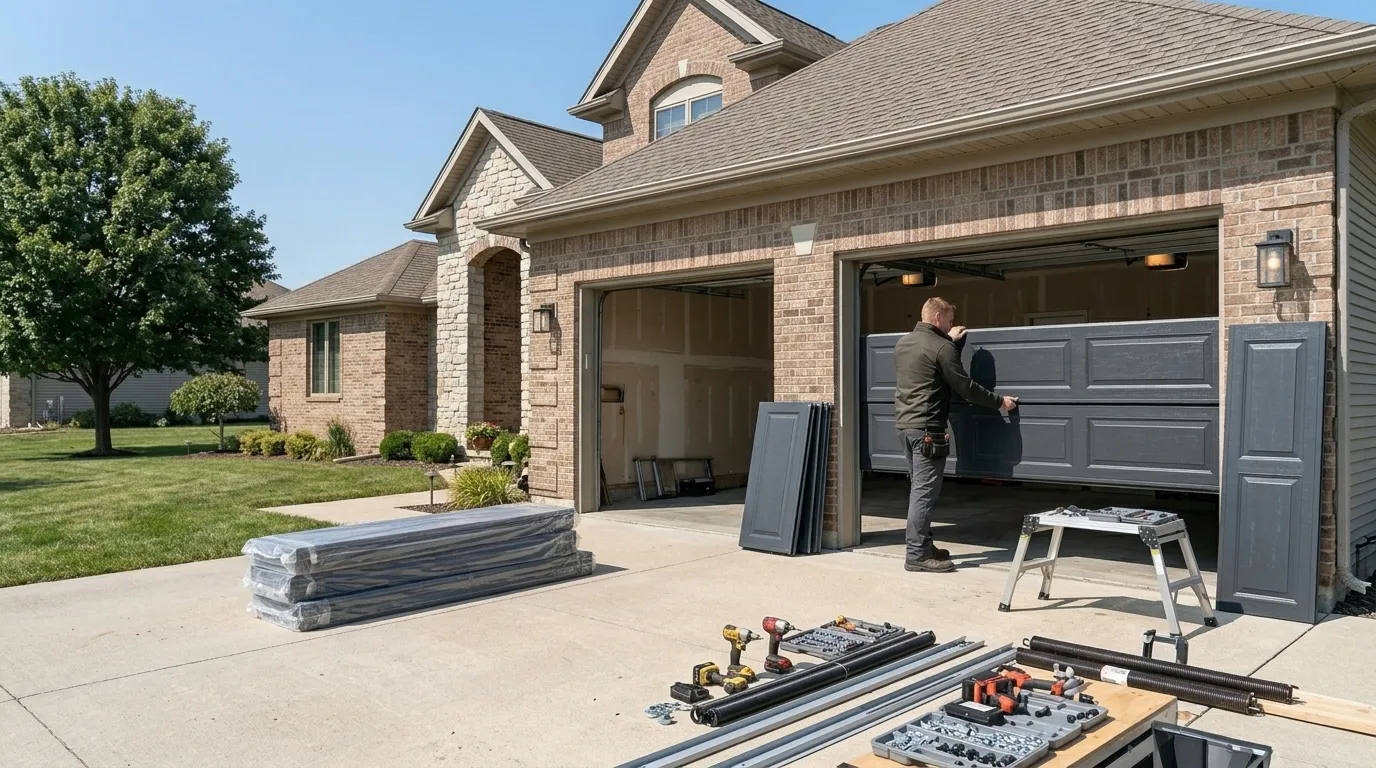
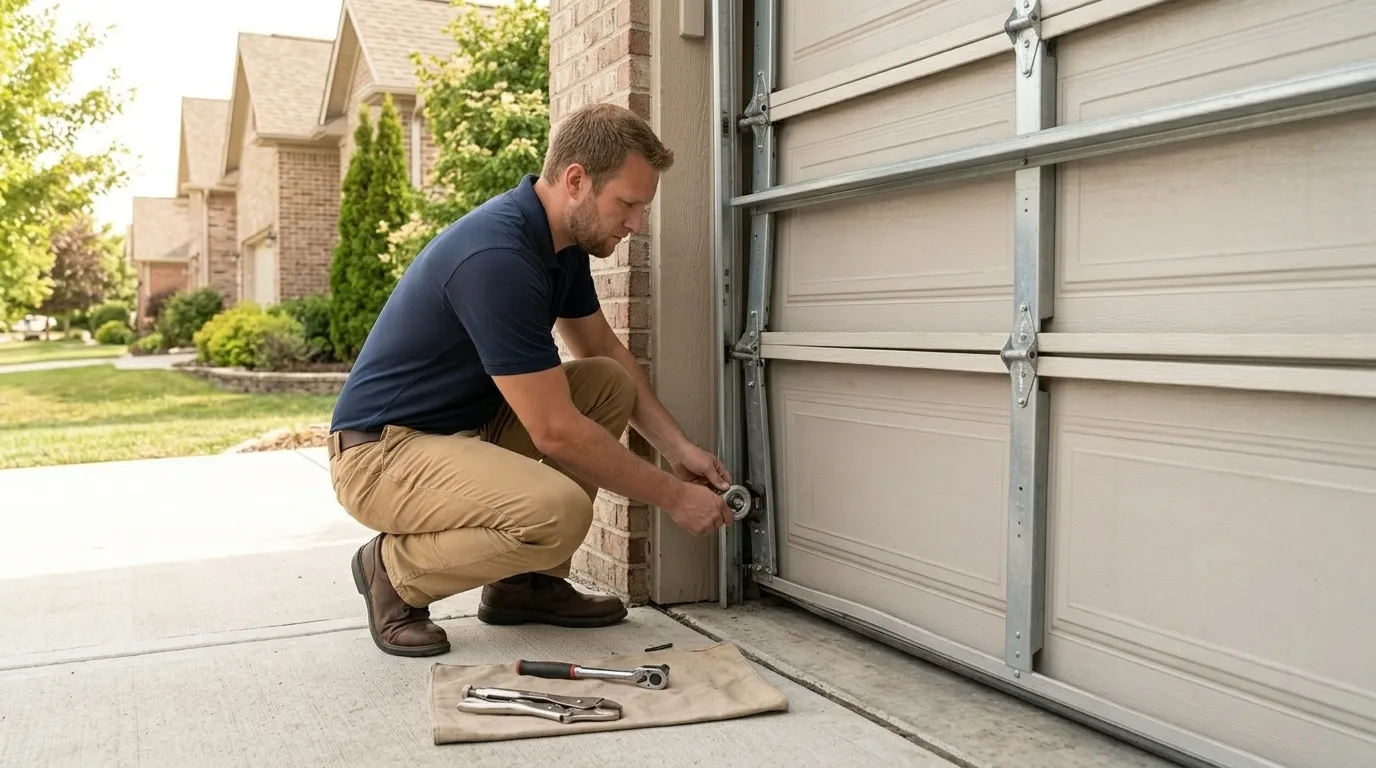
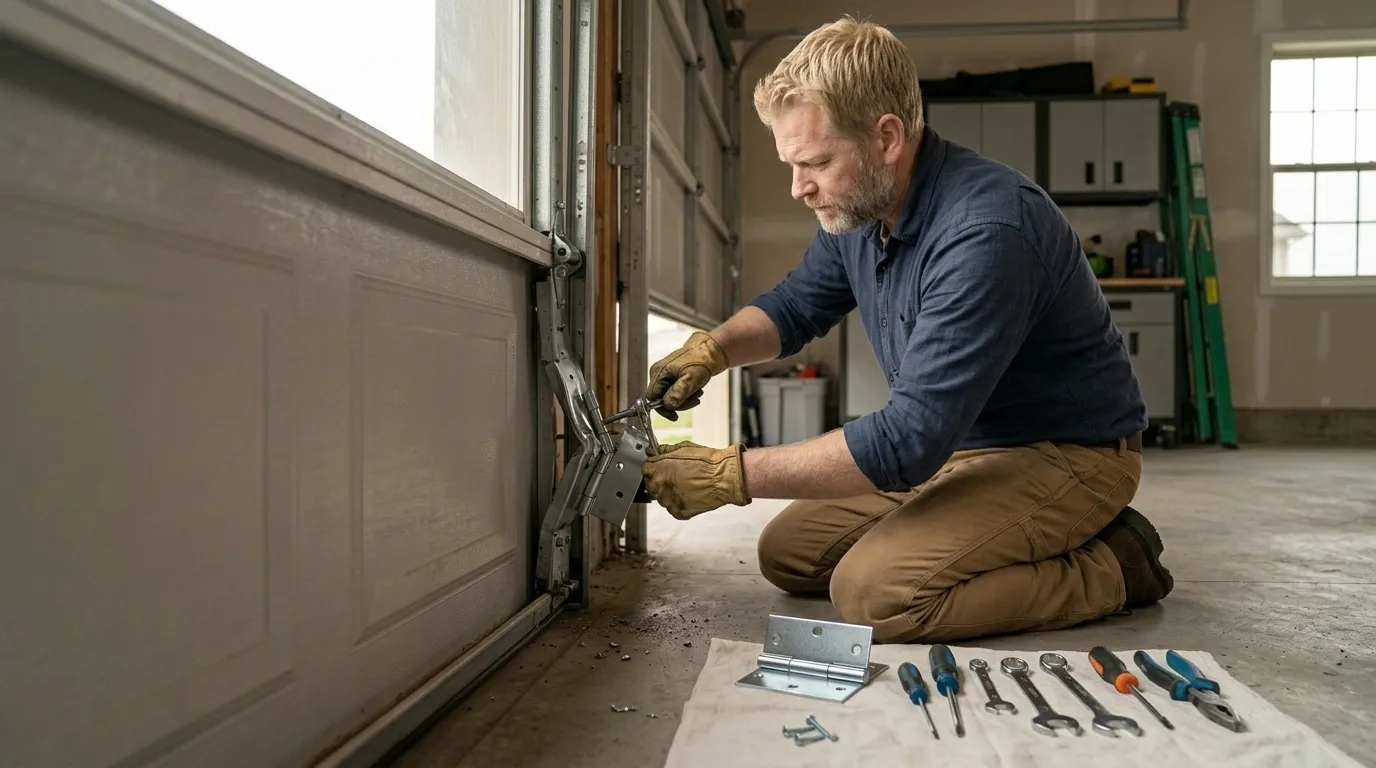
A straightforward single-panel swap, where we've got the matching panel in hand or it's a common enough size to source quickly, is usually a same-visit job - we pull the damaged section, fit the replacement, and reset the door's balance and hardware before we leave. That's the most common outcome for newer doors still in production.
Where it takes longer is sourcing. If your door is older - and given how much of the housing here dates to the 1960s through 1990s, this comes up often - the exact panel profile may not be stocked locally and has to be ordered. We'll tell you at the estimate whether we're doing it that day or scheduling a return trip once the part's in.
One honest limitation: we don't keep every discontinued panel style in the truck, and for some older doors the manufacturer isn't making that profile anymore at all. In those cases we'll say so up front rather than have you wait on a part that isn't coming, and we'll walk you through whether a close-match panel or a full door replacement gets you a better result.