What Causes It Around Here
Fairhope sits about 7 miles from our Daphne shop, close enough that a panel job here runs on the same afternoon as a call across town - the drive itself isn't the issue. What matters more is what we find when we get there. The median home in Fairhope was built around 1997, which puts a lot of doors squarely in that late-90s window: steel sandwich panels, foam-filled, usually still on the original galvanized track unless something's already been swapped out. That era of door dents easier than the heavier stock built after 2005, and a lot of homeowners here are hitting a panel crack or a caved-in section from a backed-into car, a stray baseball, or just twenty-plus years of a hinge working loose and racking the panel next to it. Across the wider service area the housing stock runs 1963 to 2007 with a lot of it built through the 1980s and 90s, so we see a mix of panel widths and gauges depending on which decade a street went up. Fairhope's own stock skews newer than some of the older pockets we cover, which changes what we're pulling off the truck before we even knock on the door.
What the Fix Involves
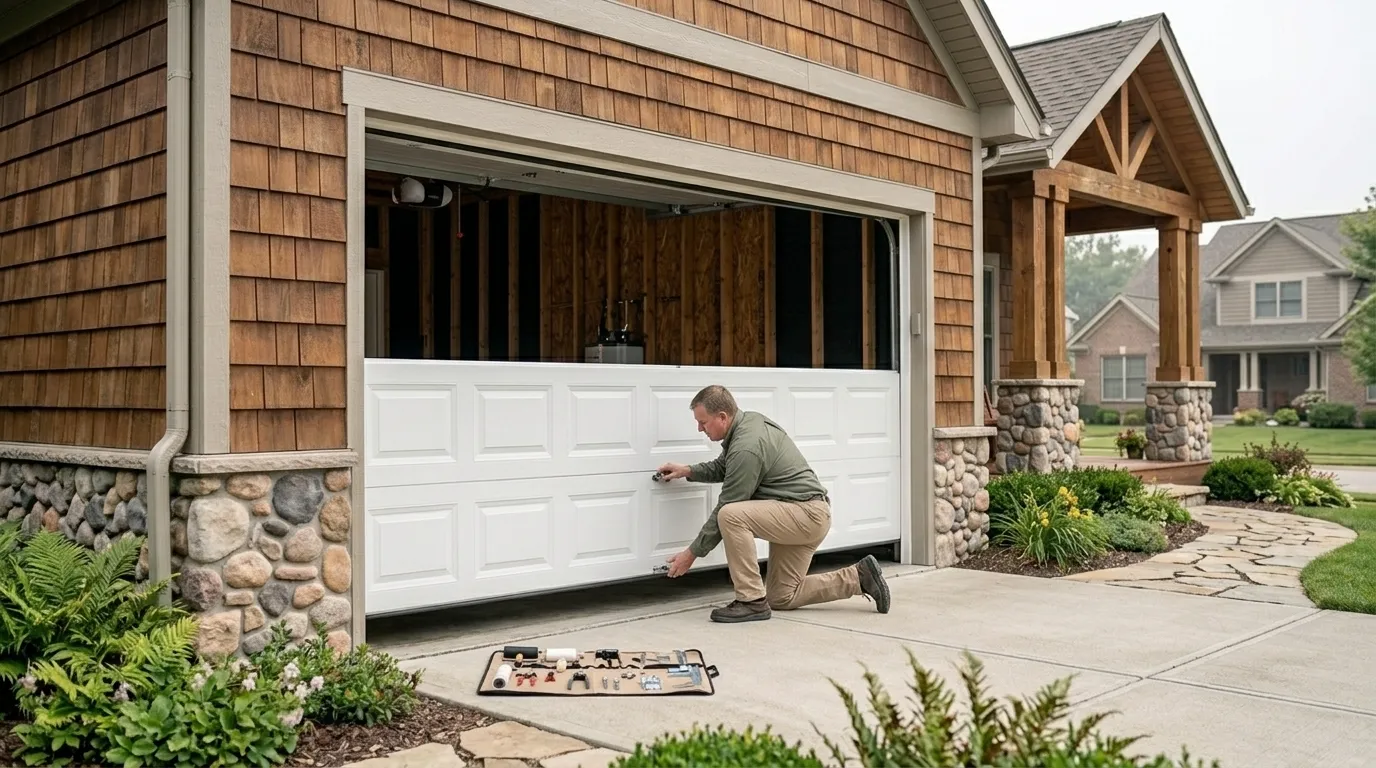
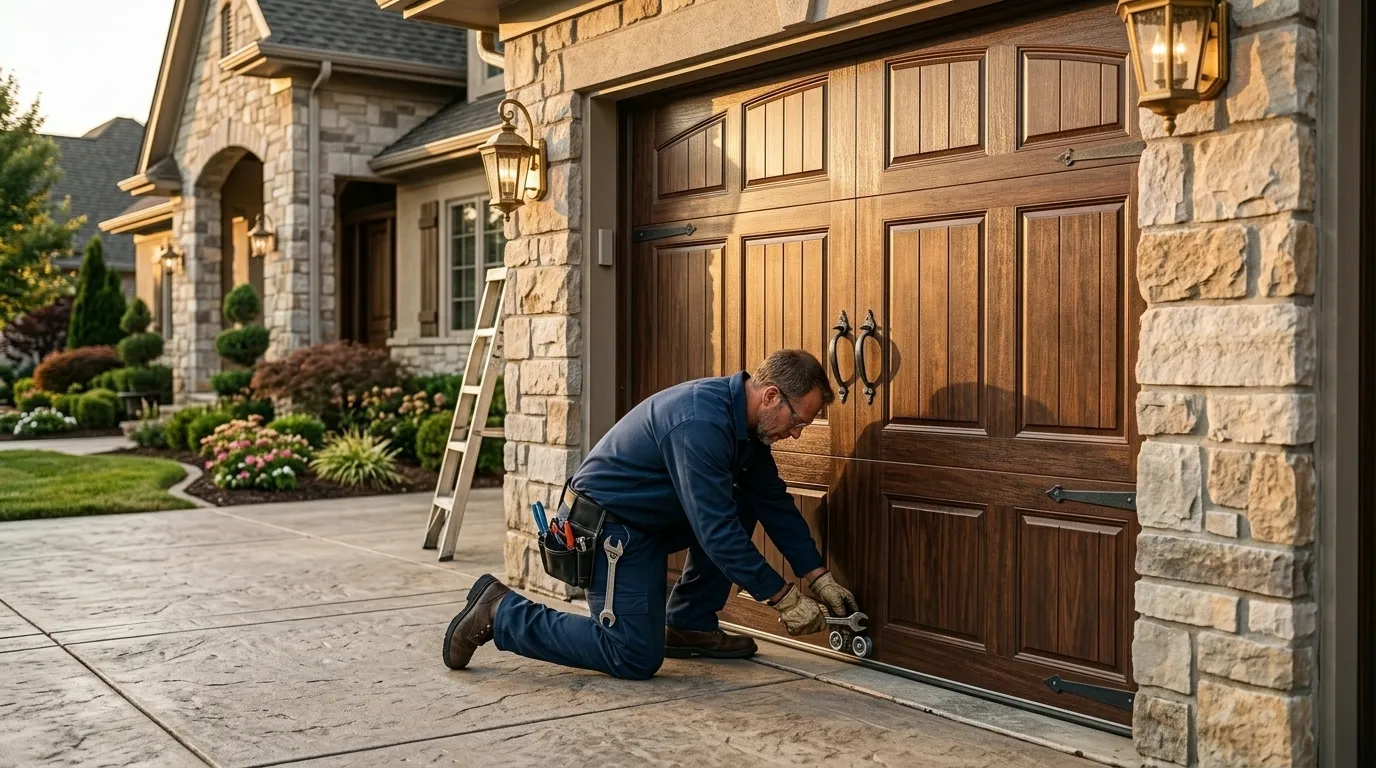
On a late-90s door, we're almost always replacing a single section rather than the whole door - the rest of the panels are usually sound, and matching one section is cheaper and faster than a full swap. We measure the width and the panel design (raised, flush, or ranch-style ribbing) before we drive out, because a mismatched panel on an otherwise good-looking door is the kind of thing you notice every time you pull in. If the hinges or rollers on the damaged section are bent, we replace those at the same time - a new panel bolted to a bent hinge just cracks again in a season. One honest limitation: if the door is an odd or discontinued width, or the finish has faded enough that a new panel would look mismatched next to twenty-year-old paint, we'll tell you that up front rather than sell you a patch job you'll be unhappy with. Full replacement makes more sense in that case, and that's a different job with a different scope.
What It Costs
We don't have a published price list to quote here, and panel cost swings a lot depending on width, insulation, and whether the design is still in production or has to be special-ordered. What we can tell you is that Fairhope's median household income, at $86,509, runs well above the roughly $60,922 median across our wider coverage area, and it shows in the doors - more insulated steel and composite panels here than in some of the older sections we cover, which generally cost more to match than a bare steel section. Get the exact number from us after we've seen the panel and confirmed the design; guessing a price over the phone on a door we haven't looked at does nobody any favors.
How It Shows Up
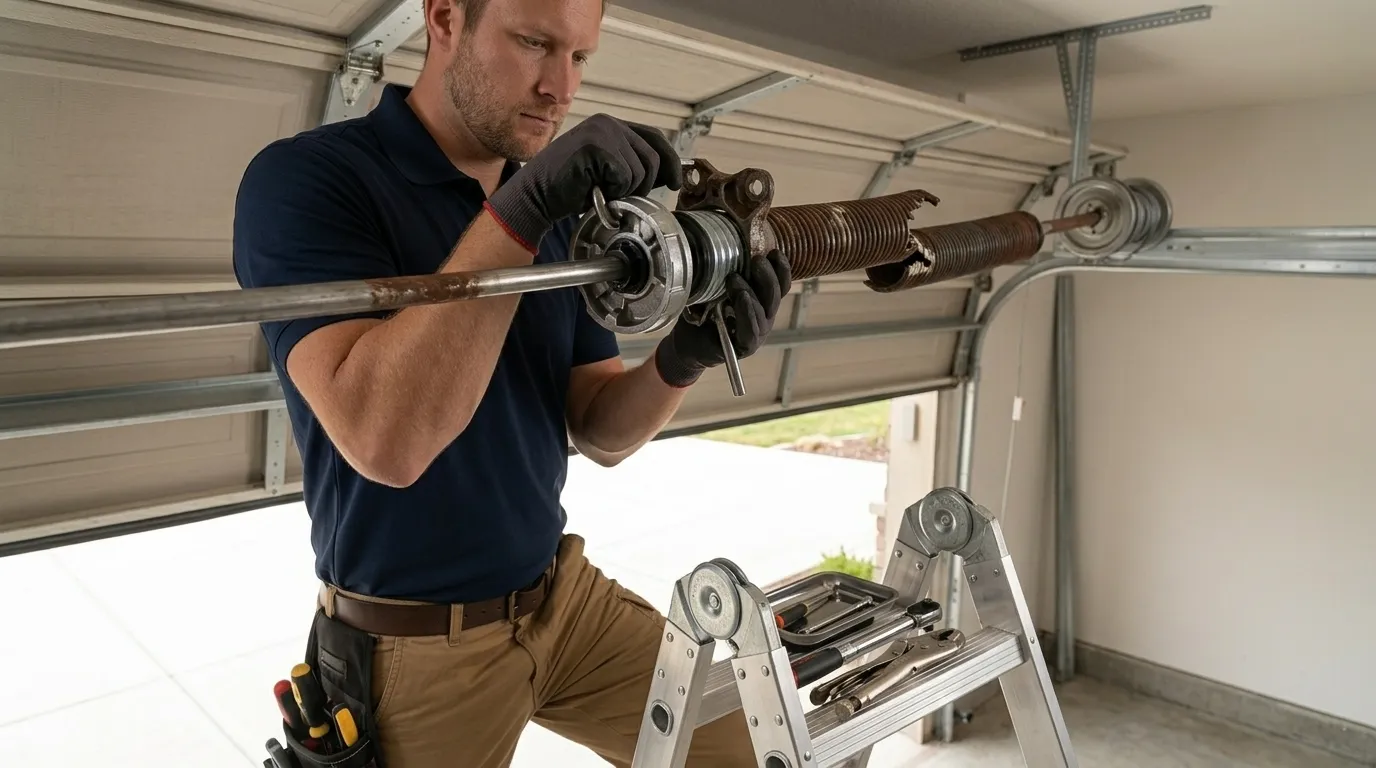
A damaged panel on a door this age usually shows up as a visible dent or crack first, then a whistle or draft around the seam once the foam core is compromised. Fairhope's climate runs mild with occasional freezes rather than hard winters, so we don't see the freeze-thaw panel splitting that colder regions deal with - here it's almost always impact damage or a stress crack from a hinge that's been loose longer than anyone noticed. If the door still opens and closes evenly and the track isn't binding, it's usually just the one panel. If the door drags, sags on one side, or the opener strains, the damage has likely spread past the panel into the track or the roller next to it, and that's worth mentioning when you call.