What Causes It Around Here
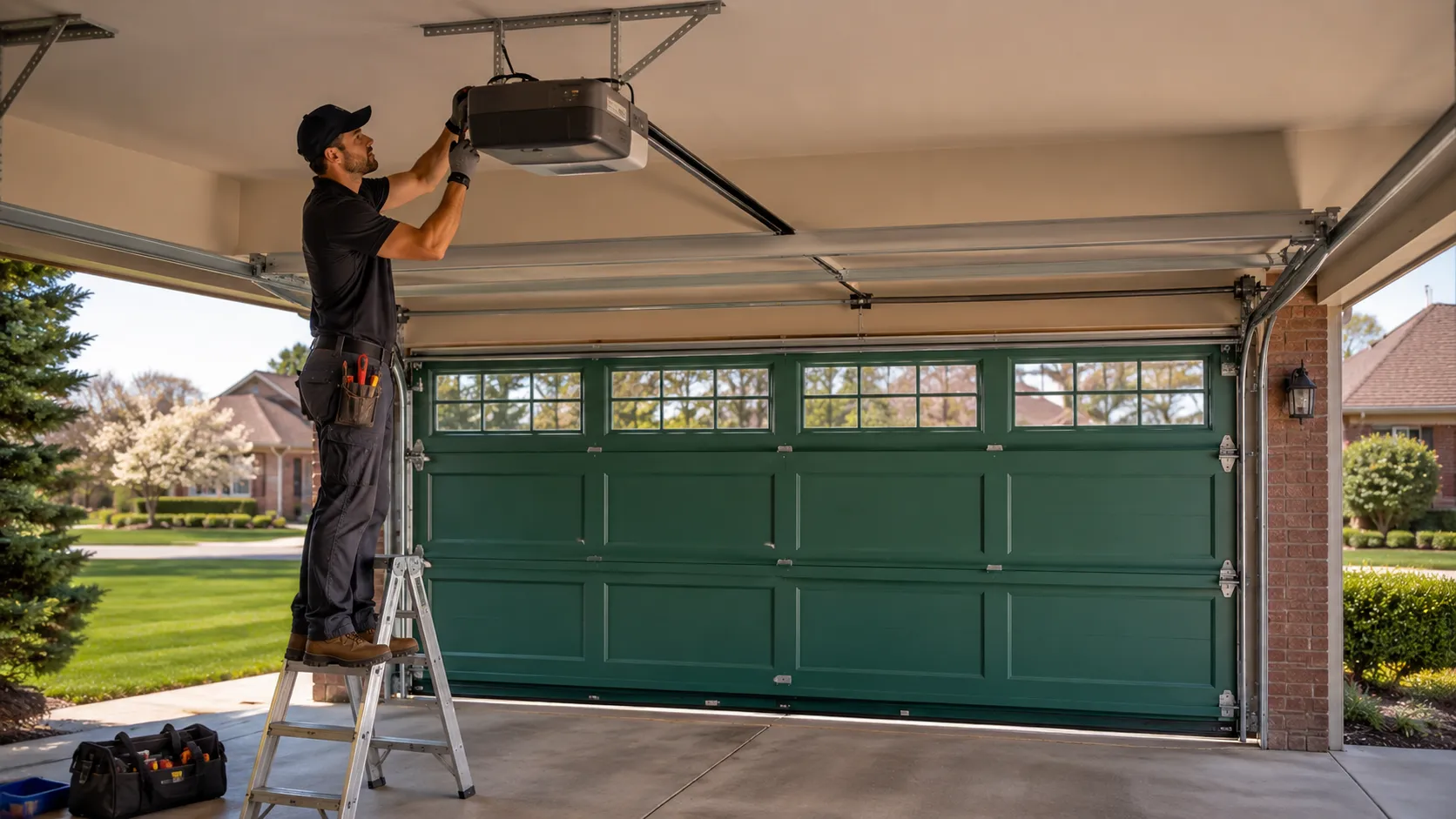
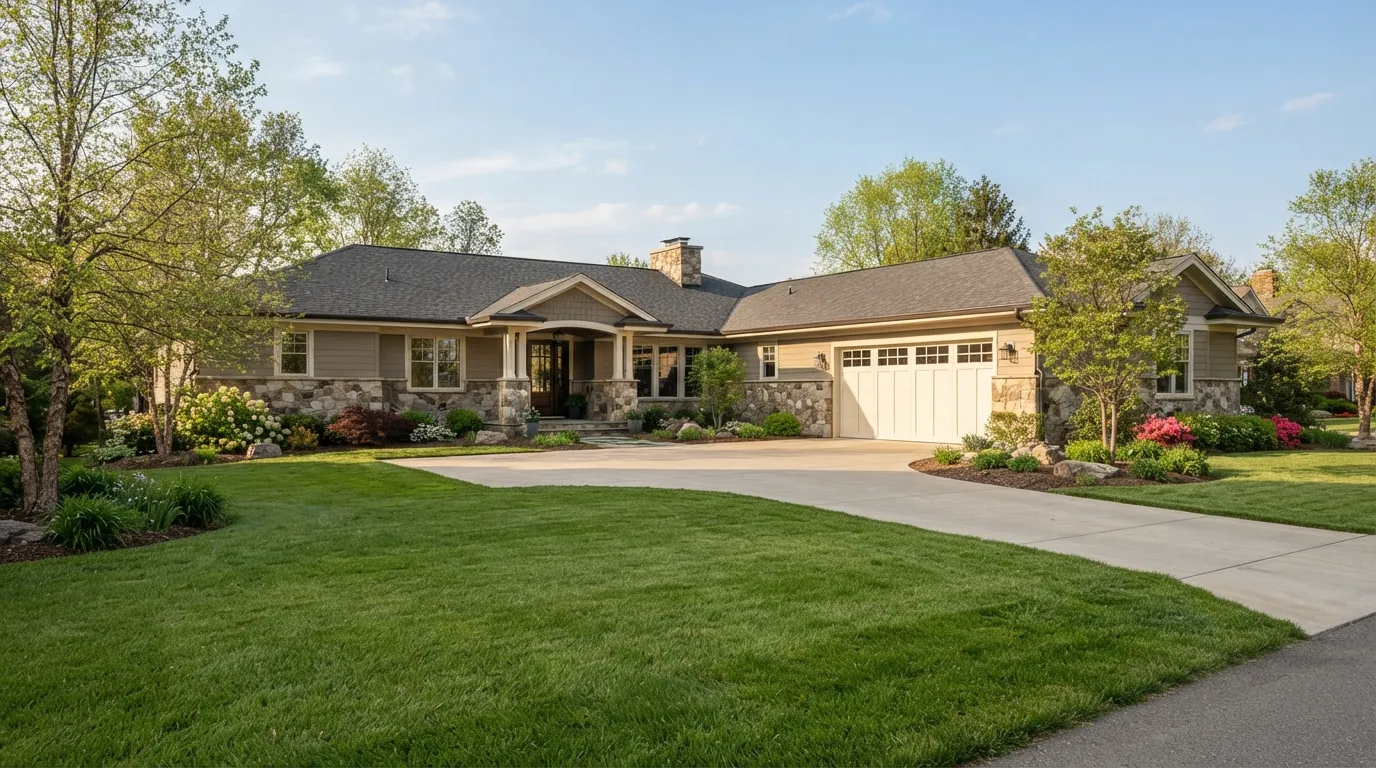
Most houses in Fairhope went up around 1997, which puts this town on the newer end of the service area's housing stock. That build era means two-car garages became the norm here, so you're mostly looking at wider steel sectional doors - 16-footers instead of the single 9-foot doors that dominate older neighborhoods closer to the bay. Wider doors carry longer horizontal tracks, and longer tracks flex more at the bend where they turn up toward the ceiling. That's the spot where a roller jumps the rail.
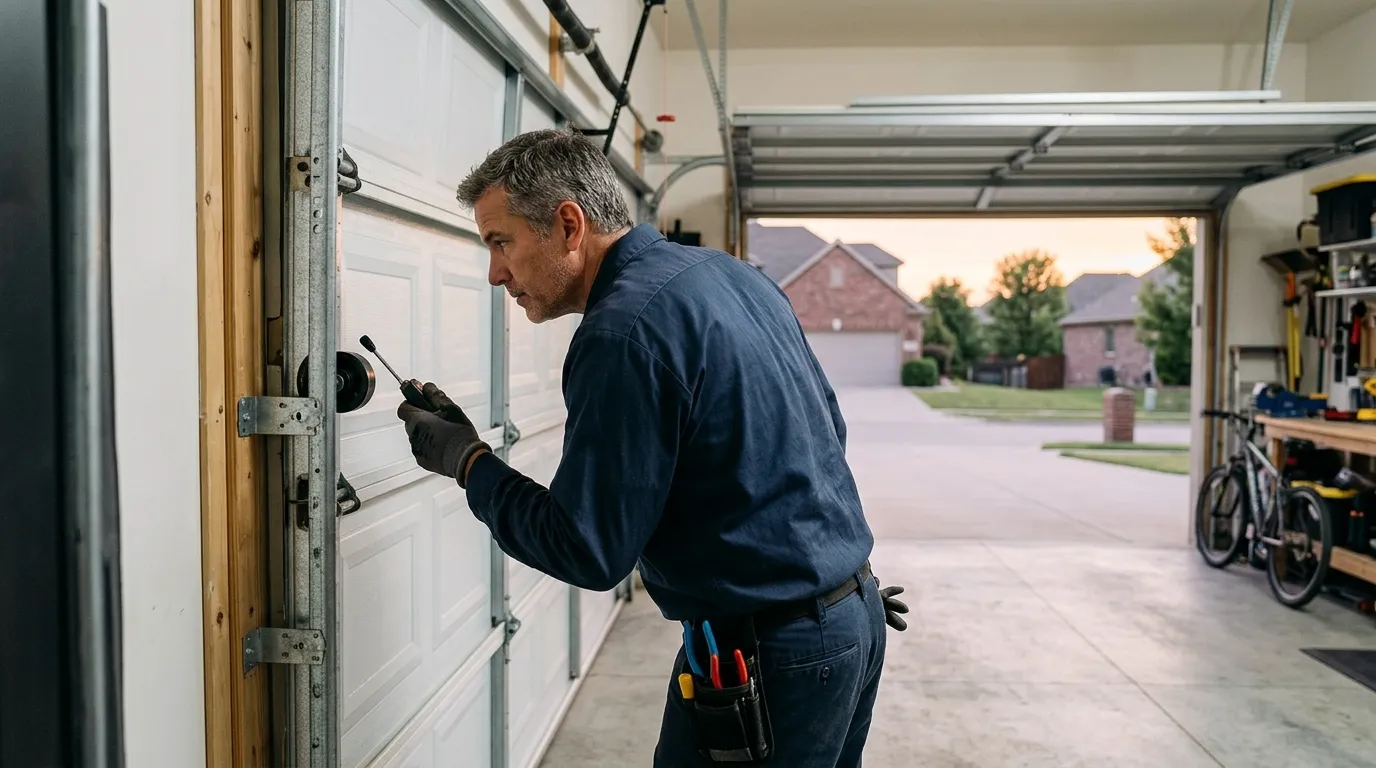
The other push comes from the climate band this whole area sits in - mild, with the occasional freeze. It's not the swing that does the damage, it's the moisture. Humid mornings followed by a cold snap a few times a winter cause the steel track brackets to expand and contract just enough, over years, to loosen the lag screws holding them to the jamb. A bracket that's crept a quarter inch out of plumb will let a roller ride off the edge of the track the next time the door cycles.
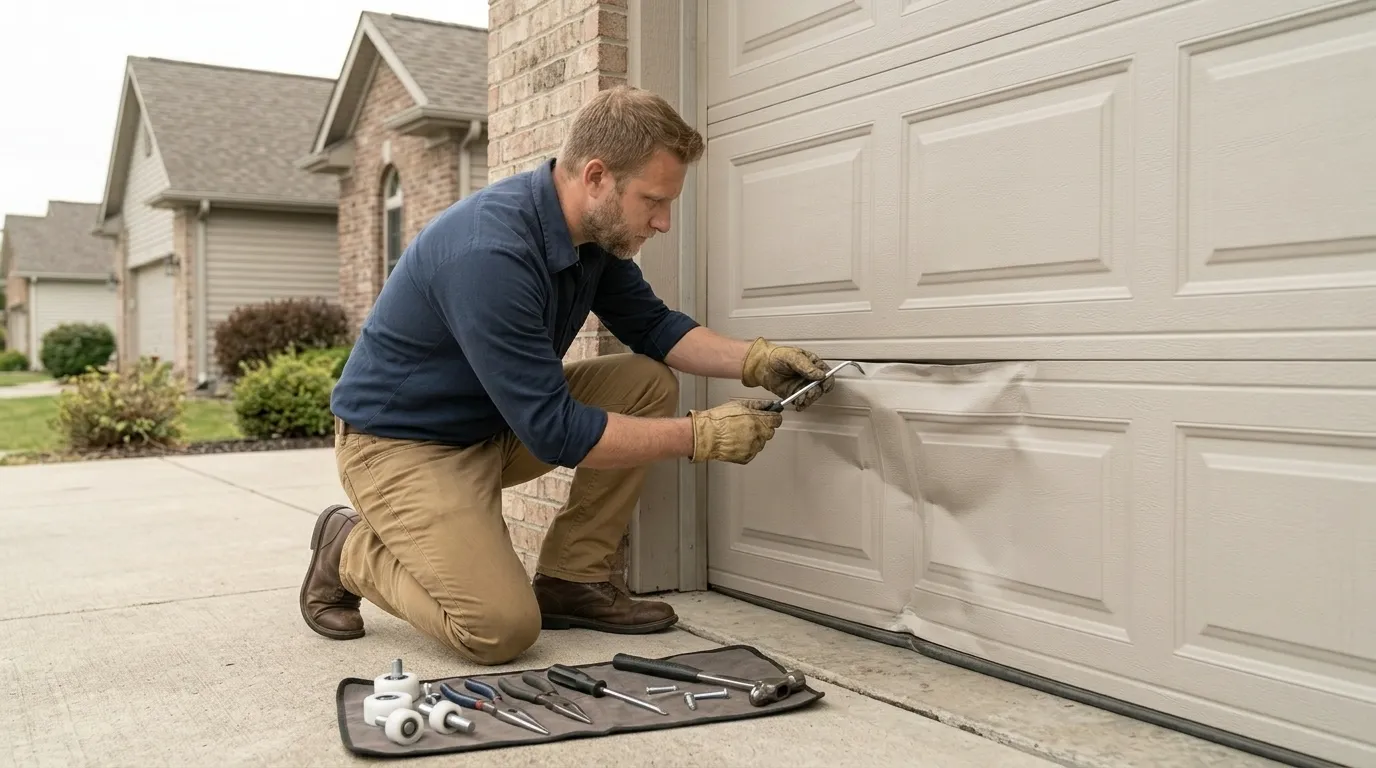
We also see it from a bent lower panel - someone backs into the door, or a basketball catches the bottom section - and the door tracks fine until it doesn't, usually a week or two later once the dent works the roller sideways.
What the Fix Involves
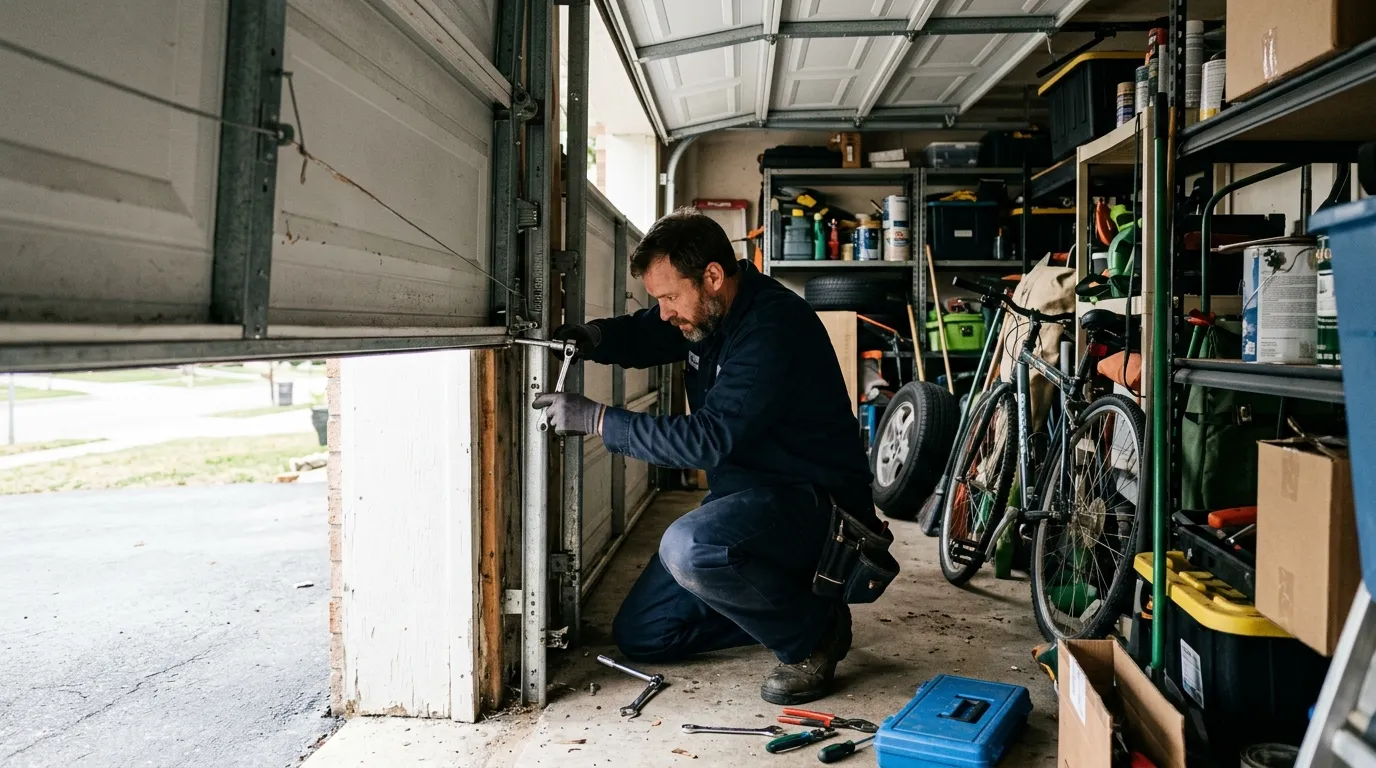
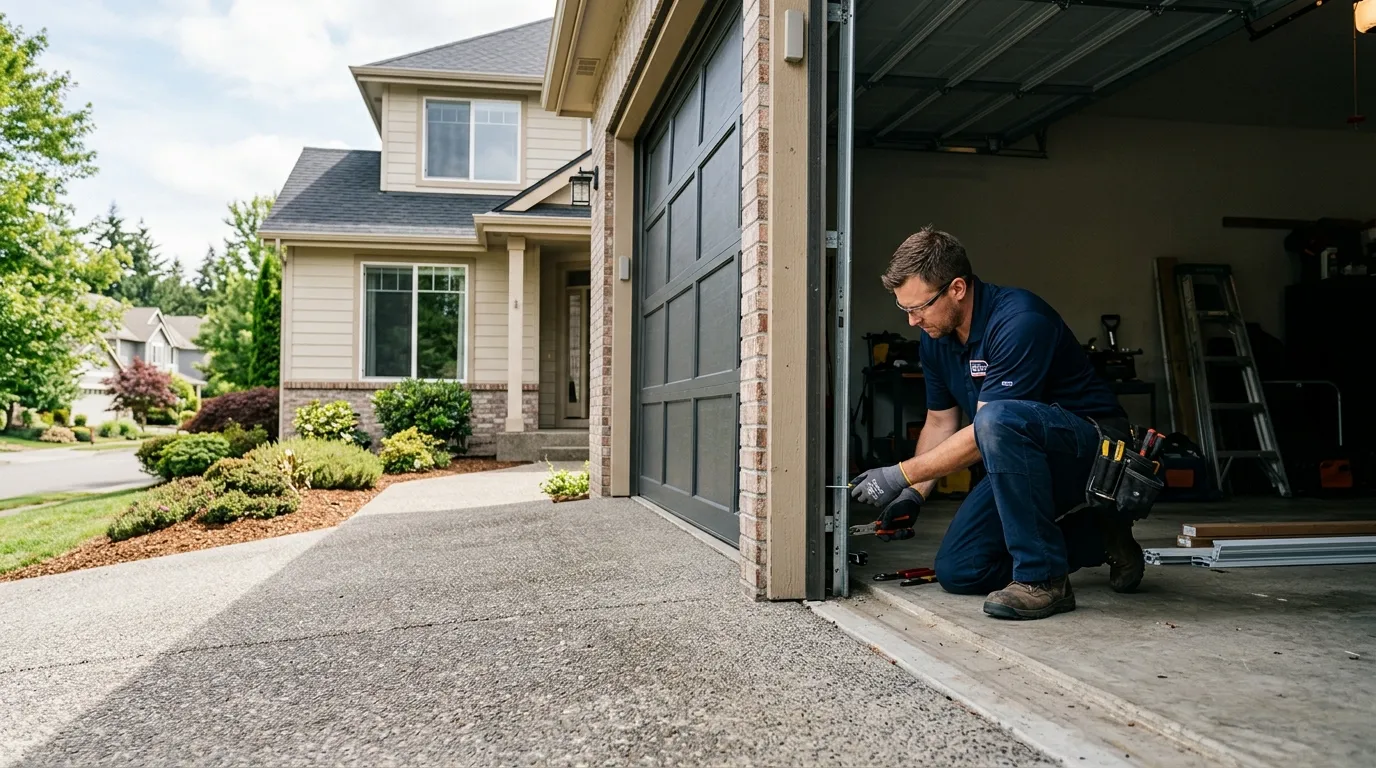
First step is finding where it actually left the rail, not just where it stopped. On the wider 16-foot doors common in Fairhope's 1990s-era garages, we usually find the failure at the vertical-to-horizontal curve on one side, rarely both, because the door's own weight is unevenly loaded the moment one side jumps.
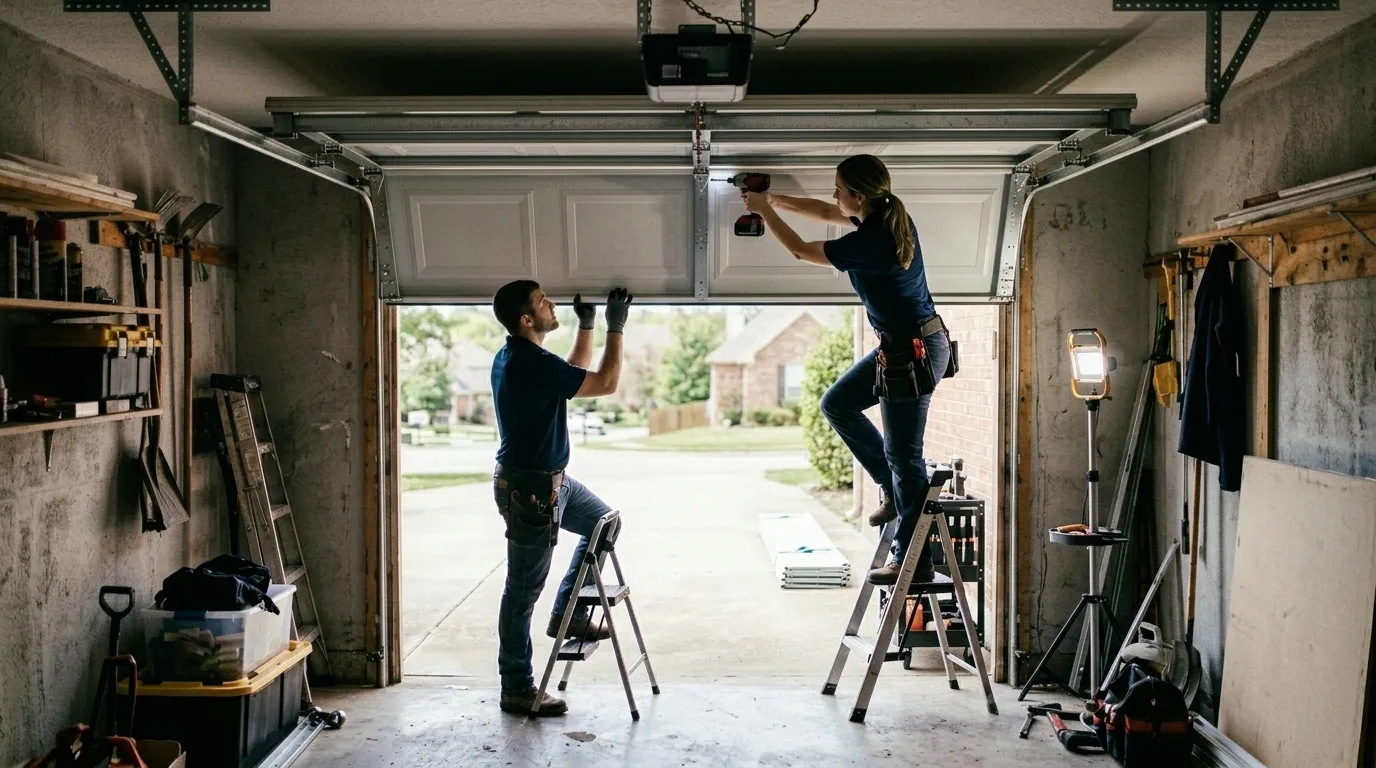
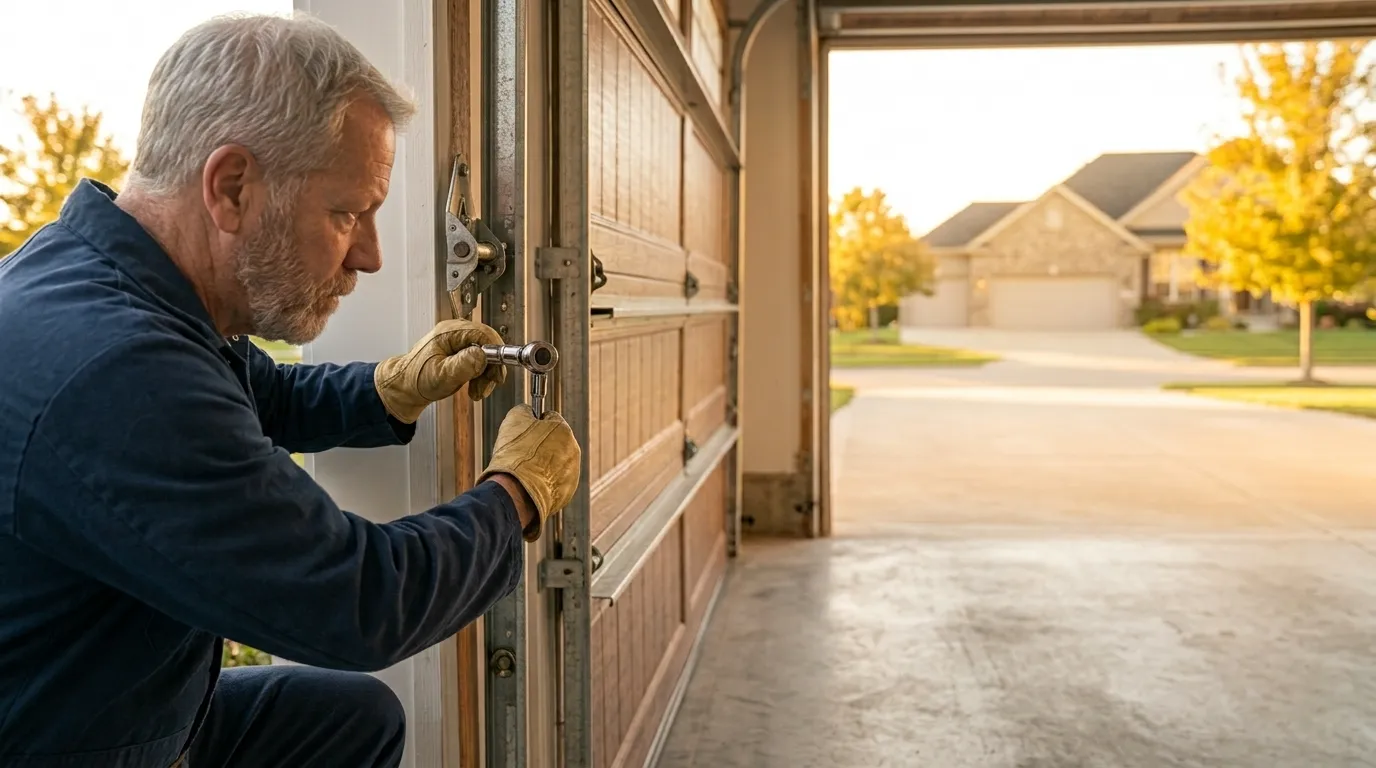
We re-set the rollers, check the track alignment against the jamb with a level, and re-torque or replace the brackets that have worked loose from the wall - that's the humidity-driven part we mentioned. If a roller itself is worn oval instead of round, it gets replaced rather than reseated, since a worn roller will jump again within weeks.
On a bent panel, straightening isn't usually worth attempting. A section that's bent enough to push a roller off track has usually taken enough of a hit that the steel won't sit flat again. In that case we're talking panel replacement, not a bend-back, and we'll tell you that up front rather than charge you for a fix that won't hold.
What It Costs
We don't post a flat number for off-track work because the two most common causes here - a loose bracket versus a bent panel - land in different cost ranges, and quoting one price for both would be misleading either way. A bracket re-set and roller swap is a straightforward hour of labor. A bent panel that needs replacing costs more, and the part has to be ordered to match the door, which adds a day or two before we can finish the job.
We'll give you the real number after we see the door, not before, and we'll tell you plainly if the repair route costs close to what a new section would run - at that point fixing it isn't doing you a favor.
How It Shows Up
The door usually still looks fine sitting closed. What you notice first is the sound - a grinding or a hard clunk partway through the open cycle instead of the smooth roll you're used to. Some owners catch it visually: one side of the door sits slightly higher or lower than the other when it's about halfway up, because one track is holding its roller and the other isn't.
If you hit the opener and the door stalls, reverses, or the opener strains and beeps without the door moving much, stop there. Running the opener against a jumped track puts stress on the opener's drive gear and on the section itself, and that turns a bracket fix into a bigger bill. Cut power at the wall switch or unplug the unit, and call before anyone tries to force the door by hand.