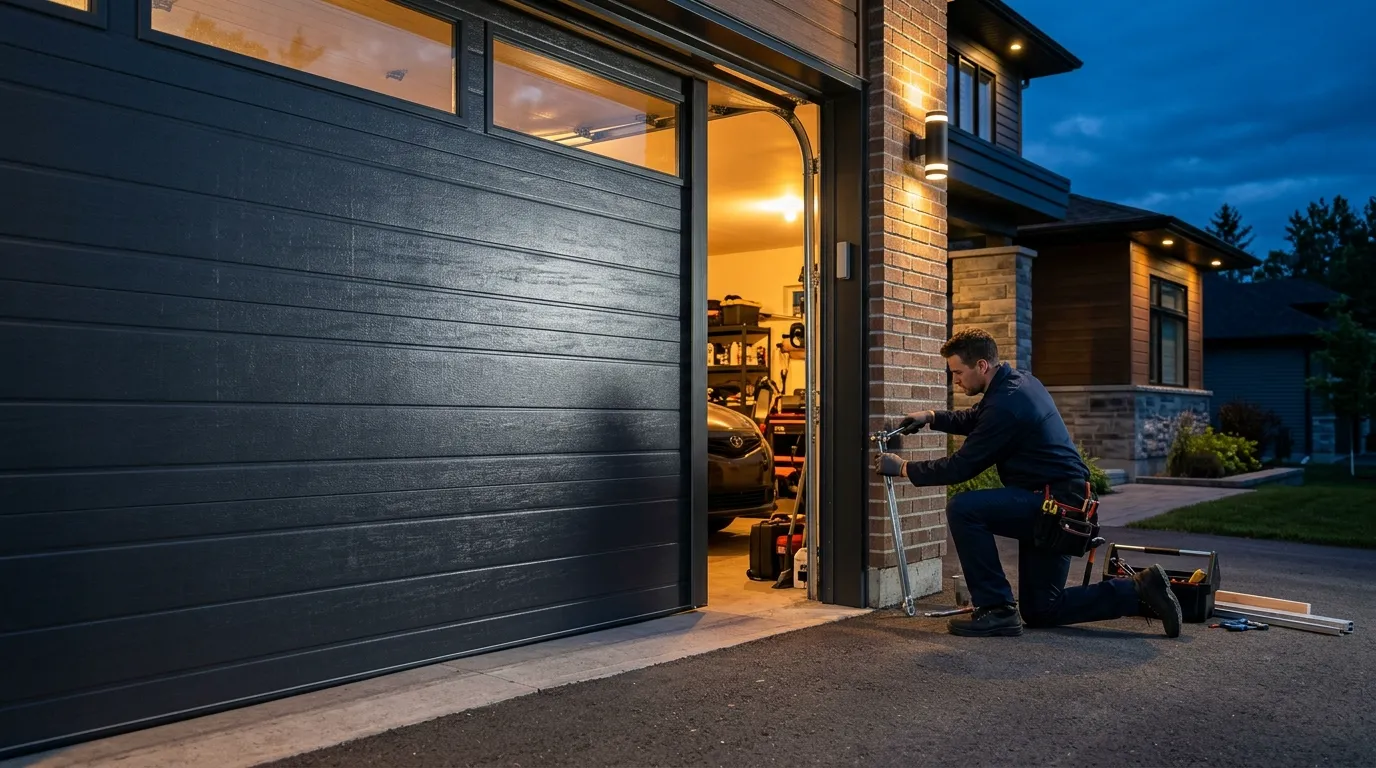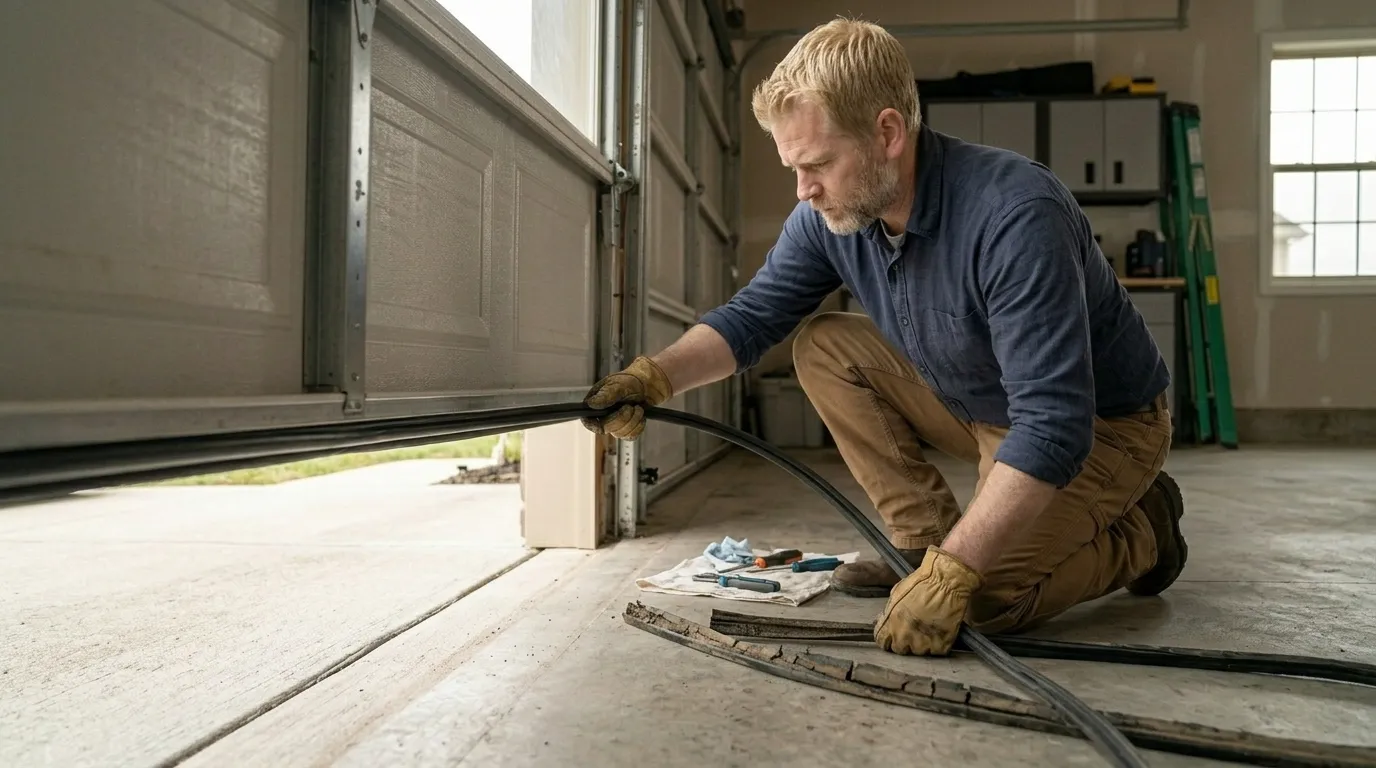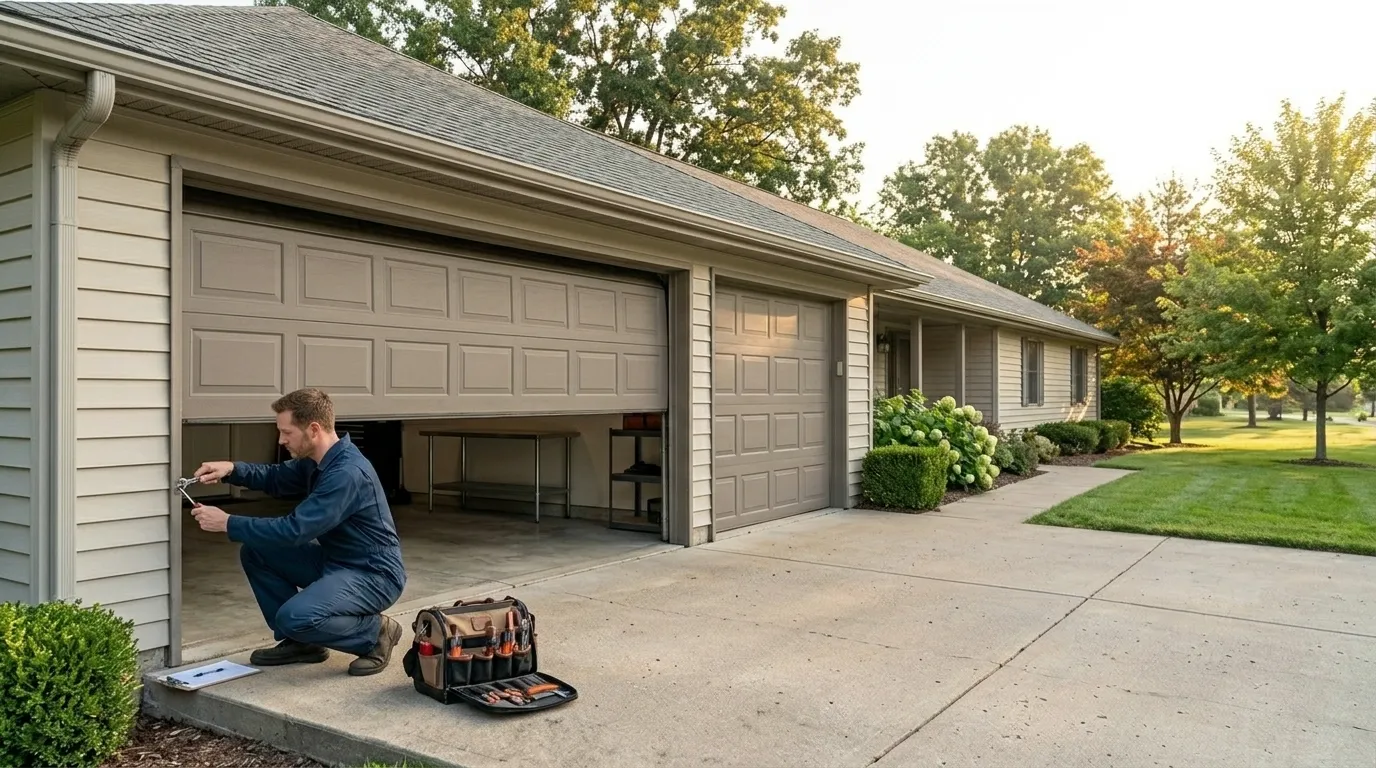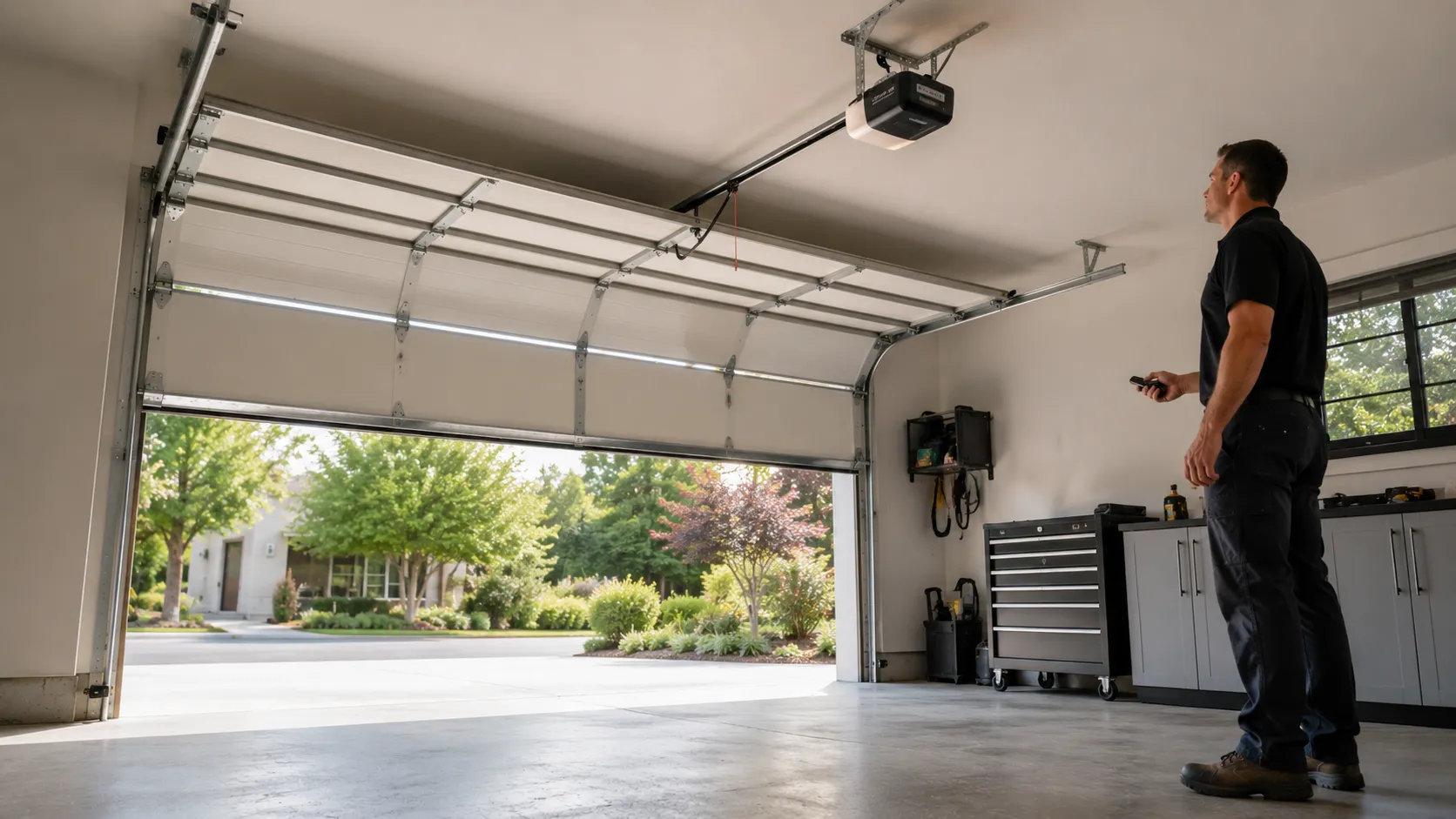
What Causes It Around Here
Start with the money, because it changes the conversation before we even open the door. Fairhope's median household income sits around $86,509, well above the $60,922 median across the wider service area we cover out of Daphne. That matters for one reason: at this income level, replacing a door instead of patching it is usually the right call sooner, not later, because the cost of a new steel door and opener is a smaller share of the household budget than it is elsewhere on our route.
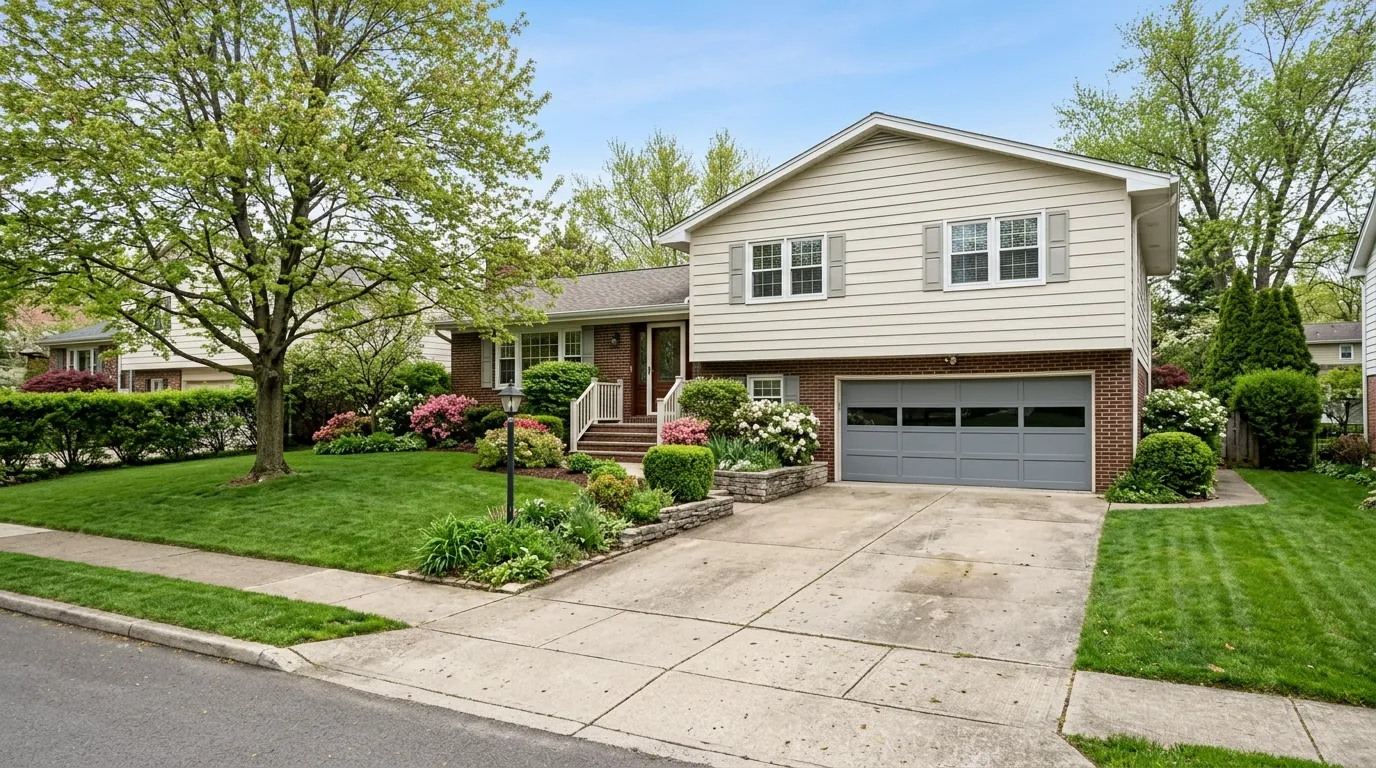
The houses themselves tell a different story than older neighborhoods nearby. Fairhope's housing stock centers on 1997, which puts most garages here well inside the era of steel roll-formed doors, chain or belt-drive openers with circuit boards, and standard torsion springs mounted the way manufacturers still build them today. You don't see the one-piece wood doors or side-mounted hardware that show up in pre-1980 stock. What you do see: opener logic boards aging out around the 20-25 year mark, worn nylon rollers on doors that have done two decades of daily cycles, and torsion springs reaching the end of their rated cycle count right on schedule.
The climate here is mild with occasional freeze nights, so we're not chasing frost-heave on tracks or ice-jammed bottom seals the way a colder market would. Humidity and salt air off the bay do more of the damage - rust on hinges and hardware that skipped a coat of galvanizing.
What the Fix Involves
Most calls in this part of town break down into three categories: opener boards failing outright, torsion springs snapping on doors that have logged their cycles, and roller/track wear from steady daily use. Because the housing stock here dates mostly to the 1990s, we're working with standard torsion spring setups and mid-weight steel doors - not the oddball extension-spring rigs or wood panel doors you'd find on much older houses.
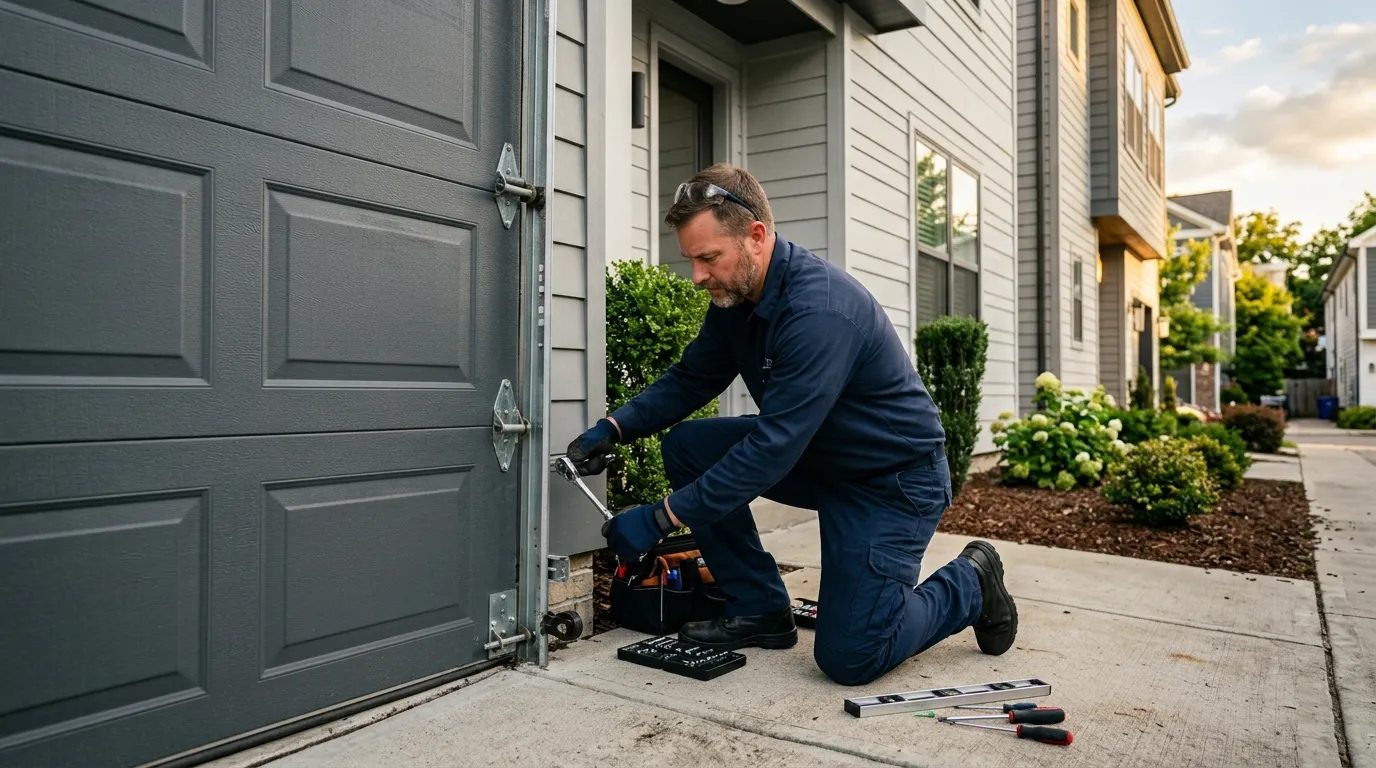
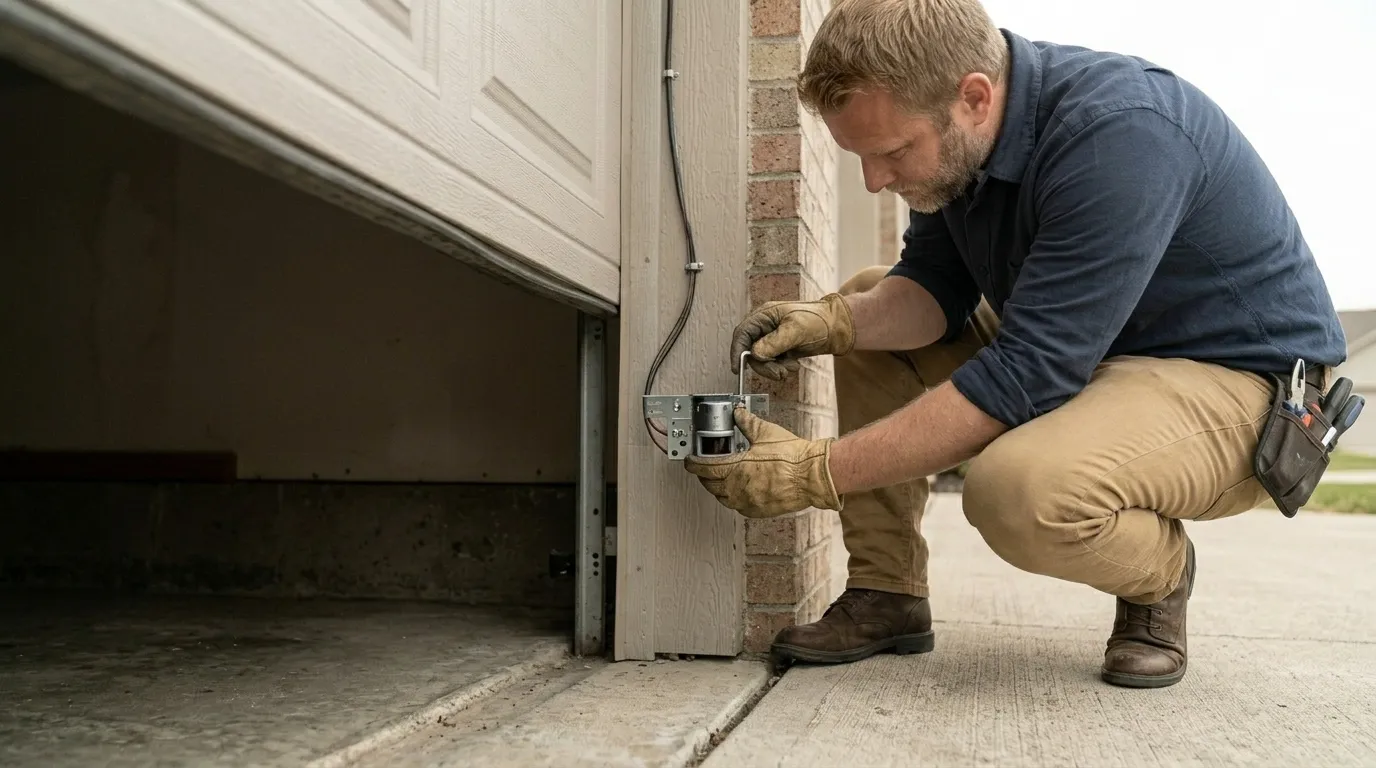
A spring swap on a standard double door is a same-visit job once we're on site - we carry the common spring sizes for this era of construction. Opener board failures take a little more judgment: if the board's dead but the motor and drive are sound, we replace the board. If the unit is old enough that parts are getting hard to source, we say so and price a new opener instead of stringing along a repair that won't hold.
One honest limitation: we don't stock every obscure opener model, and if your unit is a discontinued brand with a proprietary board, that part can take a few days to get in. We'll tell you that on the phone, before we drive out, not after.
What It Costs
Pricing depends on what's actually broken, and we're not going to put a number here that doesn't match the facts we have for this job. What we can tell you is how the decision usually plays out at Fairhope's income level: a torsion spring replacement or roller service is almost always worth doing on a door built to 1990s-era standards, since the door itself has years left in it. An opener nearing the end of its life is a closer call - if the board, motor, and drive are all aging out together, a new opener often makes more sense than three separate repairs spread over two years.
We'll give you the actual number for your door and your fault once we're looking at it, not before.
How It Shows Up
On a 1990s-built door in this climate, the pattern is fairly predictable. A spring failure usually announces itself with a loud bang from the garage and a door that suddenly weighs twice as much to lift by hand. An opener board failing shows up as lights that flicker on the unit but no motor response, or a remote that works some days and not others.
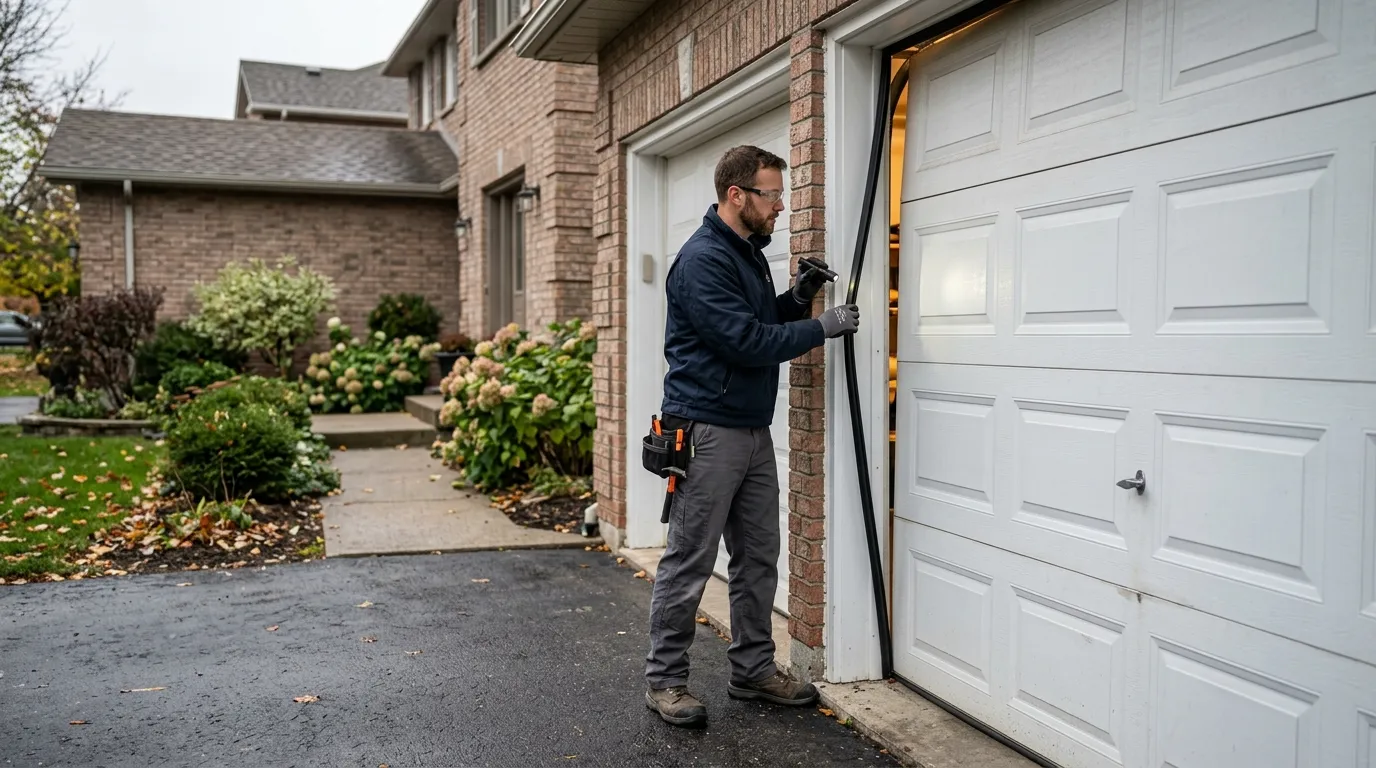
Roller wear is quieter - a grinding or squealing sound as the door travels, worse in the first cold snap of the year when the mild-climate freeze nights here tighten up old grease. None of these are emergencies in the sense of danger, but a spring under tension that's about to go is not something to keep opening and closing while you wait.