What Causes It Around Here
Fairhope's housing runs newer than a lot of what we see closer to Daphne. The median year built out here lands around 1997, later than the roughly 1990 median across the wider service area, which means fewer of the original one-piece doors and more raised-panel steel doors on torsion springs that were standard by the early '90s. That's a different failure pattern than an older neighborhood. Instead of side-mounted torsion hardware nobody stocks, you're more likely dealing with a factory torsion spring that's simply worn out after two-plus decades of daily cycles, or an opener from the late '90s/early 2000s whose logic board or receiver is starting to fail before the motor does.
The climate here is mild with occasional freeze events (per regional climate data), which doesn't stress doors the way a hard freeze-thaw cycle would, but a cold snap a few times a winter is enough to stiffen old spring lubricant and make a marginal torsion spring finally let go. On steel doors from this era, that shows up as a sudden loud bang and a door that won't lift, not a slow decline. Homes on the later end of Fairhope's build range - into the 2000s - sometimes have early keypad or rolling-code openers that don't talk to newer safety sensors the way current code requires, which matters if you're adding a sensor or swapping a panel.
What the Fix Involves
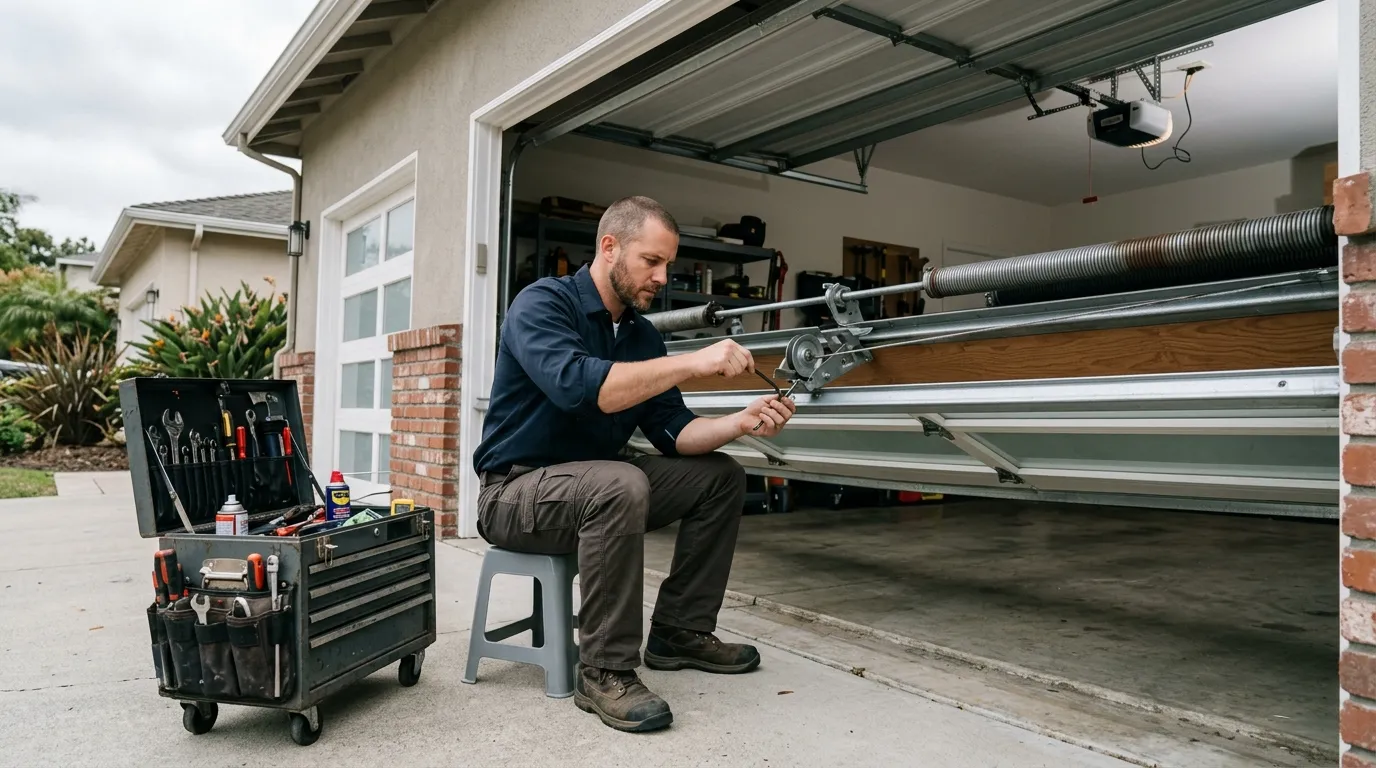
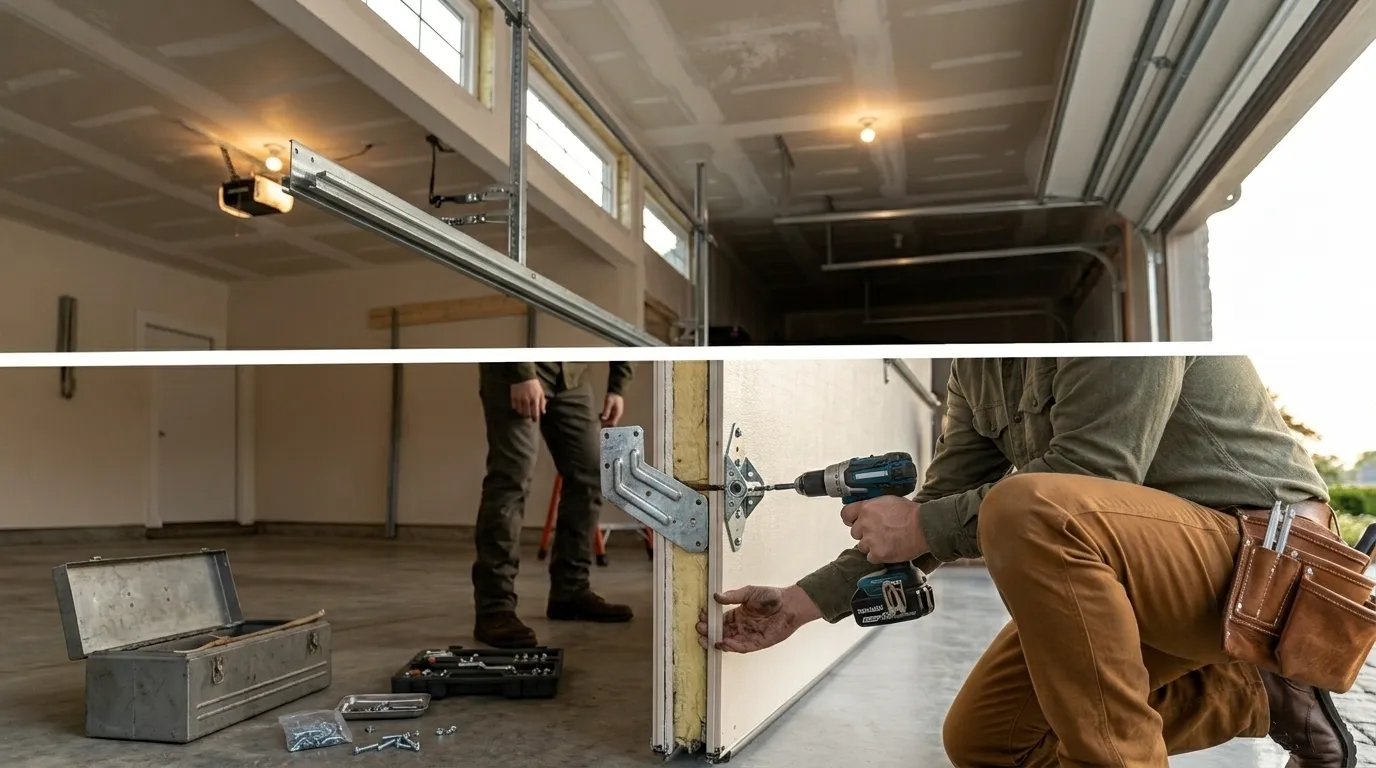
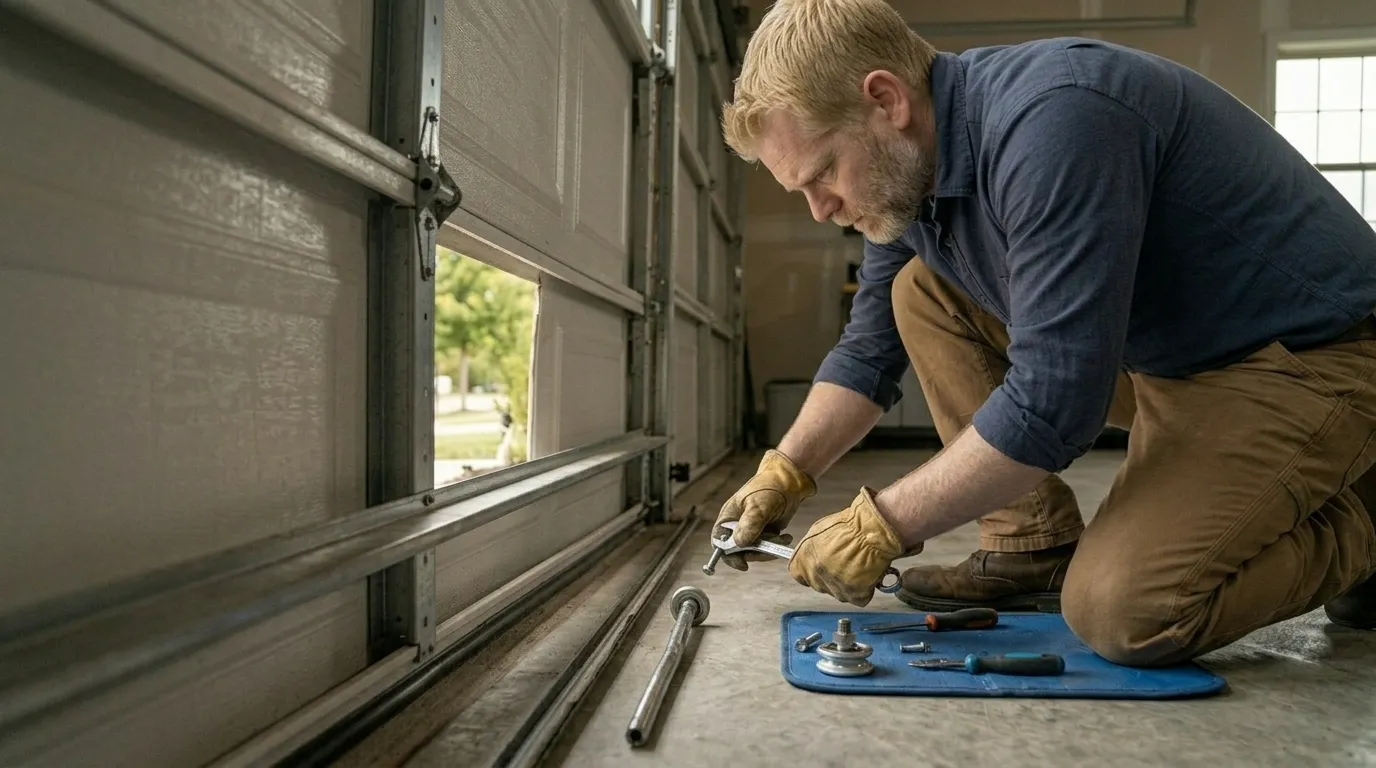
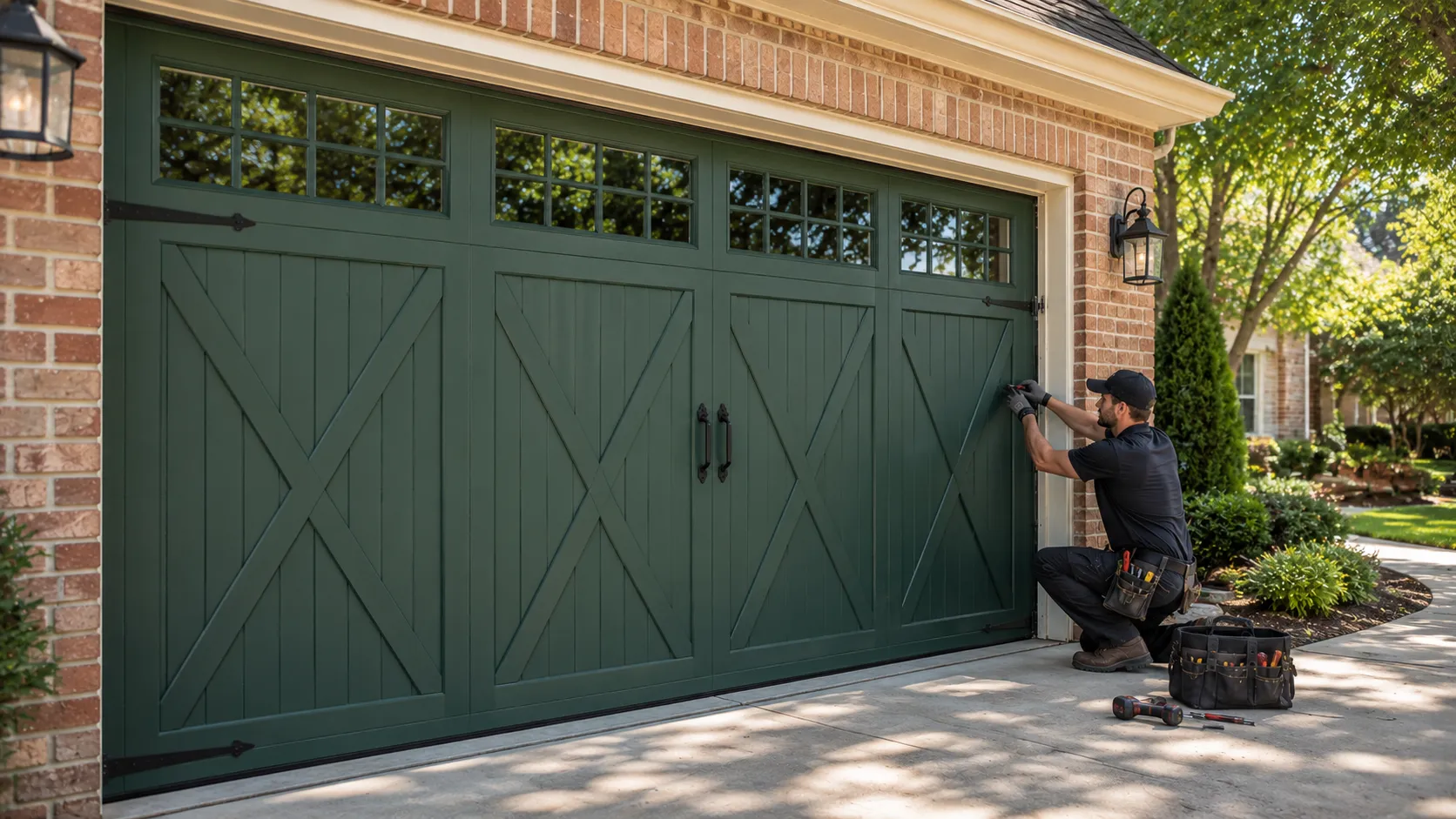
On a 1990s-built door in Fairhope, the most common call is a torsion spring swap. These doors were built with steel torsion hardware mounted center-shaft above the door, so the job is a straight spring replacement and cable check rather than the retrofit work an older side-mount system needs. If the door is original to a mid-90s build, we're also checking rollers and the bottom bracket, since 25-30 years of cycles wears those parts evenly with the springs.
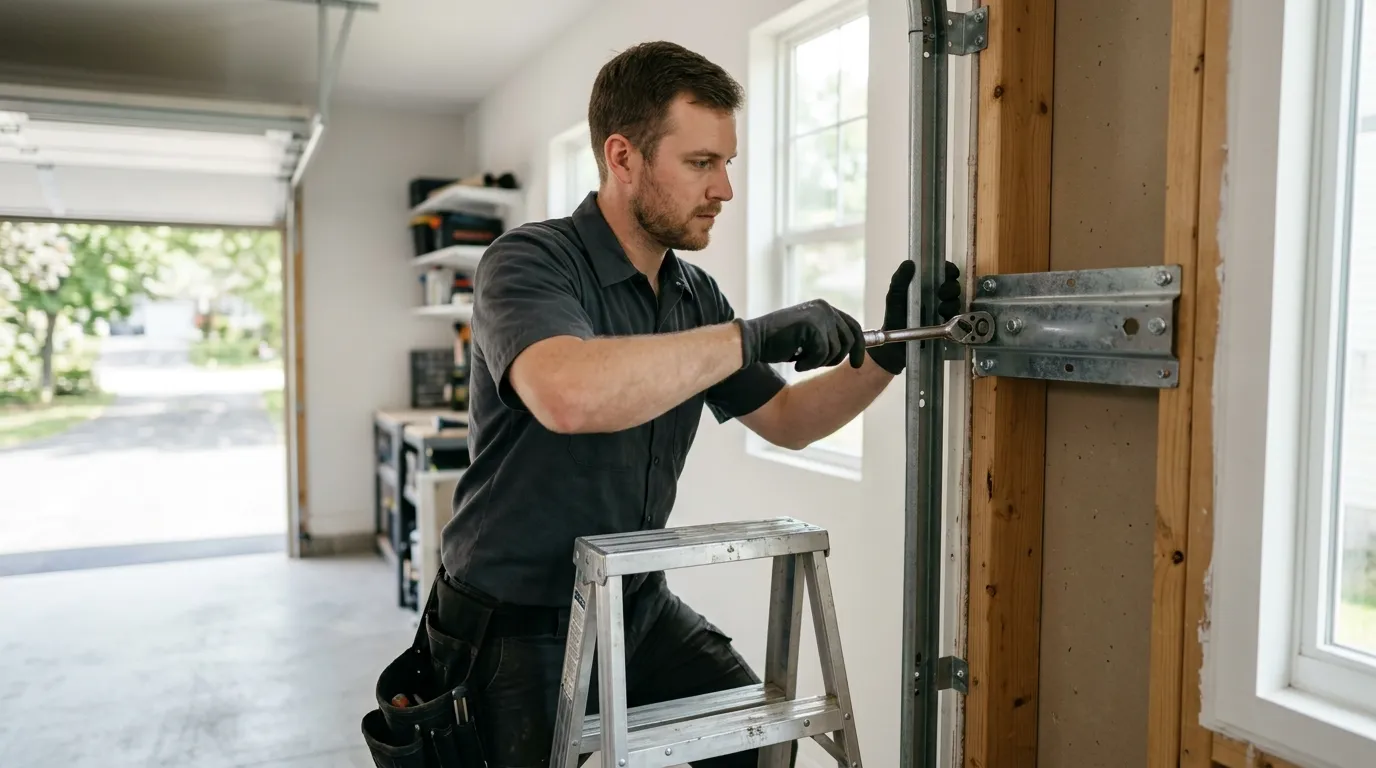
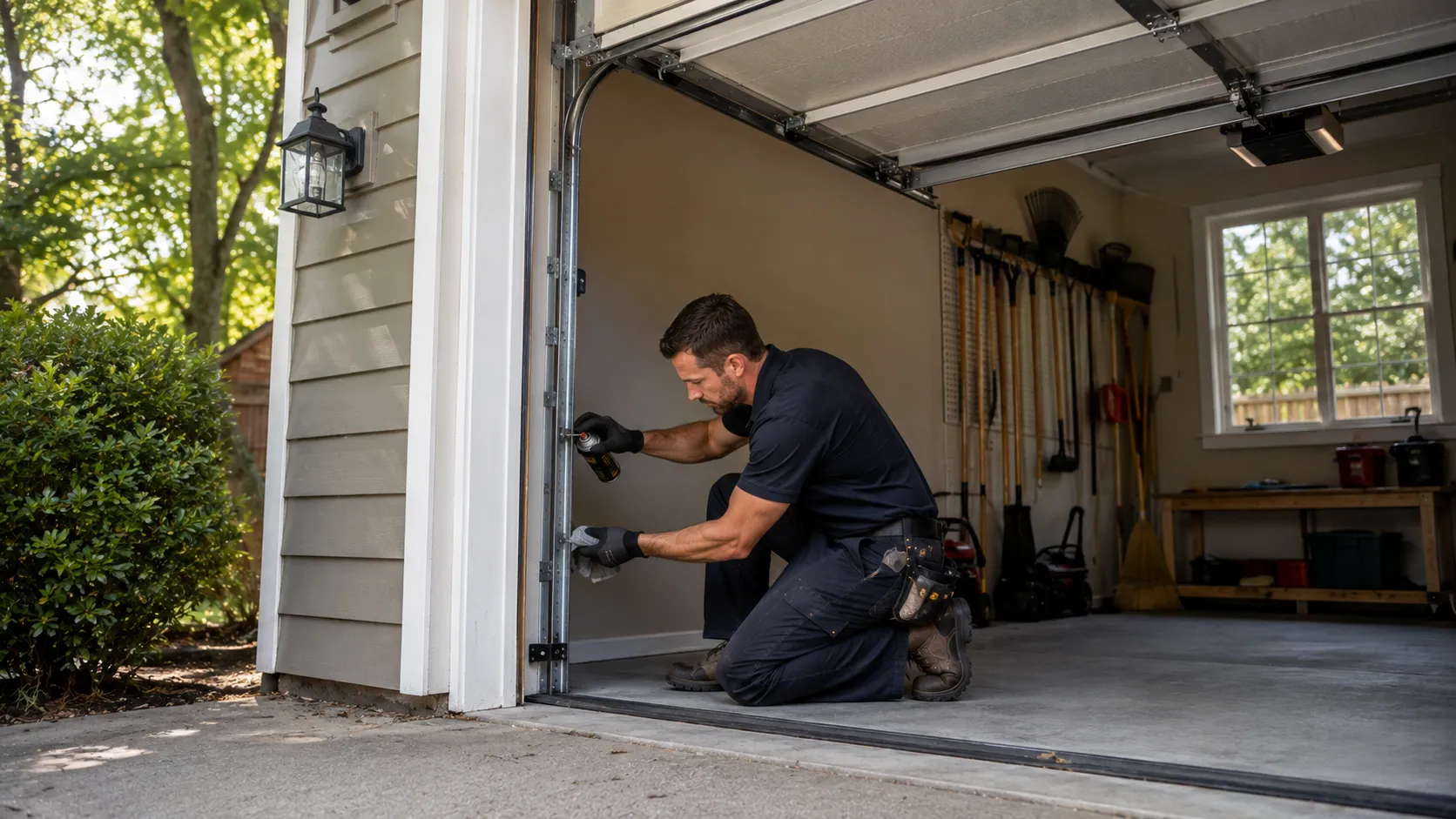
For doors built later in the range, closer to the 2000s, opener issues come up more than spring issues. A logic board that's dropping the remote signal, or a safety sensor that's misaligned after years of settling, is common on that generation of opener. We test the board and the sensors before assuming a full opener replacement - a failing capacitor or a loose sensor bracket is a cheaper fix than a new unit, and we'll say so if that's what we find.
One limitation worth being upfront about: if an opener from this era is a model no longer supported for parts, we may recommend replacement instead of chasing a repair, because a board that's out of production can mean a long wait for a part that may not hold up anyway.
What It Costs
We don't have a set price to quote here without seeing the door - spring size, door weight, and whether the opener needs a board or a full swap all move the number, and none of that is something we'll guess at over the phone. What we can say is that the work on a typical Fairhope door - a 1990s-2000s steel panel on torsion springs - is generally a same-visit repair rather than a multi-day job, since the parts for this era of door are common stock, not special order.
The honest limitation: if your opener is an older model that's been discontinued, the part itself can take longer to source than the labor does, and that's outside our control. We'll tell you that up front rather than let you assume the job is stuck on us.
How It Shows Up
On the steel raised-panel doors common in Fairhope's 1990s-era homes, a failing torsion spring usually announces itself - a bang from the garage, then a door that won't budge past a few inches, or one that slams down instead of lowering smoothly. That's different from the slow sag you'd see on an older wood door; steel doors on torsion springs tend to fail all at once rather than gradually.
On the later-built homes with openers from the early 2000s, the signs are quieter: the remote works some days and not others, the door reverses partway through closing without an obvious obstruction, or the wall button responds but the remote doesn't. Those point to the opener's board or sensor alignment rather than the door itself, and they're worth calling in before the door gets stuck open or closed at an inconvenient time.