What the Fix Involves
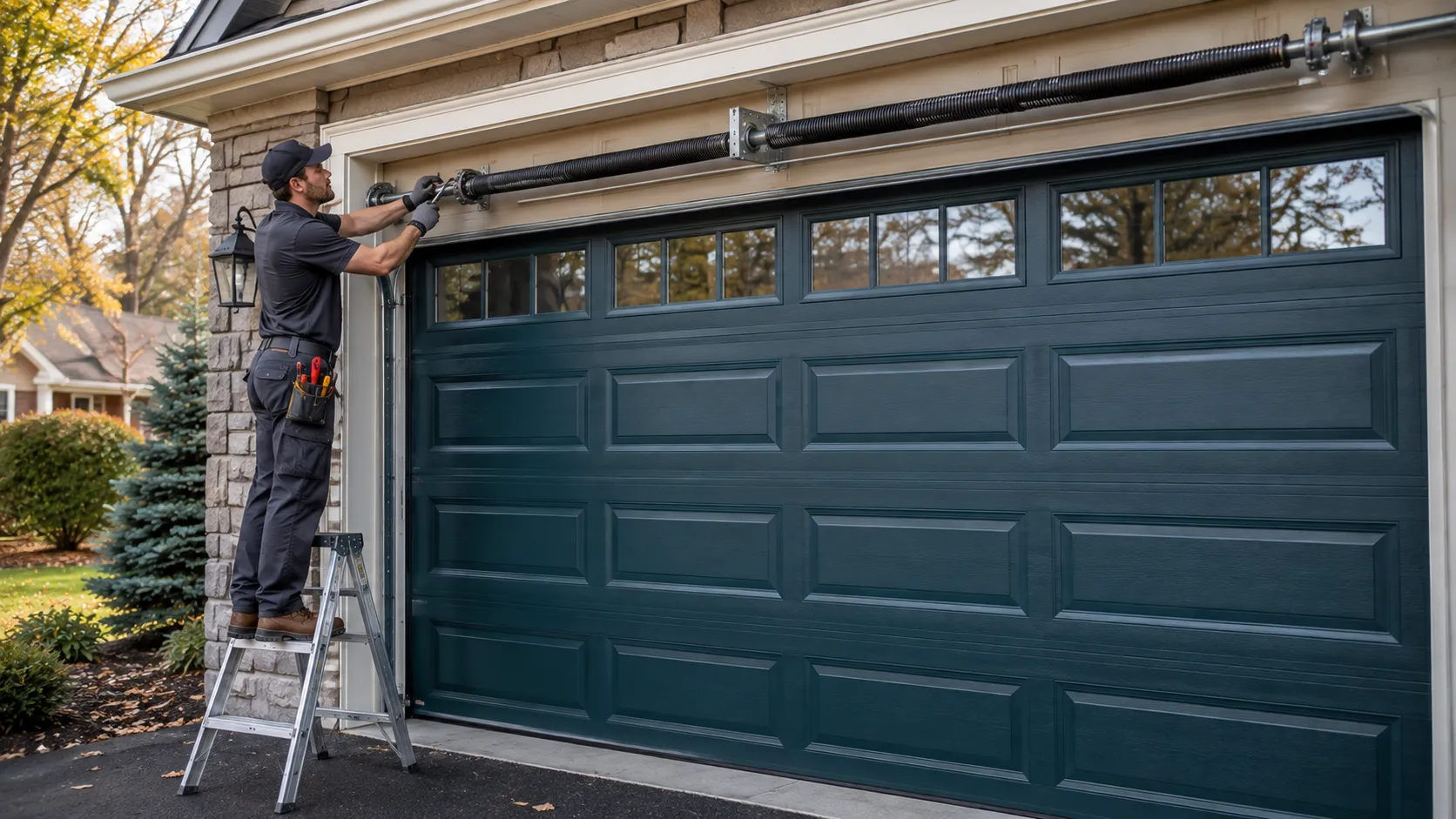
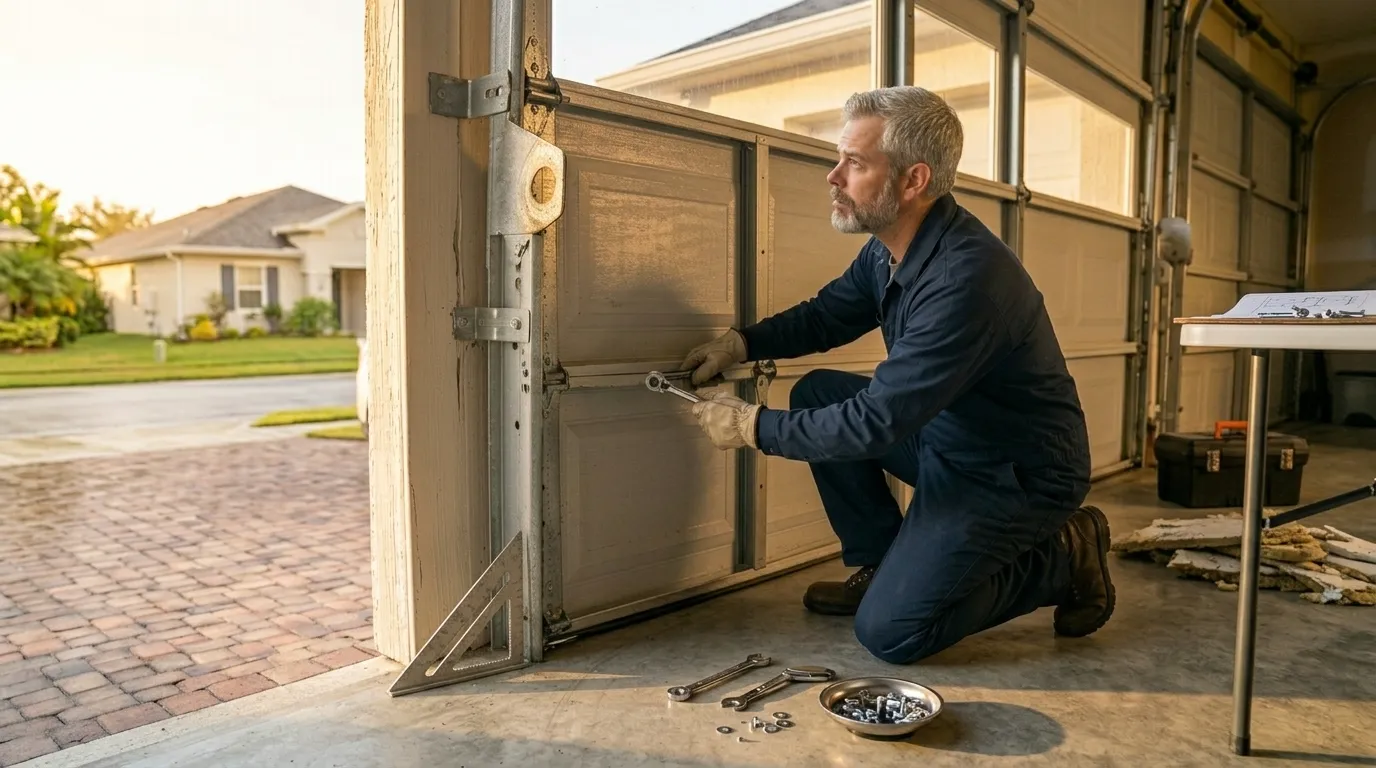
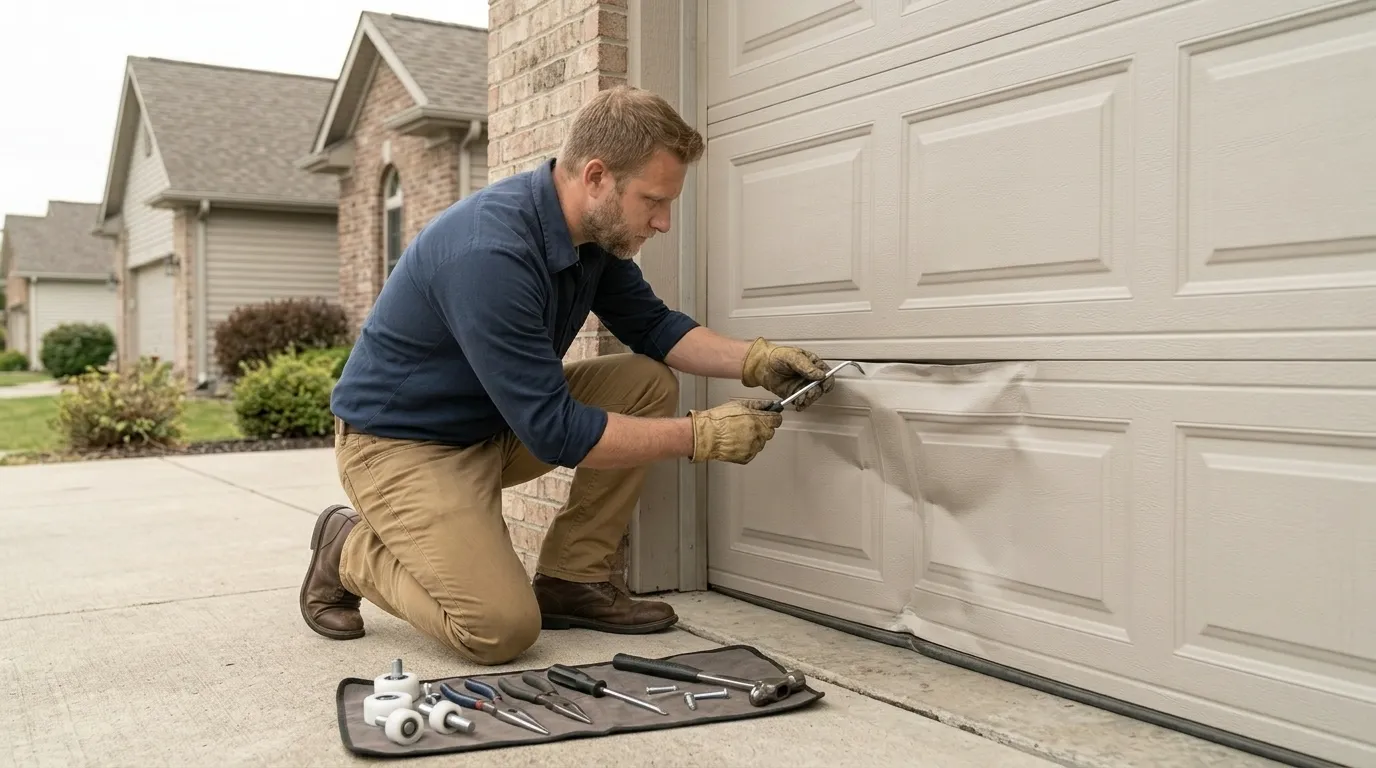
When a door jumps its track, the fix depends on why it happened, not just on pushing the panel back into the rollers. We check the track alignment, the roller condition, and whether a cable let go on one side and pulled the door sideways. On a lot of Prichard houses, the door is original or close to it, so the track brackets are older steel, sometimes bent from years of small hits rather than one big one.
Here's where the money matters: median household income in Prichard sits at $35,331. That's well under the $60,922 median across our wider service area, and it changes the conversation we have on the driveway. If the track is bent in one spot and the rollers are worn but the door itself is sound, we straighten and re-hang it - that's a repair, not a remodel. If the bottom bracket has torn loose from a rusted or cracked panel, or the door is old enough that parts are hard to source, we say so plainly instead of billing you for a patch that won't hold. At this income level, a repair that actually lasts matters more than a quick fix that gets you back on a truck run in six months.
What Causes It Around Here
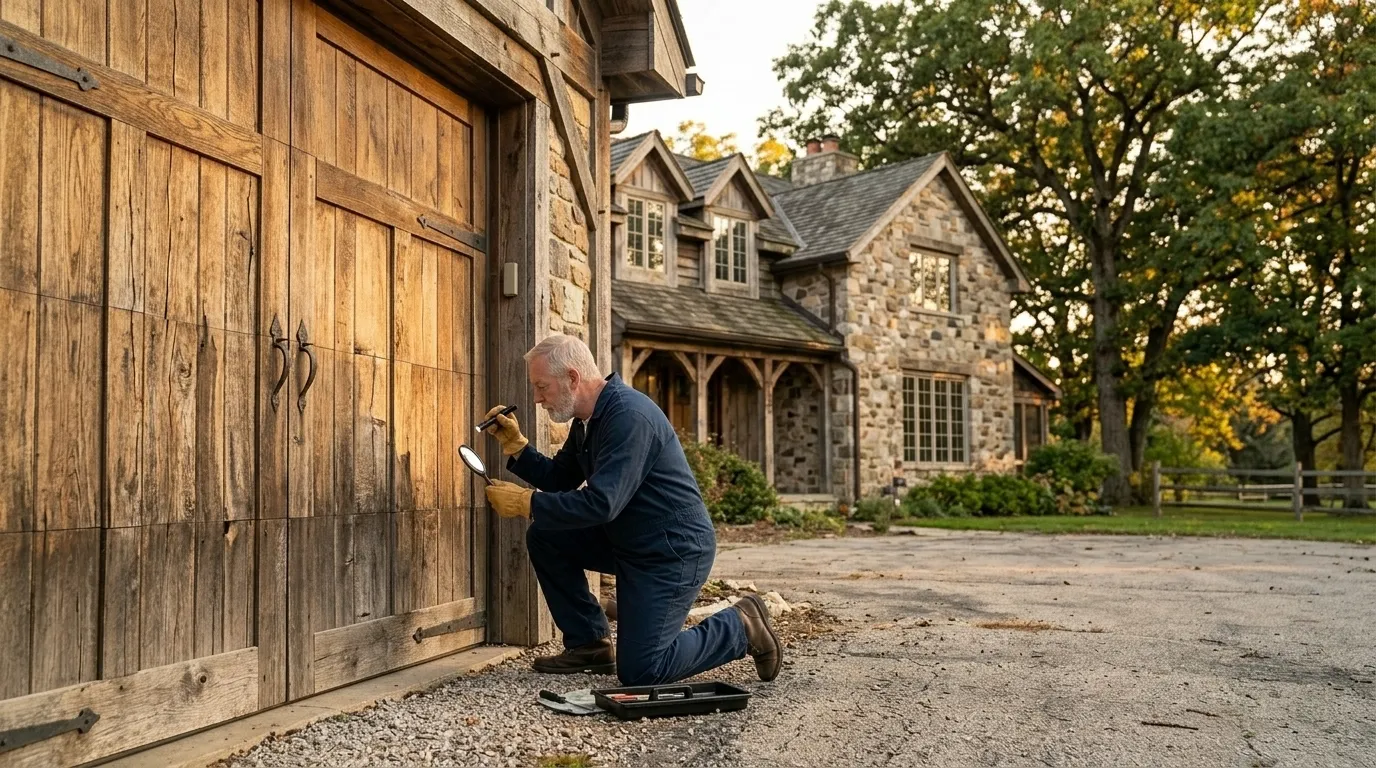
Median year built in Prichard is 1967, noticeably older than the 1990 median across the rest of the service area covered from Daphne. A door installed or replaced in that era is more likely to be running on narrower track and lighter-gauge brackets than what's standard now, and those brackets don't flex the same way modern ones do - they bend and stay bent.
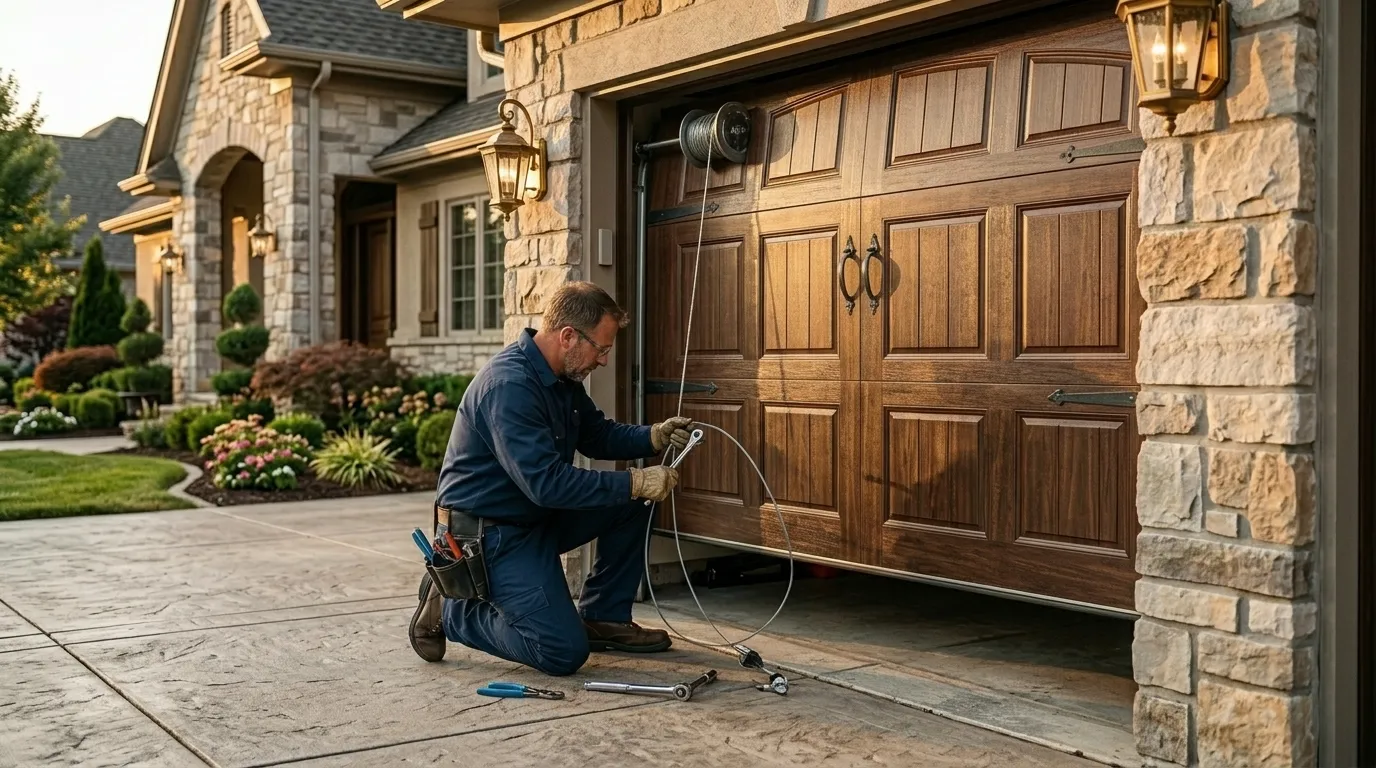
The other driver is cable wear. On a door this age, if one lift cable has frayed or a roller has seized in its track, the door doesn't come down straight. It cocks to one side, the bottom corner catches, and the panel pops off the track on that side. We also see this after a spring adjustment nobody caught early - an unbalanced door puts uneven load on both tracks every time it cycles, and eventually one side gives. None of this is exotic. It's just what happens to hardware from the 1960s that's been running two cycles a day for fifty-plus years.
How It Shows Up
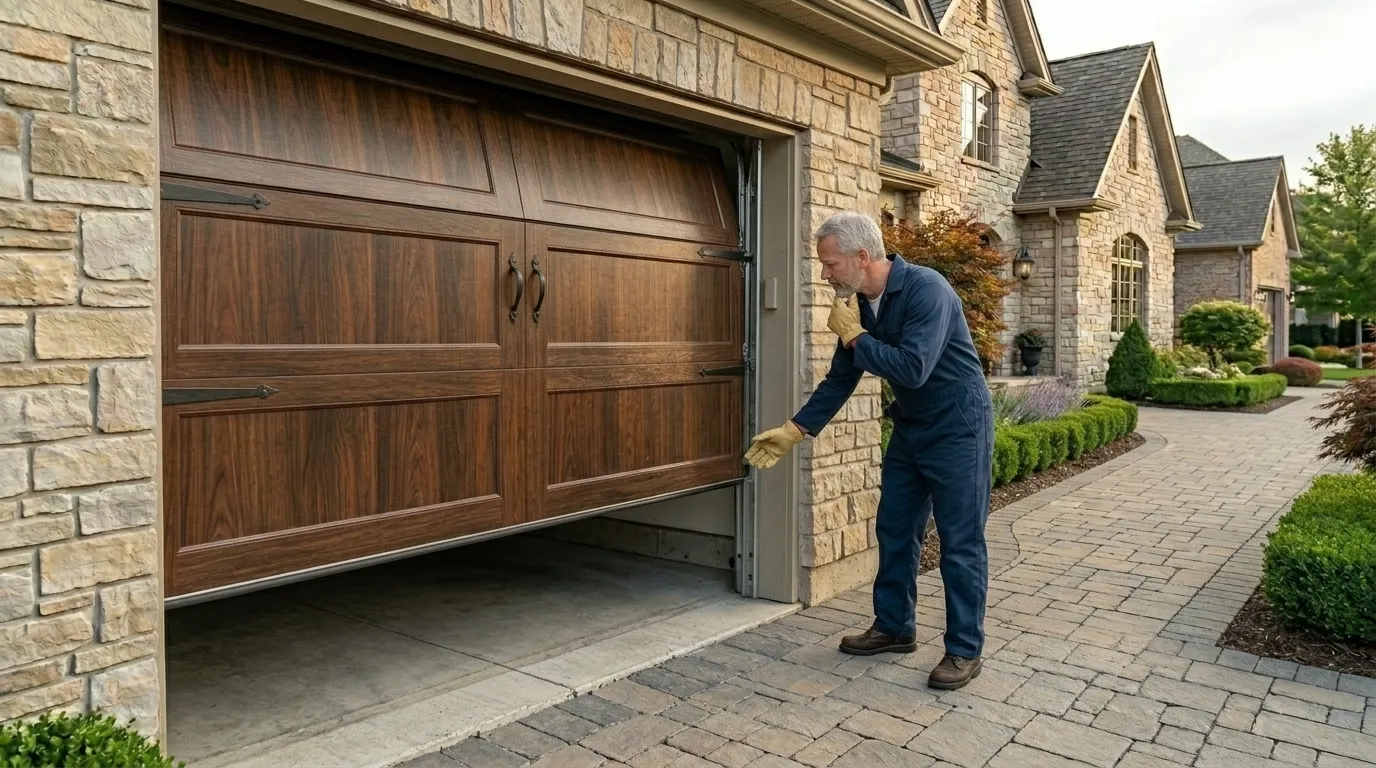
Most people notice it the same way: the door stops halfway, hangs crooked, or one bottom corner sits lower than the other when it's down. Sometimes there's a bang from the garage before anyone sees it - that's usually a roller jumping the track under load. If the door still moves but grinds or scrapes on one side, the track itself may have bent rather than the roller coming loose, which is a different repair.
Alabama's mild climate with occasional freeze doesn't cause much of this on its own, but temperature swings do make old steel brackets more brittle than they were new. If your door is original to a house built around the mid-1960s, an off-track incident is often the hardware finally telling you it's at the end of its working life, not a one-time fluke.