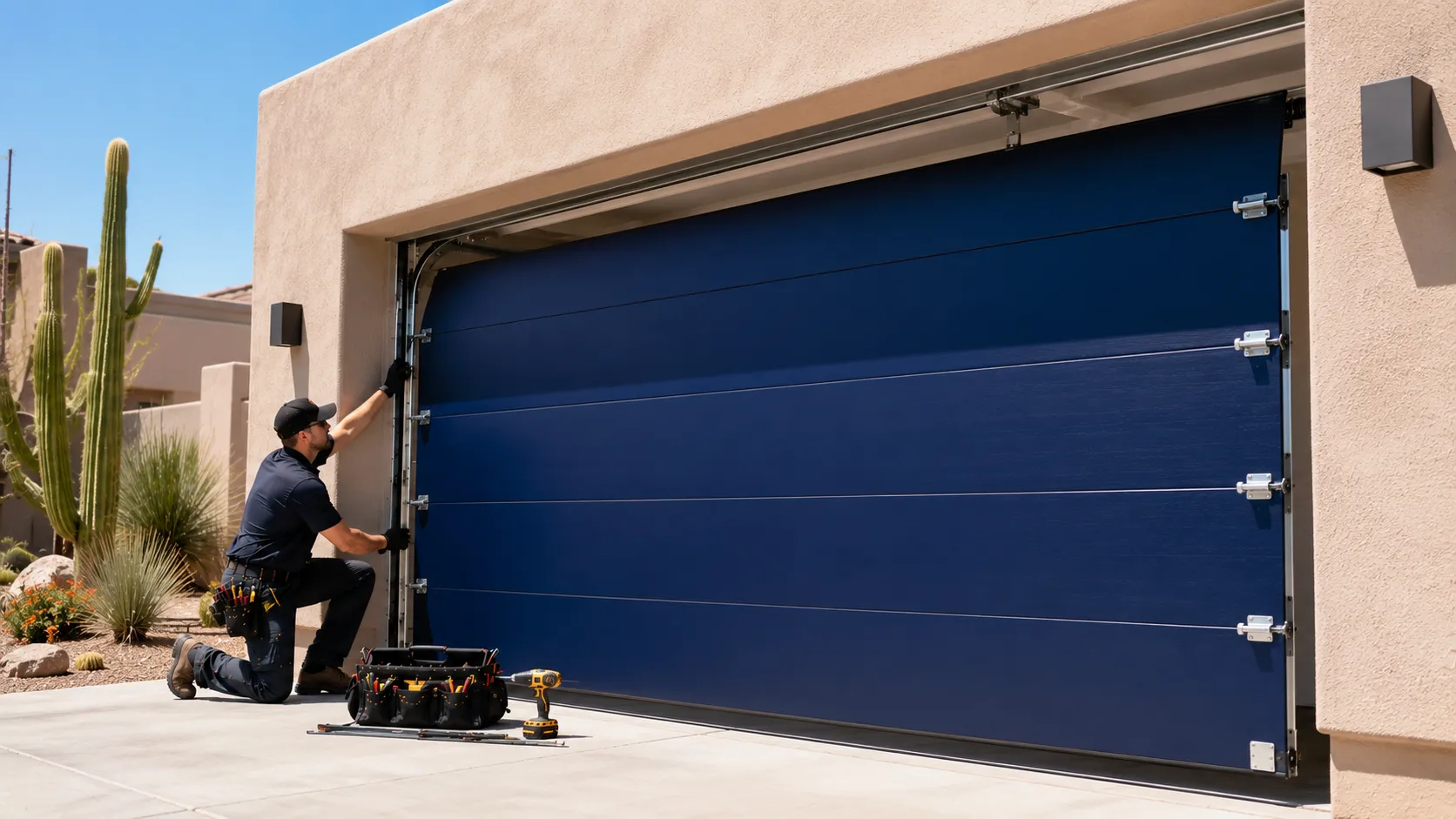
What the Fix Involves
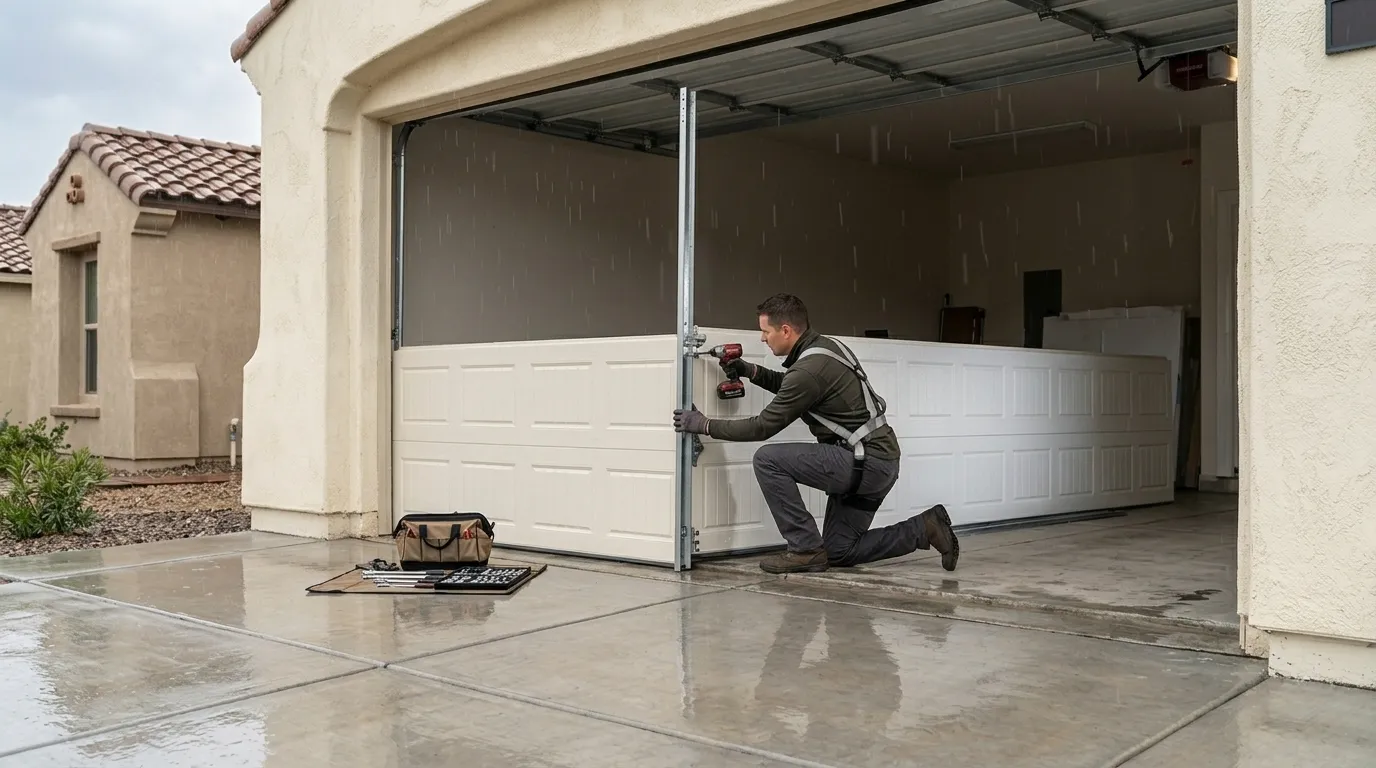
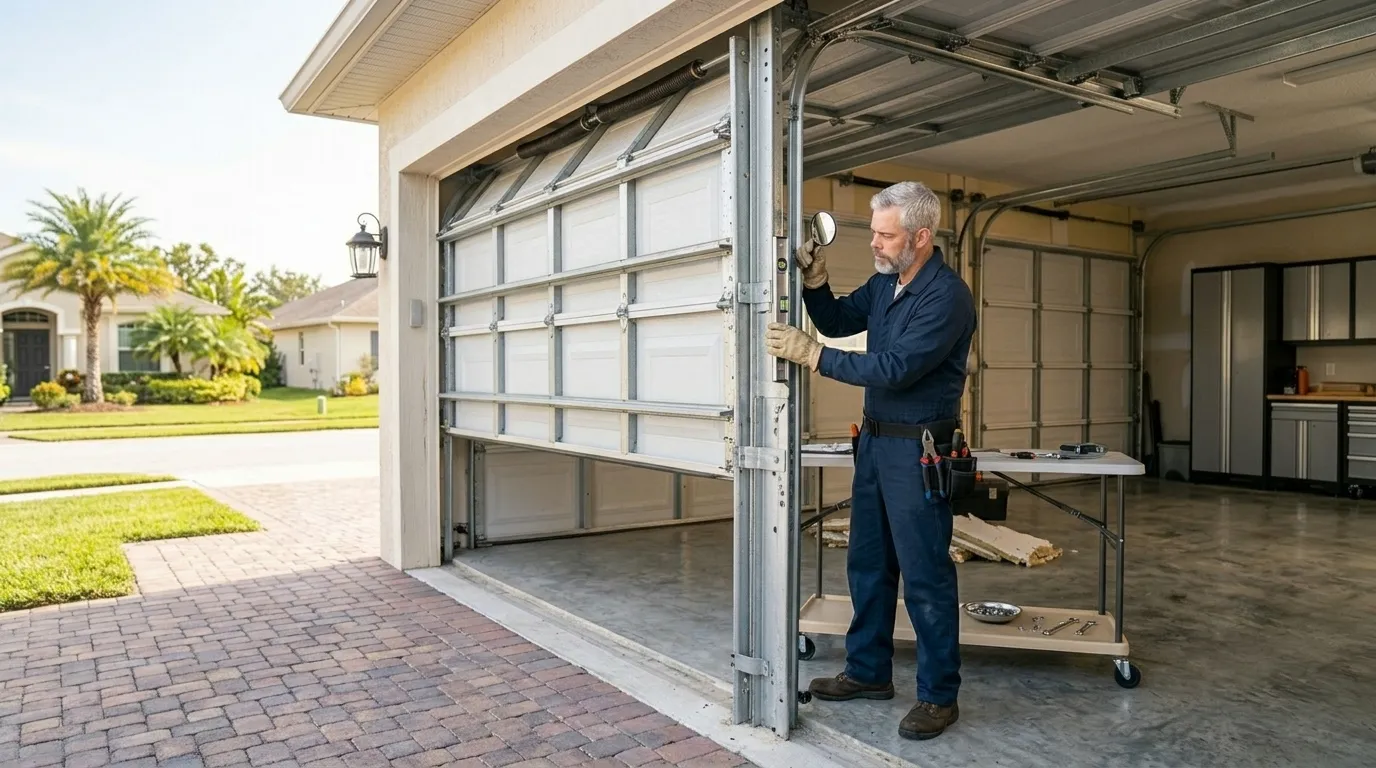
Prichard's houses went up around 1967 on average, which puts most of the neighborhood ahead of the wider service area's 1990 median build year. That gap matters on a garage door call. A door from that stretch is usually a steel or aluminum single-layer panel, single-car width more often than double, hung on a torsion spring set that was sized for a lighter door than what's sometimes been bolted onto it since. We're not swapping in a wireless keypad and calling it done - the fix here usually starts with the spring and the track, because that's what's carrying the load and that's what's worn.
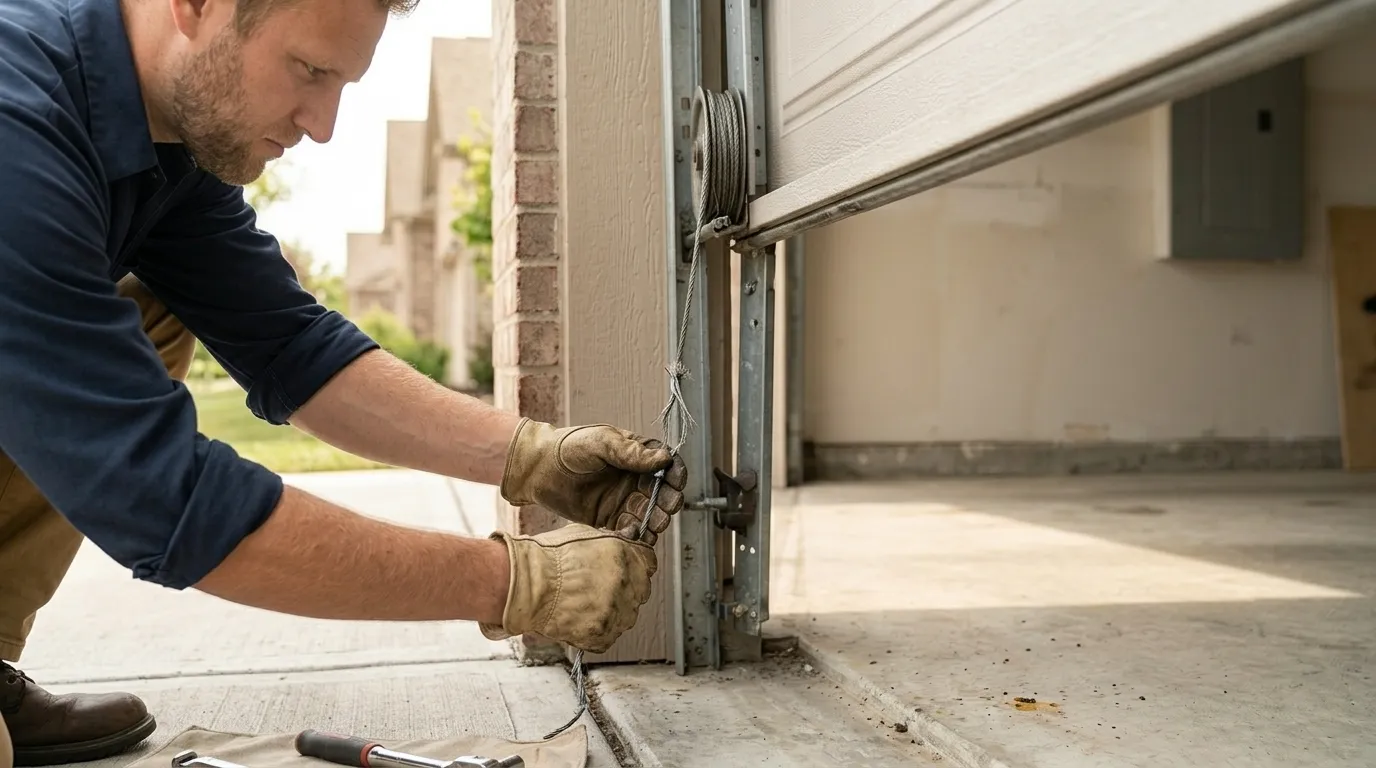
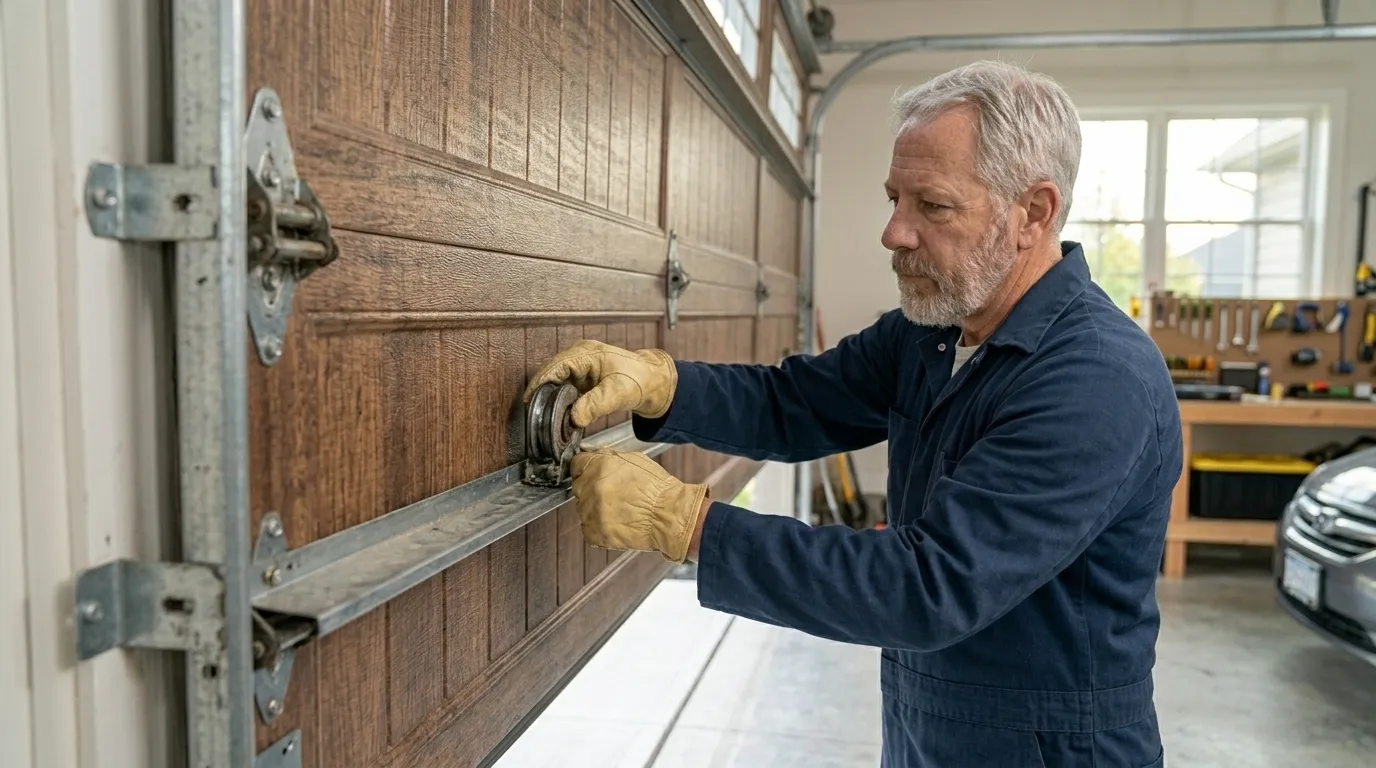
On a call like this we check the torsion spring for the correct wind and cycle count, look at the roller track for the kind of play that comes from decades of use, and inspect the panel seams for rust-through, which shows up more on older steel than people expect. If the opener's been replaced more recently than the door itself - which is common - we also make sure the travel limits and force settings match the original door weight, not a modern lightweight replacement. One honest limit: if the panel itself is rusted through at the bottom section, we're not going to patch it and call it fixed. That's a replacement job, not a repair, and we'll say so before we start.
What Causes It Around Here
The climate here sits in a mild band with occasional freeze, so the failures aren't from ice jamming a track the way they would up north. What we see instead is slower, cumulative wear tied to the age of the stock. A torsion spring rated for 1967-era hardware has usually been cycled tens of thousands of times by now, and springs don't fail gracefully - they go from fine to snapped with no warning in between.
Household income in the area runs lower than some of the surrounding towns, at a median of $35,331, which we mention only because it shapes the kind of call we get: fewer folks are replacing a whole door system at the first sign of trouble, more are running it until something breaks outright. That's a reasonable way to live with a garage door, but it means when we do get the call, it's often a full stop - spring snapped, cable off the drum, door stuck at half-mast - rather than a squeak somebody caught early. Original hardware from a 1960s build also just doesn't get restocked. Finding a matching drum or a same-gauge cable sometimes takes an extra day, and we tell people that up front rather than promise a same-visit fix we can't back up.
How It Shows Up
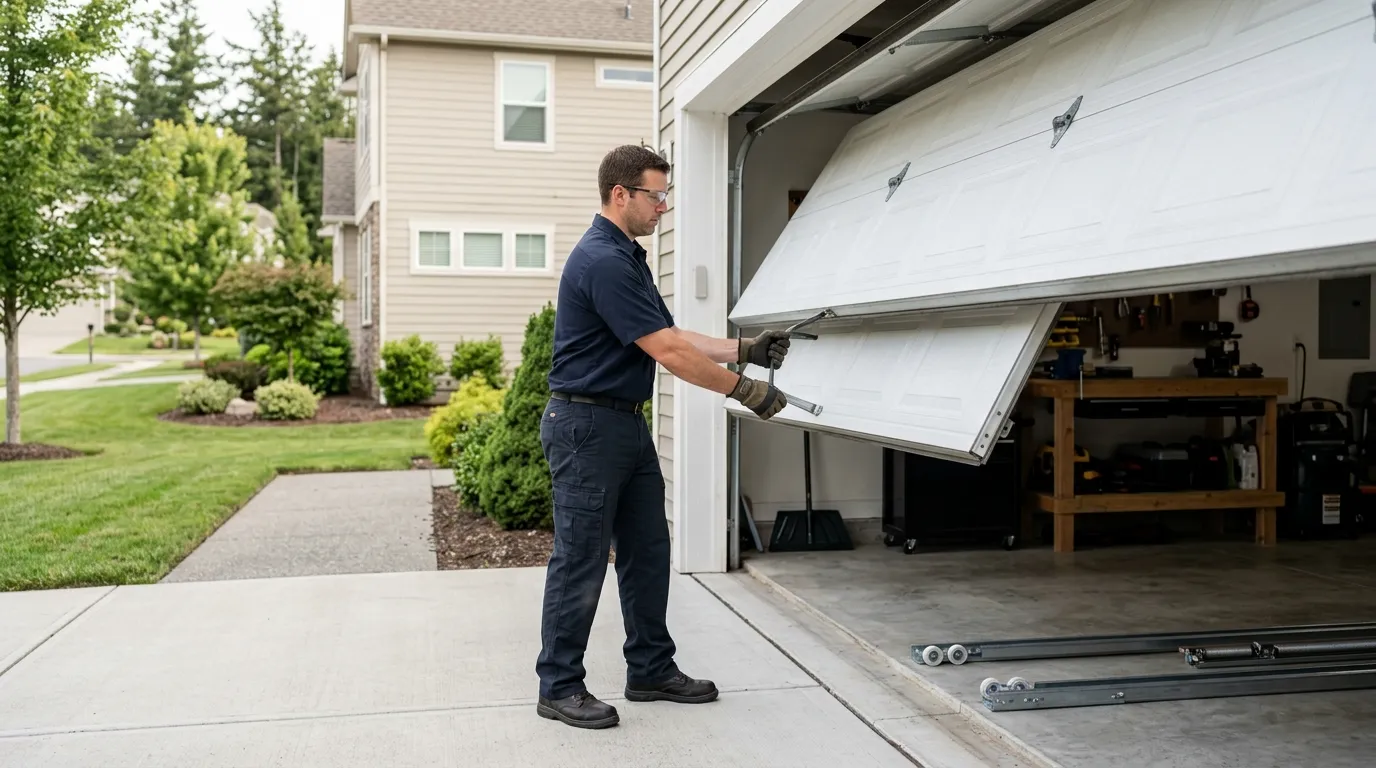
On a door this age, trouble usually announces itself as one of a few things: the door won't budge past a few inches and the opener strains against it, a loud bang from the garage followed by the door refusing to open at all, or a slow list to one side as it travels - a sign the spring on that side let go or is close to it. None of that is subtle, and none of it is safe to force past with the opener; that's how a cable snaps the rest of the way or a track pulls loose from the wall.
Across the broader service area there are 27,371 owner-occupied houses among 43,514 households, and the ones built closest to Prichard's era tend to show these same symptoms in clusters - a run of houses on one block hitting spring failure within a year or two of each other, simply because they were all built and equipped around the same time. If your door's making noise it didn't used to make, or it's started hesitating partway up, that's worth a call before it becomes a full stop.