Can You Do This Yourself
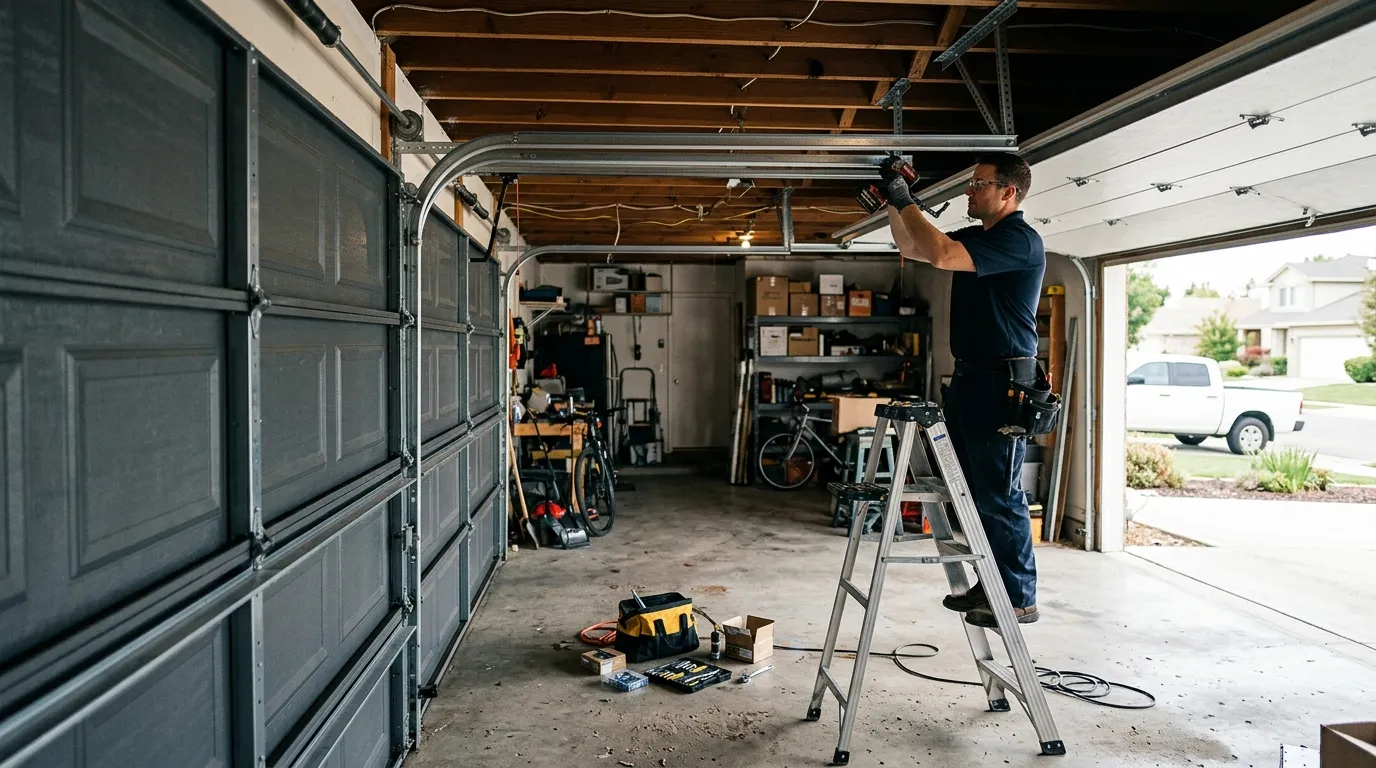
Most homes out here went up around 1983, which puts Tillmans Corner ahead of the 1990 median you'll see across the wider Daphne service area. That few-year gap matters more than it sounds. Doors from this era often still run on extension springs stretched along the horizontal track above the rollers, not the torsion bar mounted over the header that became the standard fix-it-yourself topic online. Extension springs are under less stored energy than torsion springs, but they're not safe to pull off a ladder solo either - the cable and pulley system can whip if a spring lets go while you're working the bracket loose.
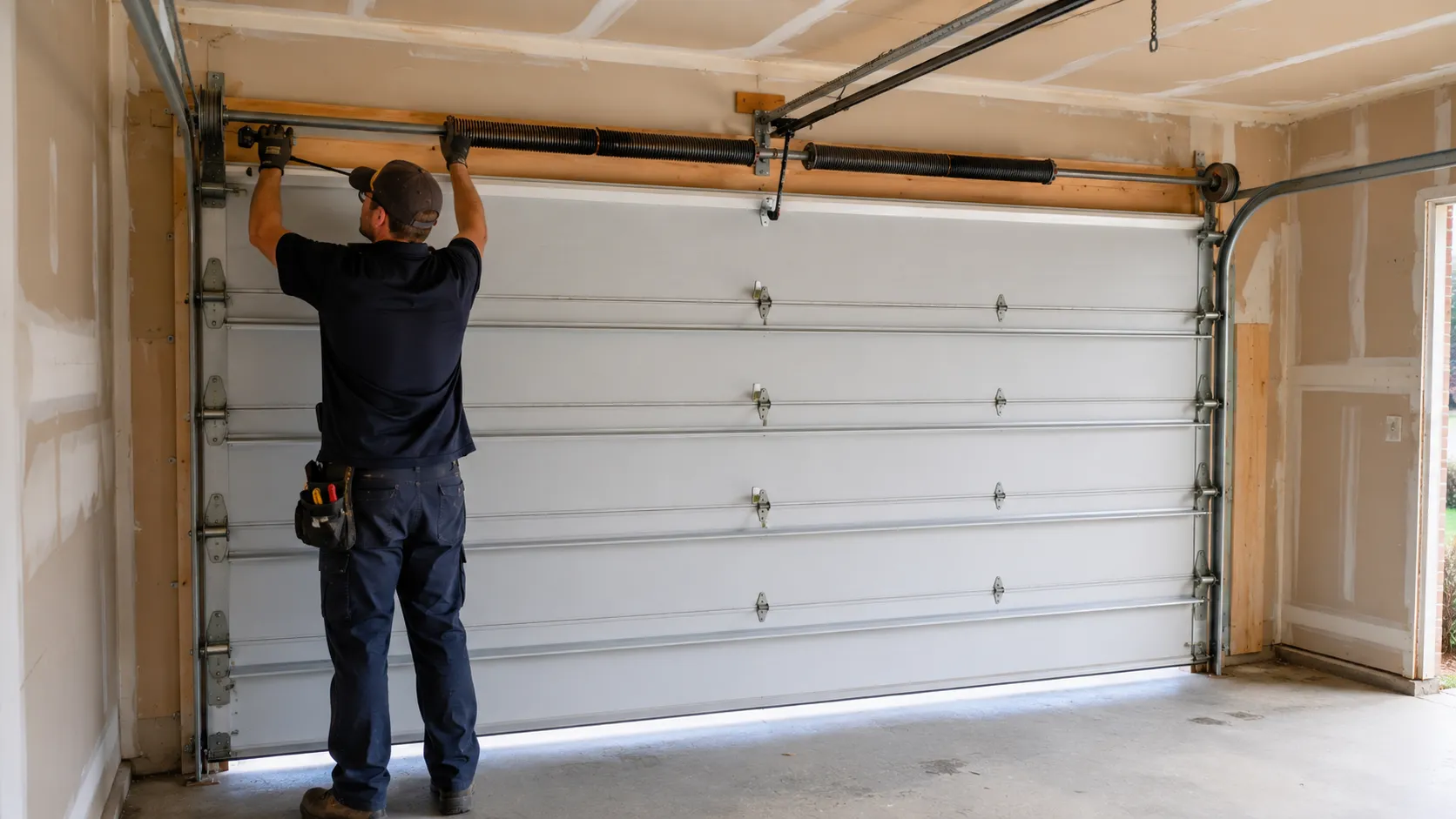
If your door is one of the later builds in the neighborhood with a center-mounted torsion bar, the job is a different animal: winding bars, cones, and a spring under enough tension to break a wrist if the winding tool slips. Either way, this isn't a YouTube-Saturday repair. We're not going to pretend it is just to sound approachable. If you want to know which setup you have before you call anyone, look at whether the spring sits above the door on a horizontal shaft (torsion) or stretches along the upper track on either side (extension).
Getting It Booked In
Tillmans Corner sits about 20 miles from our shop in Daphne - roughly twice the distance of closer stops like Spanish Fort or Fairhope, which sit at 7 miles each. That doesn't mean we skip it, but it does mean a spring call here gets scheduled as a planned trip rather than a same-day walk-in the way a five-minute-away job might. Tell us the make of the door if you know it, whether the spring is broken clean through or just sagging, and whether you've got one spring or two - most single doors run one torsion spring, most doubles run two.
Because the drive is part of the job, we try to bundle Tillmans Corner calls with other stops in the same direction when the schedule allows. It keeps the trip efficient and keeps our pricing fair for both ends. If your door won't open at all and the car's trapped inside, say so up front - that changes how we prioritize the day.
What the Fix Involves
On a torsion setup, the job means locking the door down, releasing tension safely with winding bars, pulling the old spring off the center bracket, and winding in the replacement to the right number of turns for your door's weight and height. On an extension setup, more common on the earlier-built homes in this area, it's releasing the safety cable, unhooking the stretched spring from the track anchor, and hanging a matched replacement - matched being the key word, since a spring rated wrong for the door's weight will either strain the opener or won't hold the door open on its own.
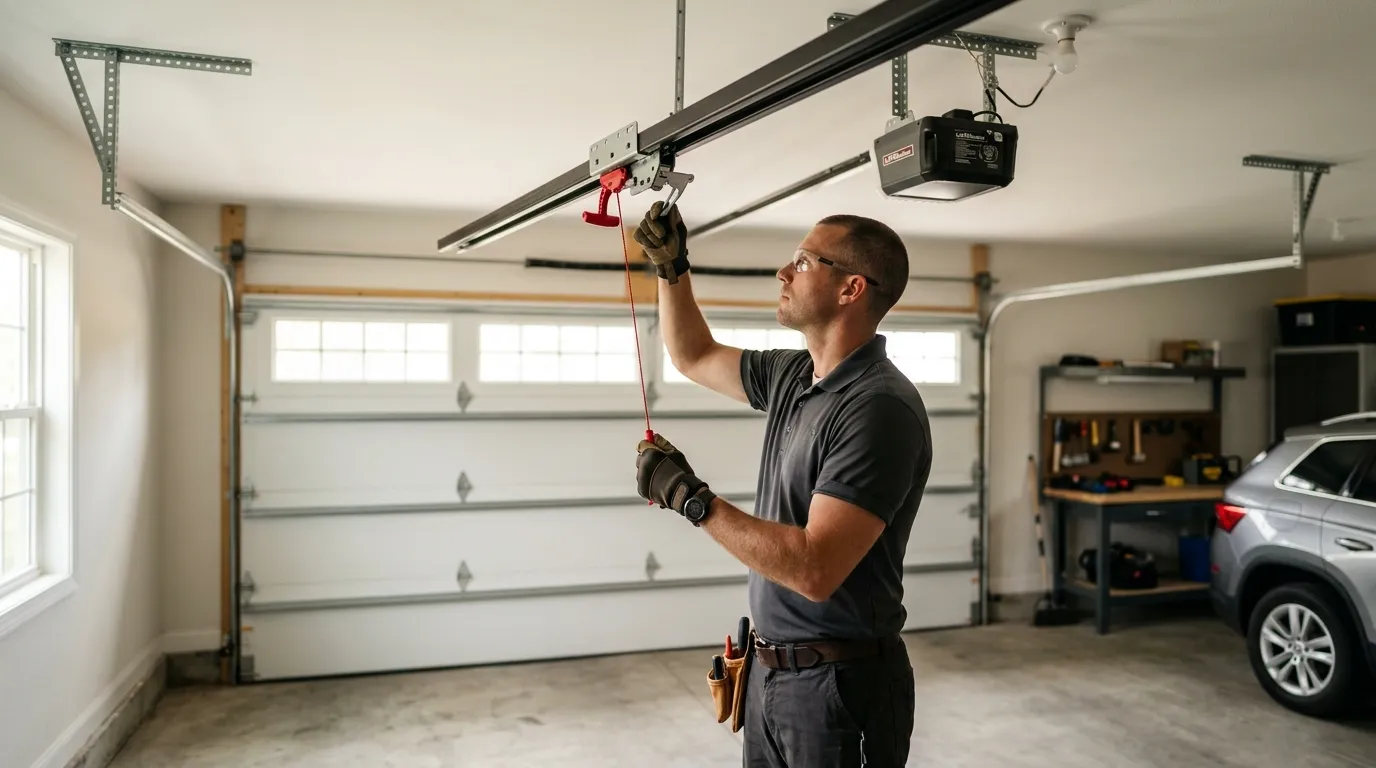
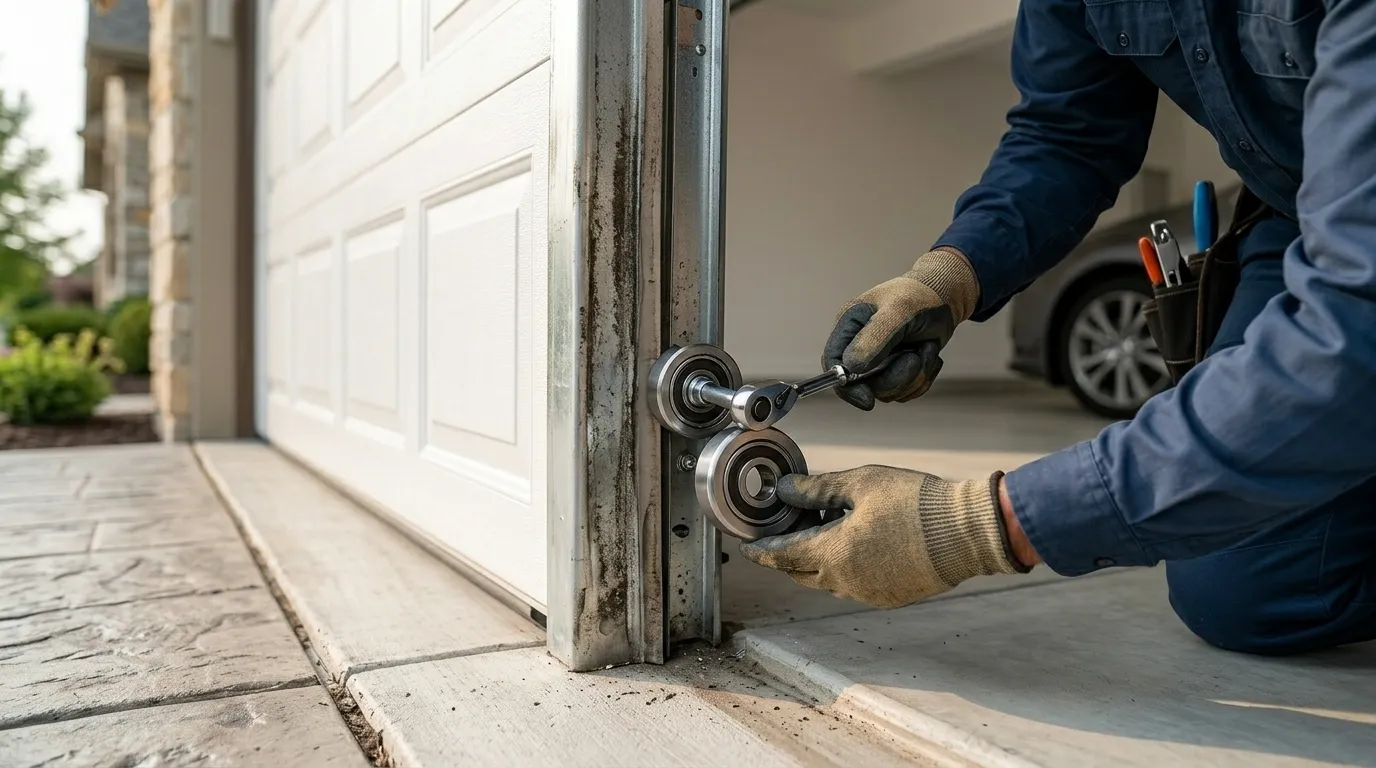
Either way we check the drums, cables, and end bearings while we're in there, since a spring rarely fails in isolation on a door that's been running twenty-plus years. If the opener's been straining against a weak spring for months, that's worth flagging too - a new spring on a dying opener just moves the next call up on the calendar instead of closing the book on it.