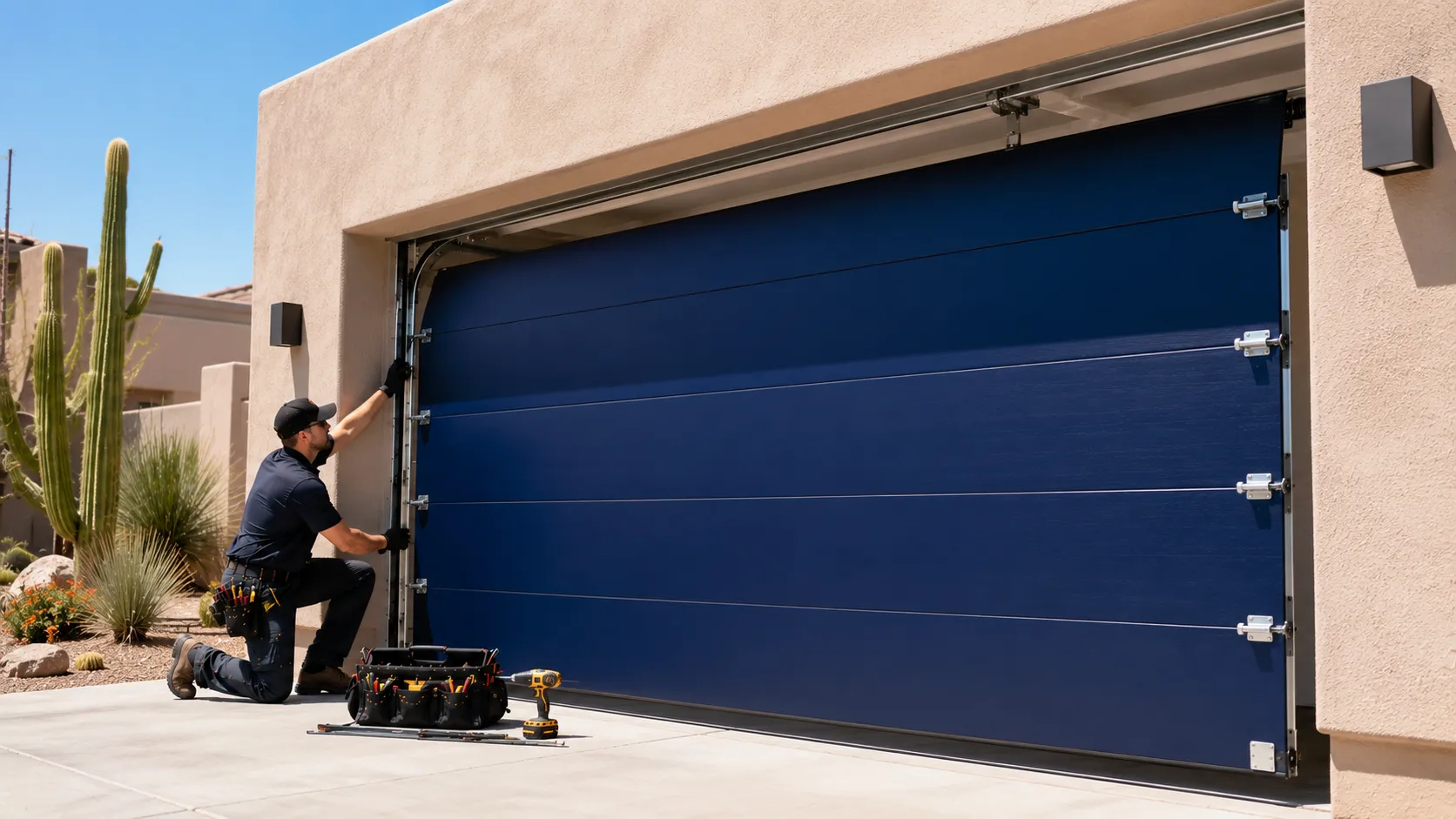
Can You Do This Yourself
A lot of the doors we see out this way are the same door the house was built with back in 1983 - a single-layer steel panel, 16x7 for a double bay or 9x7 for a single, hung on galvanized track that's spent forty years in Gulf Coast humidity. That's not a door you patch. The steel has usually thinned at the bottom panel, the track has surface rust at every bolt, and the torsion hardware is sized for a door that weighed less than the insulated replacement you'd actually want.
Swapping a door yourself is possible if you've done it before and have a second set of hands - the panels aren't heavy individually, but a torsion spring under load can put someone in the hospital, and getting a 16-foot door square in the opening without pinching a cable is harder than it looks on video. What you can reasonably do yourself: measure your rough opening, decide on insulated vs. non-insulated, and figure out if you want a single wide door or two singles, since a lot of these older openings were framed for one big panel and a two-door layout means header work.
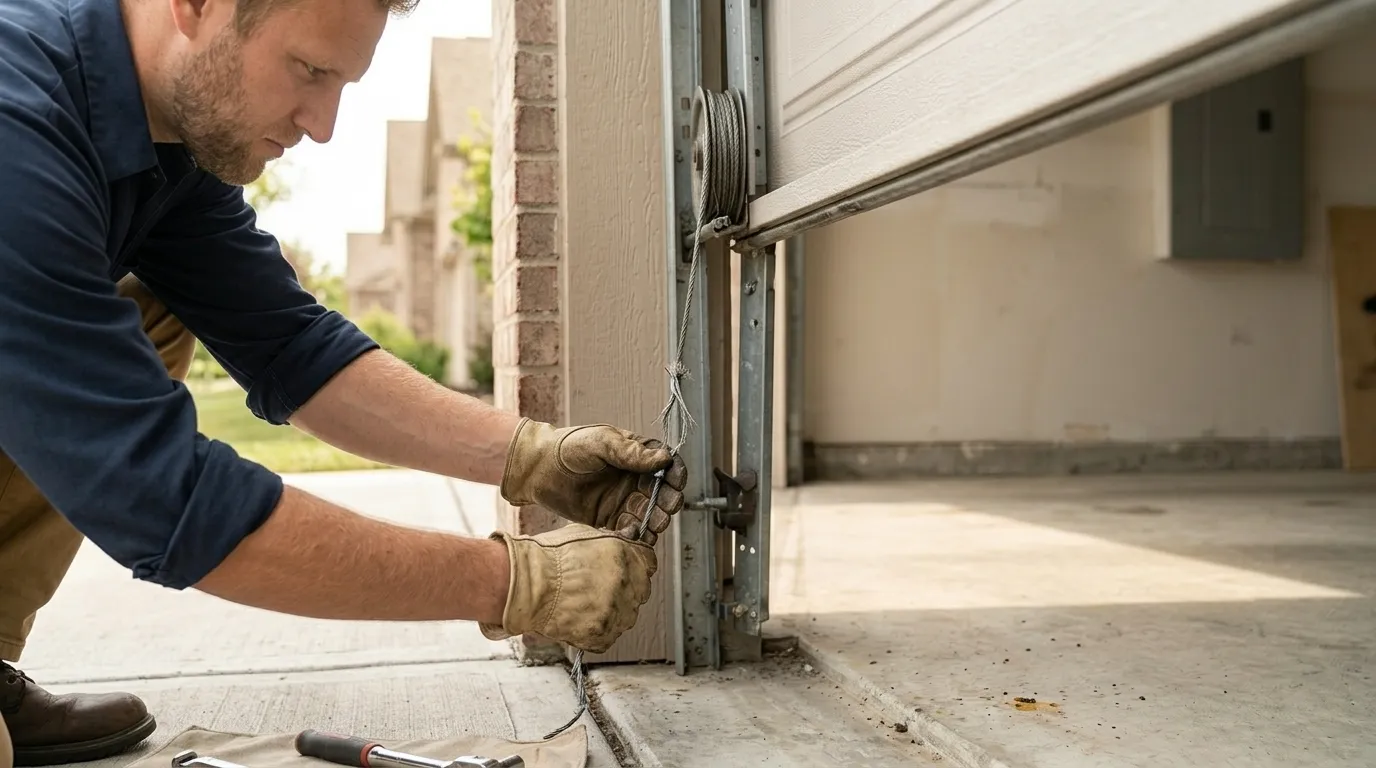
Where we'd tell you to stop and call: anything involving the spring, the cable drum, or removing the old track while the new door's already staged. That's the part where a mistake costs more than the door did.
Getting It Booked In
We run out of Daphne, about 20 miles from Tillmans Corner, so a new-install job here gets scheduled as a full day - drive time, the old door coming out, the new one going in, and haul-off of the old panels and track. We don't keep a branch or a truck staged in Tillmans Corner, so this isn't a same-day walk-in kind of job; it's booked ahead, same as any install we do outside Daphne proper.
Because the housing stock here mostly dates to the early 1980s, we ask about the opening size and whether the header's wood or steel before we quote, since a lot of these houses were framed a size or two off from what current door lines stock. If your opening is non-standard we may need to order rather than pull from stock, which adds lead time on top of the drive.
We'll also ask whether you're replacing like-for-like or changing door count - single to double or vice versa - since that's a different scope than a straight swap and changes what we bring on the truck the first trip.
What the Fix Involves
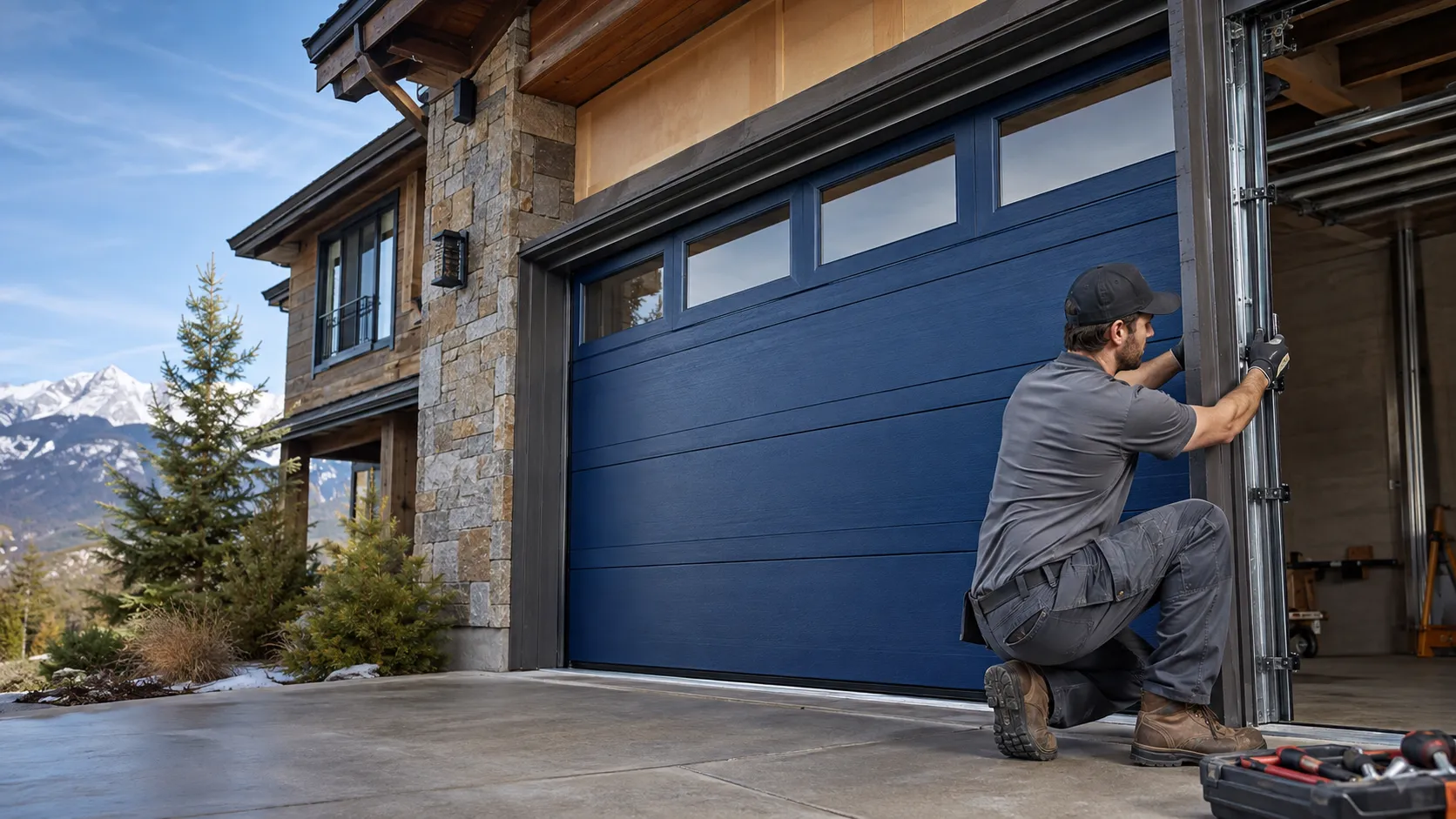
On a straight install where the opening's standard, the job is: pull the old door and track, check the header and jambs for rot or shift (common on houses this age), set new track and hardware sized to the new door's weight, hang the panels, and balance the springs to the door - not to whatever spring happened to be on the old one, since a lot of these 1980s doors were under-sprung for their actual weight even when new.
If you're going from a two-door layout to a single wide door, or the reverse, there's framing work at the header before any door hardware goes up, and that's the part that turns a one-day job into two.
One thing we won't do: reuse forty-year-old track or a spring system on a new door just to save you money on the visit. If the hardware's not rated for the new panel weight, it goes on the truck with the old door, not back up on the wall. That's not us upselling - a mismatched spring on a new door is exactly the kind of thing that fails hard and fast, and it's not worth the callback.