Can You Do This Yourself
Tillmans Corner is a smaller pocket of the service area - about 6,850 households, which is a fraction of the 43,514 households spread across the wider coverage zone. That size matters for opener work: fewer houses means fewer openers failing on any given week, but it also means most of what comes up is the same problem repeated across a narrow build era rather than a mix of eras.
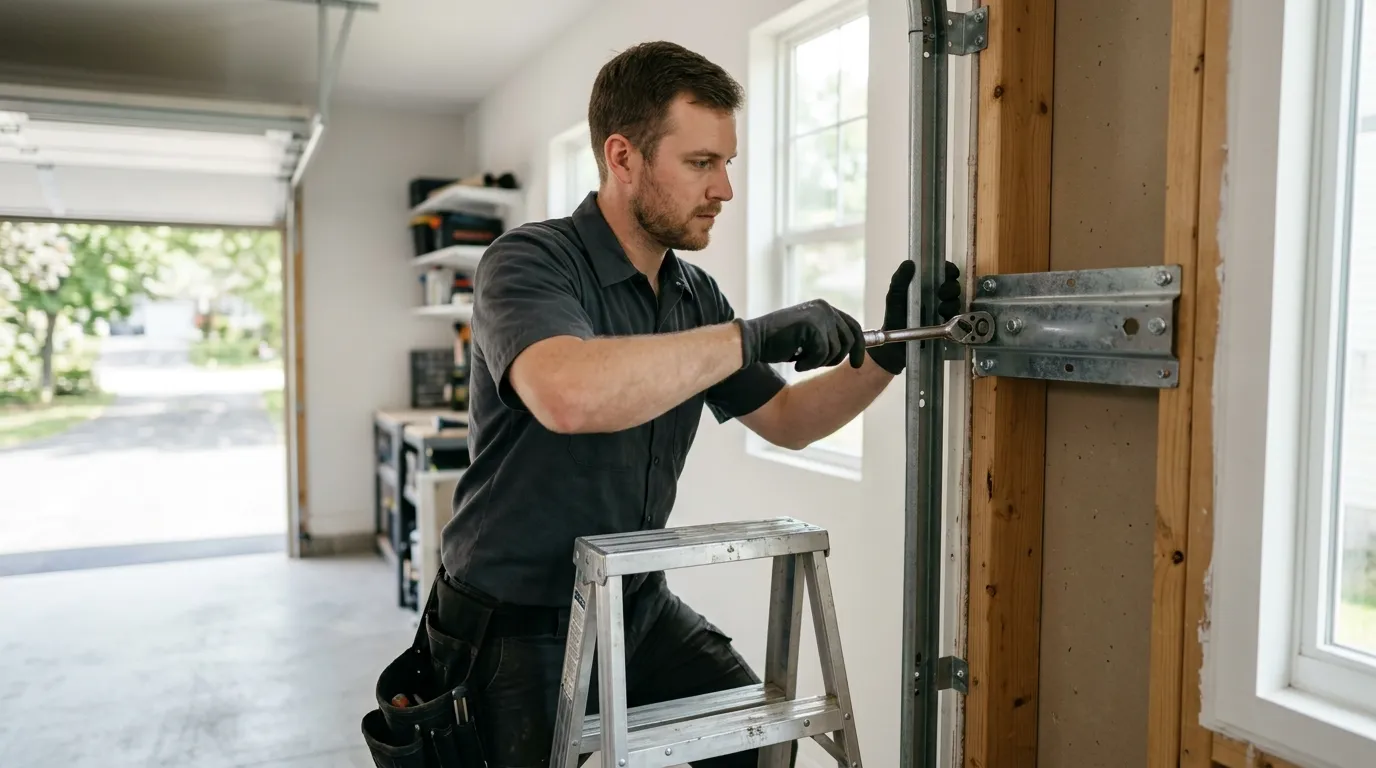
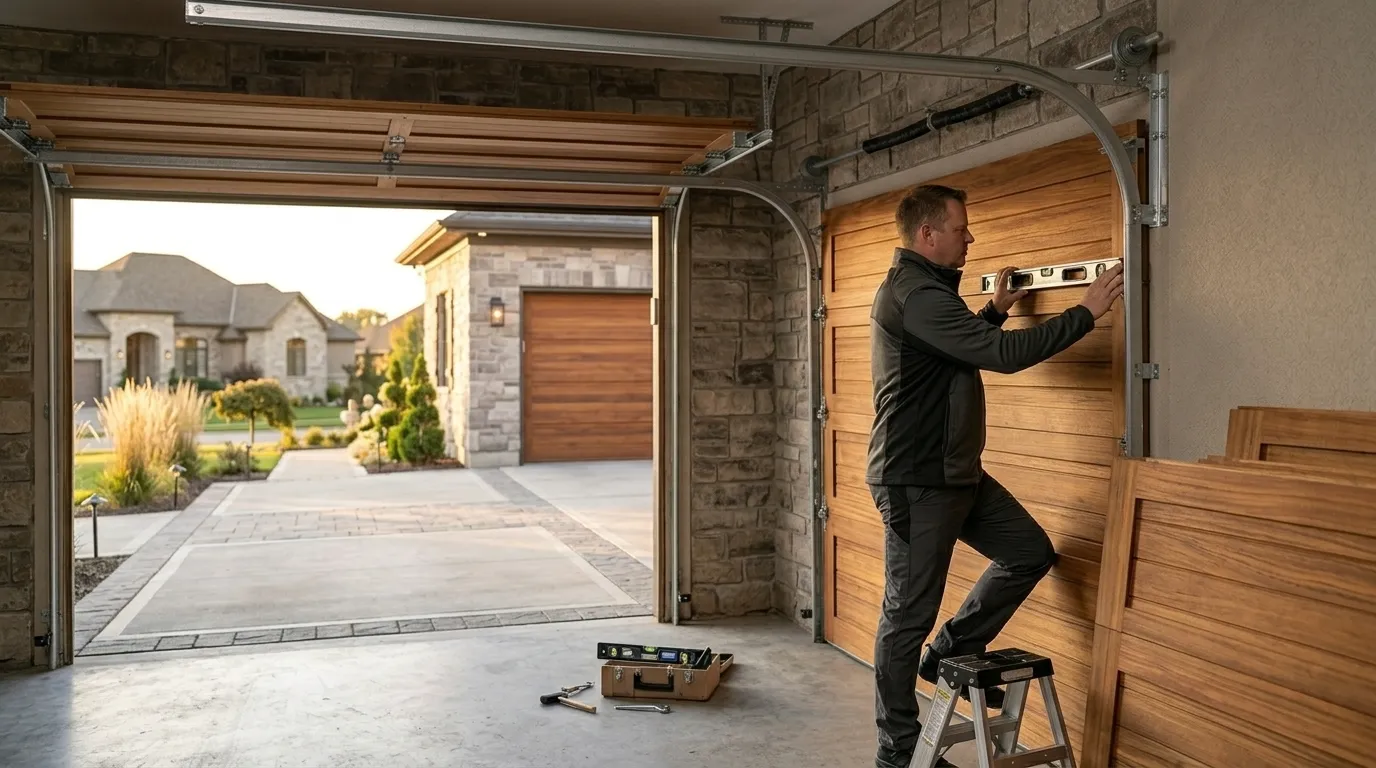
Swapping an opener yourself is doable if you're comfortable with a ladder, a drill, and reading a wiring diagram twice before you trust it. Where people get hurt is the travel limit and force settings - set them wrong and the door either won't close on the sensor or it comes down hard enough to crack a windshield or a knuckle. If your house still has the original bracket and rail from a builder-grade unit, expect the mounting points to be slightly off from what a new kit's template expects. That's a five-minute fix if you know to check for it, and a half-day headache if you don't.
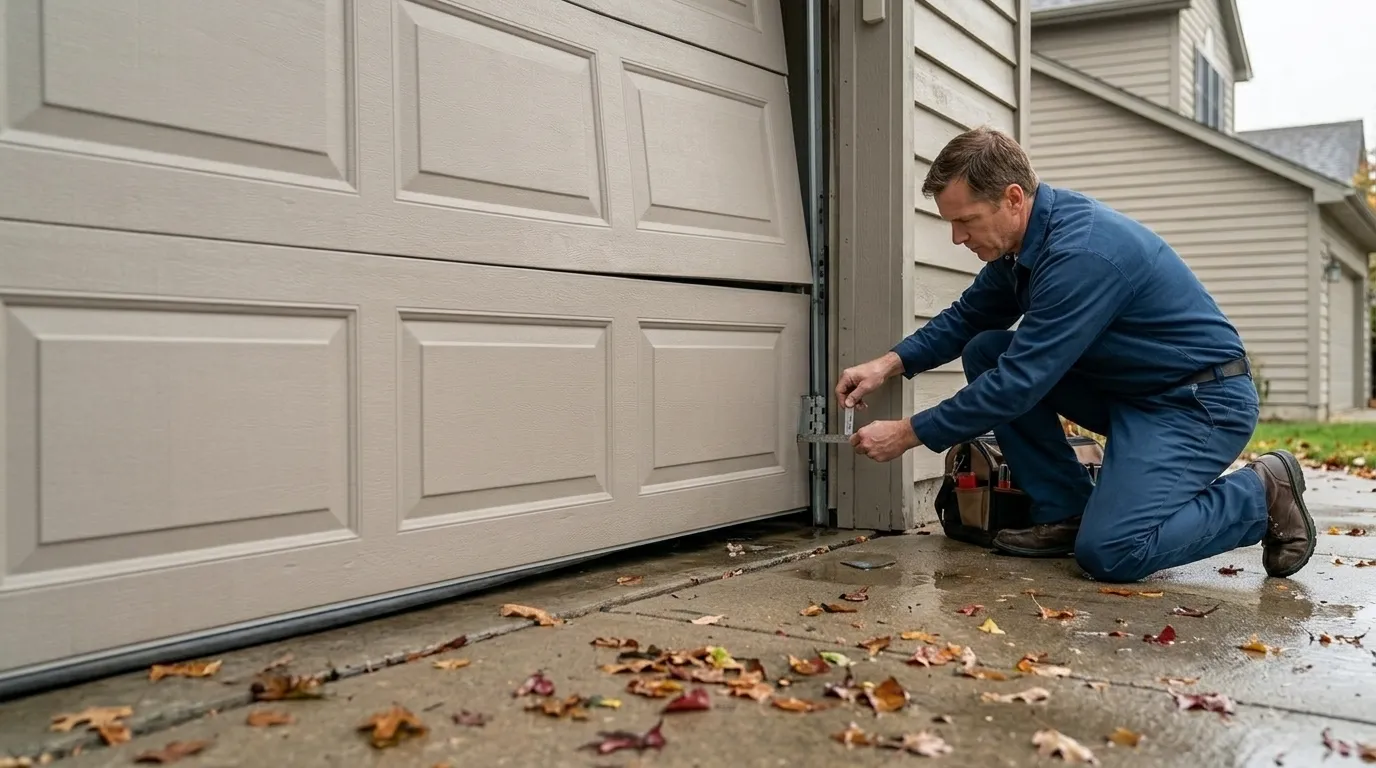
Our honest limit: we don't install openers on wood jamb doors that are already sagging or racked - that's a door repair first, opener second, and we'll tell you that on the phone before we drive out.
Getting It Booked In
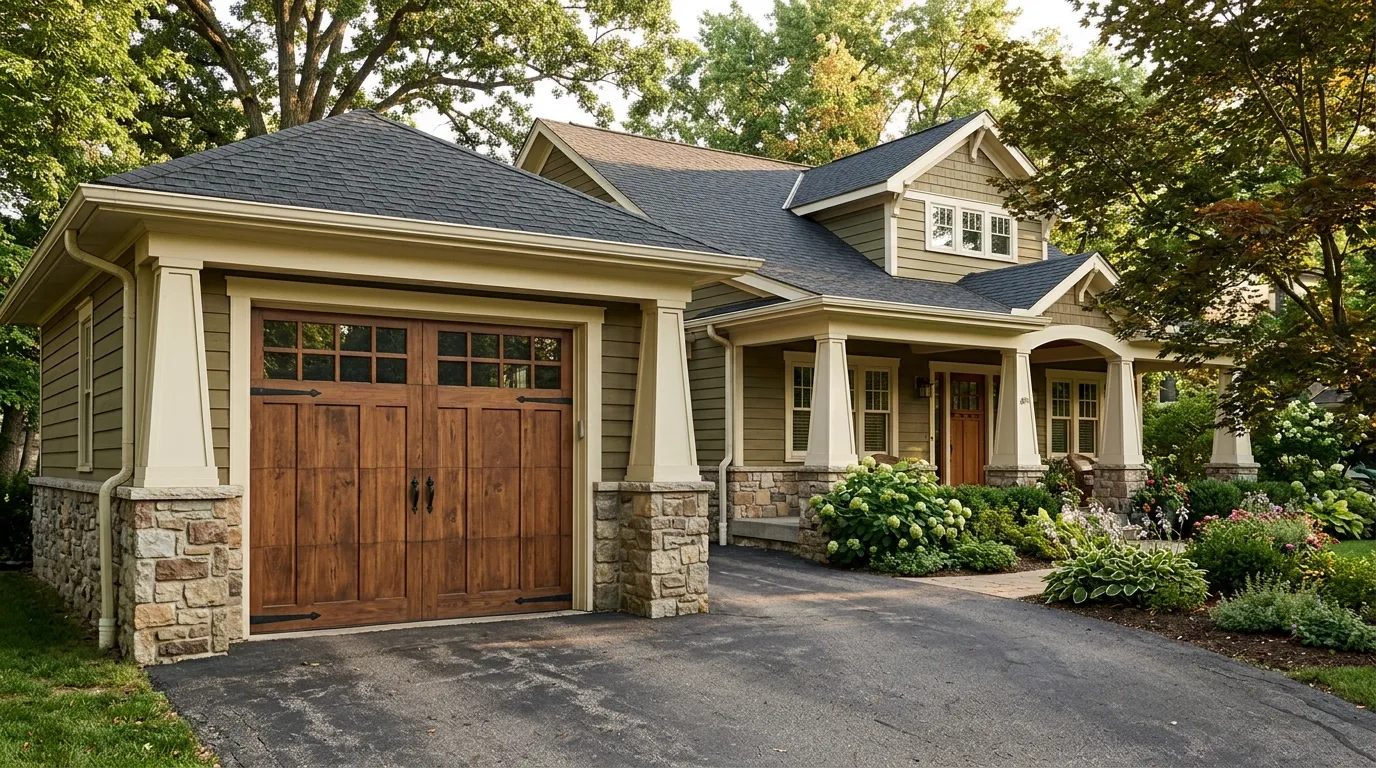
We run out of Daphne, about 20 miles from Tillmans Corner, so a job here gets scheduled as a trip rather than a drop-in. That's not a knock on the town - it's just the honest shape of how coverage works from a single base. When you call, tell us the age of the house if you know it; most of Tillmans Corner's stock lines up with the wider area's 1980s-90s build years, and a house from that window usually has a specific opener profile - low-horsepower chain drive, no battery backup, sometimes no safety sensors at all if nobody's touched it since it was built.
We ask that up front because it changes what's on the truck. A house built in the 1963-2007 range across this region can be running gear-drive, belt, or a screw-drive unit depending on which decade it went up, and we'd rather bring the right rail length and header bracket than make a second trip.
If your opener quit dead - no lights, no hum, nothing - say so when you book. That's usually a logic board or a tripped breaker, not a motor, and it changes how we plan the visit.
What the Fix Involves
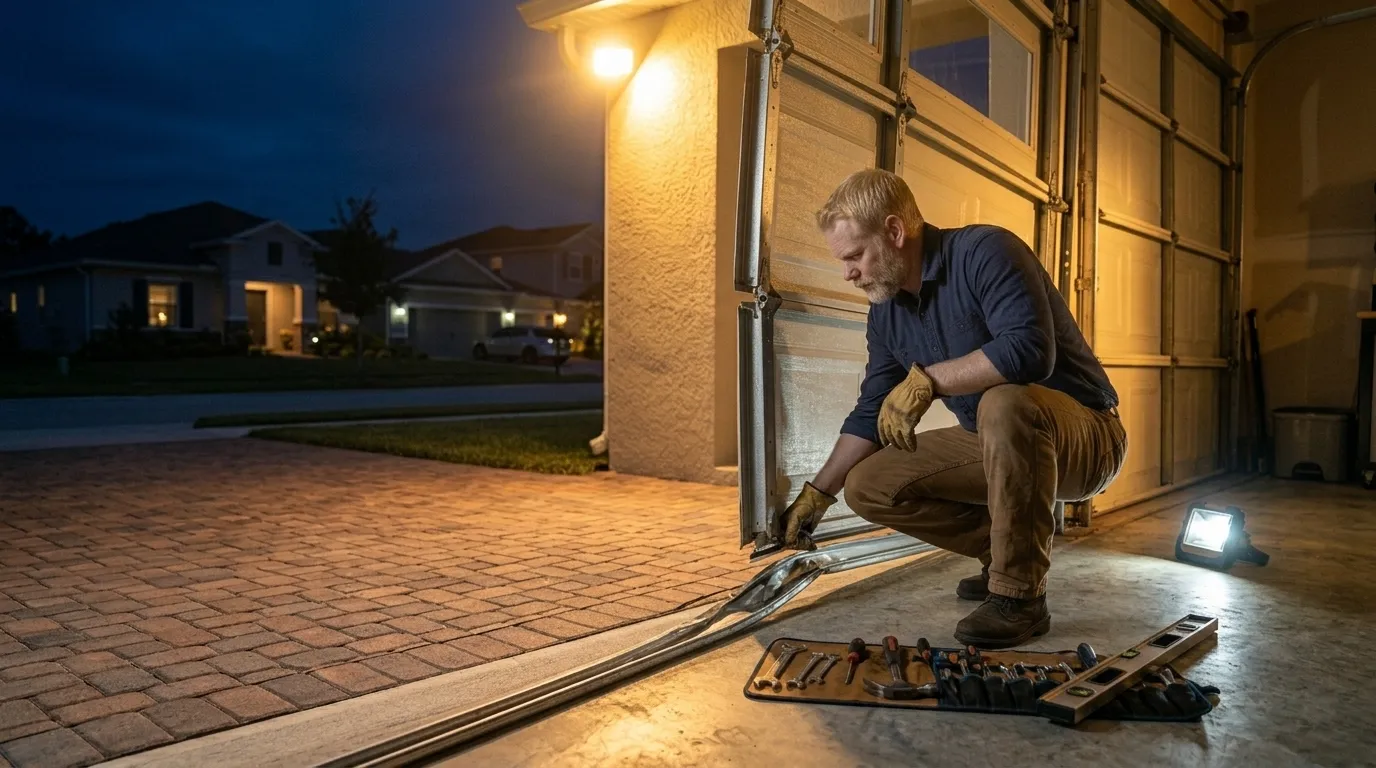
Most Tillmans Corner houses were built around 1983, which puts the opener - if it's original - well past any reasonable service life. The fix starts with pulling the old head unit and rail down, checking the header bracket for rot or old lag bolts that won't hold a new mount, and confirming the door itself still tracks straight. A door that binds on its rollers will fight a new opener just as hard as it fought the old one, so we check that before anything gets wired.
The area sits in a mild climate with occasional freezes, which is easy on openers compared to true cold-weather markets - we're not dealing with cold-soaked gear boxes or ice-cracked plastic housings very often. What we do see is humidity working into old wiring insulation over a few decades, so on a 1980s install we'll usually replace the wall button and sensor wiring rather than trust it.
Once the new unit's up, we set the travel limits, test the force settings against the door's actual weight, and confirm the safety sensors trip correctly before we call it done.