Can You Do This Yourself
A lot of the calls we'd get from Tillmans Corner trace back to hardware that's been on the door since it went up, and the median house here was built around 1983 - a good seven years ahead of the typical build date across the rest of our coverage area. Doors from that era often ran on extension springs mounted along the horizontal tracks rather than the torsion setup you'd find on newer construction, and that changes what's safe to touch yourself.
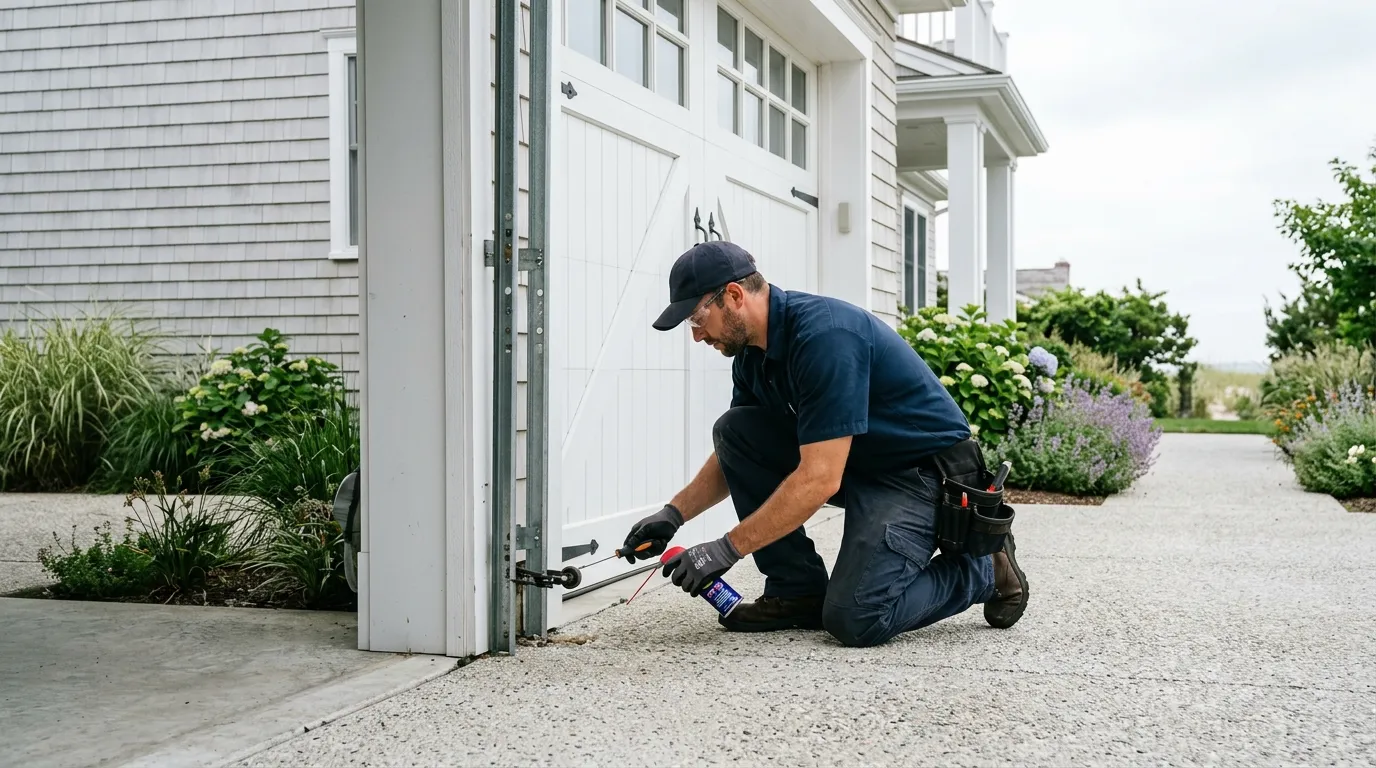
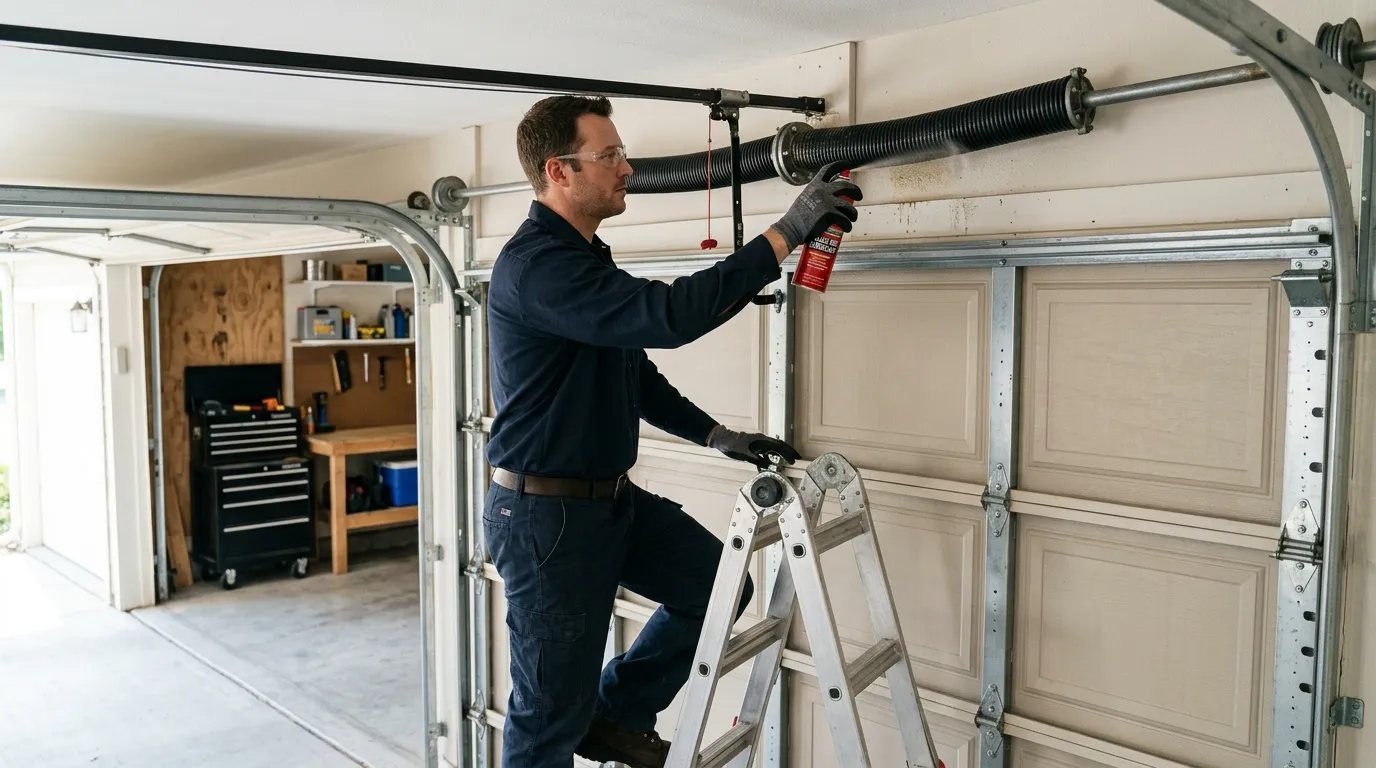
You can do the easy stuff: lubricate the rollers and hinges, tighten loose bolts on the track brackets, check that the photo-eye sensors near the floor are aligned and clean. What you should not do is touch an extension spring under tension, or try to realign a bent track on a door this old, because the steel has usually fatigued in ways you can't see from the garage floor.
One honest limitation: if the door has been repainted or modified over the decades, we sometimes can't tell what's underneath until we're standing in front of it. We won't quote a firm fix over the phone for a door we haven't opened up.
Getting It Booked In
We work out of Daphne, and Tillmans Corner sits about 20 miles out, which is farther than most of the towns we cover. That distance doesn't change what we charge for the repair itself, but it does mean we're not the outfit to call if you need someone standing in your driveway in twenty minutes - we're driving in, not already down the street.
When you call, tell us the door's approximate age if you know it and whether it's making noise, stuck halfway, or won't move at all. For a lot of Tillmans Corner homes built in the early 80s, that information alone tells us whether we're dealing with old spring hardware or a worn-out opener, and we can bring the right parts on the first trip instead of a second one.
We'll ask for your address up front so we can plan the drive against the rest of the day's jobs, not because the work is any different here than closer to Daphne.
What the Fix Involves
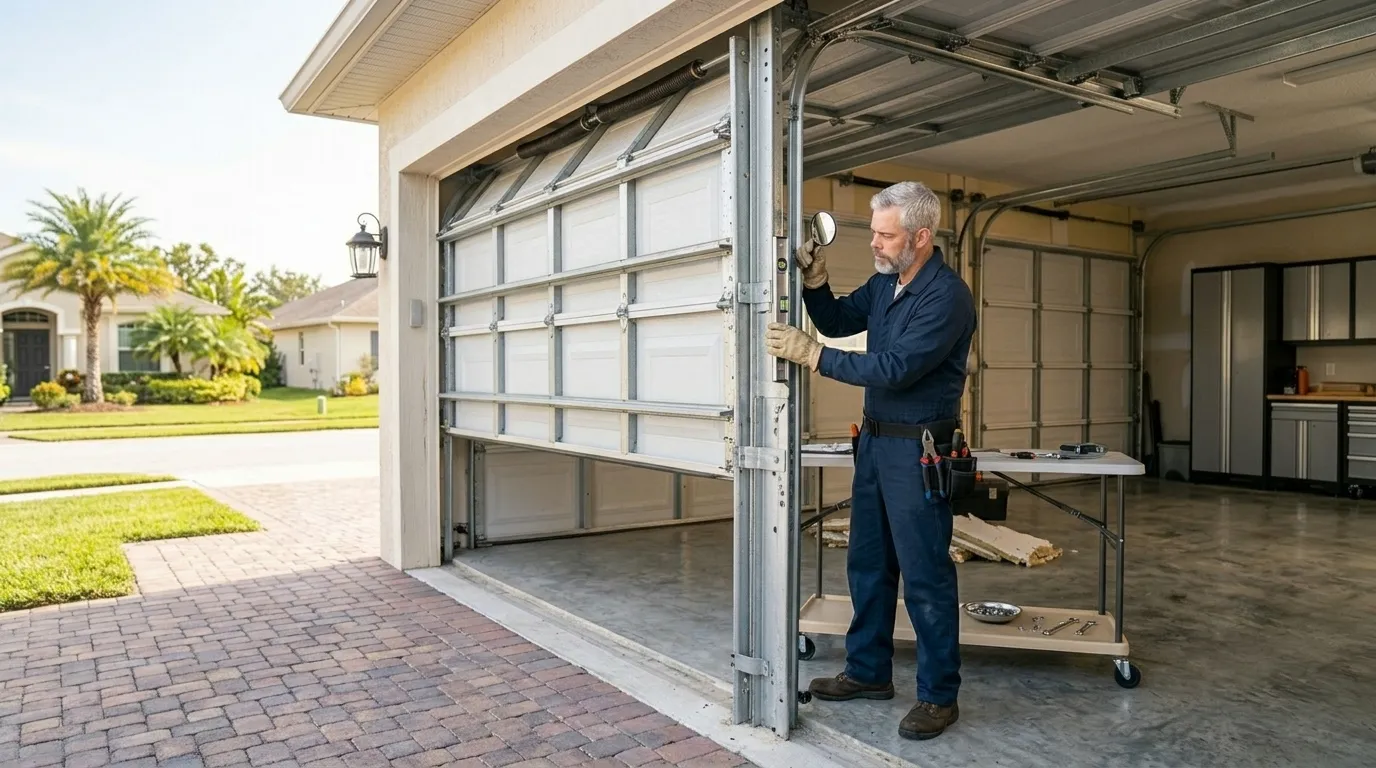
Most Tillmans Corner jobs start the same way: we pull the door panel by panel with the opener disconnected, check the spring tension by hand, and look at how the track brackets have held up. On a house from the early 80s, the brackets are often the weak point - decades of minor shifting in the framing can leave them slightly out of plumb, which throws the door off its rollers even when the spring itself is fine.
Our climate here doesn't bring hard freezes, but it isn't dry either, and steel track hardware that's spent forty-some years in a humid garage tends to show surface rust at the mounting bolts before it shows anywhere else. We check those bolts on every call, not just the ones the homeowner mentioned.
If the opener is original to the house, we'll tell you straight whether it's worth repairing or whether the motor's age means a repair now just delays a second call in a year. We don't replace parts that don't need it, and we don't pretend a 40-year-old drive gear is going to outlast the new spring we just put in.