What the Fix Involves
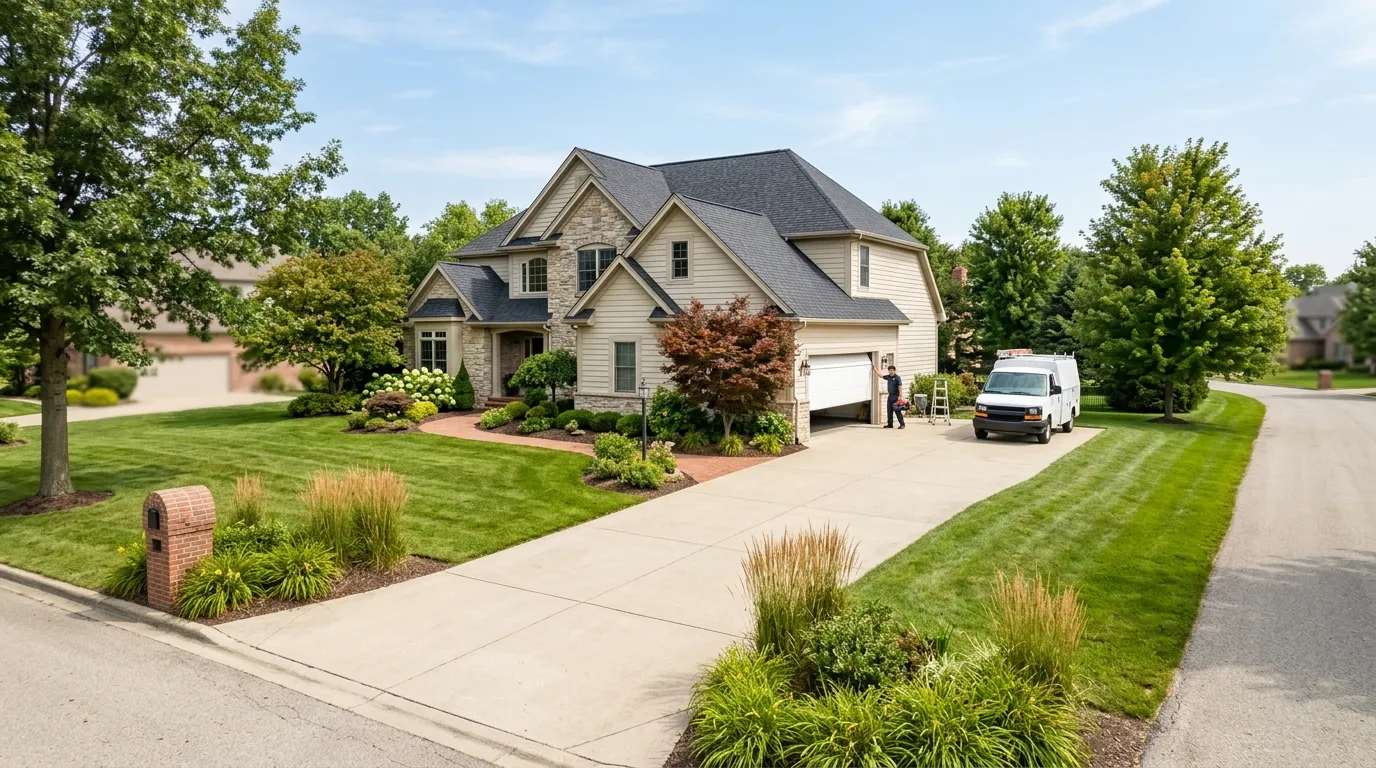
Most houses in Point Clear went up in the early-to-mid 1990s - the median build year here is 1993, right in line with the broader service area's 1980s-90s housing stock. By that point, builders had moved past the old side-mounted extension springs you still find on 1960s and 70s houses elsewhere in the region, and put in torsion springs instead: a spring wound on a steel shaft above the door, working through cable drums to lift a steel sectional door, usually a 16x7 double or a 9x7 single.
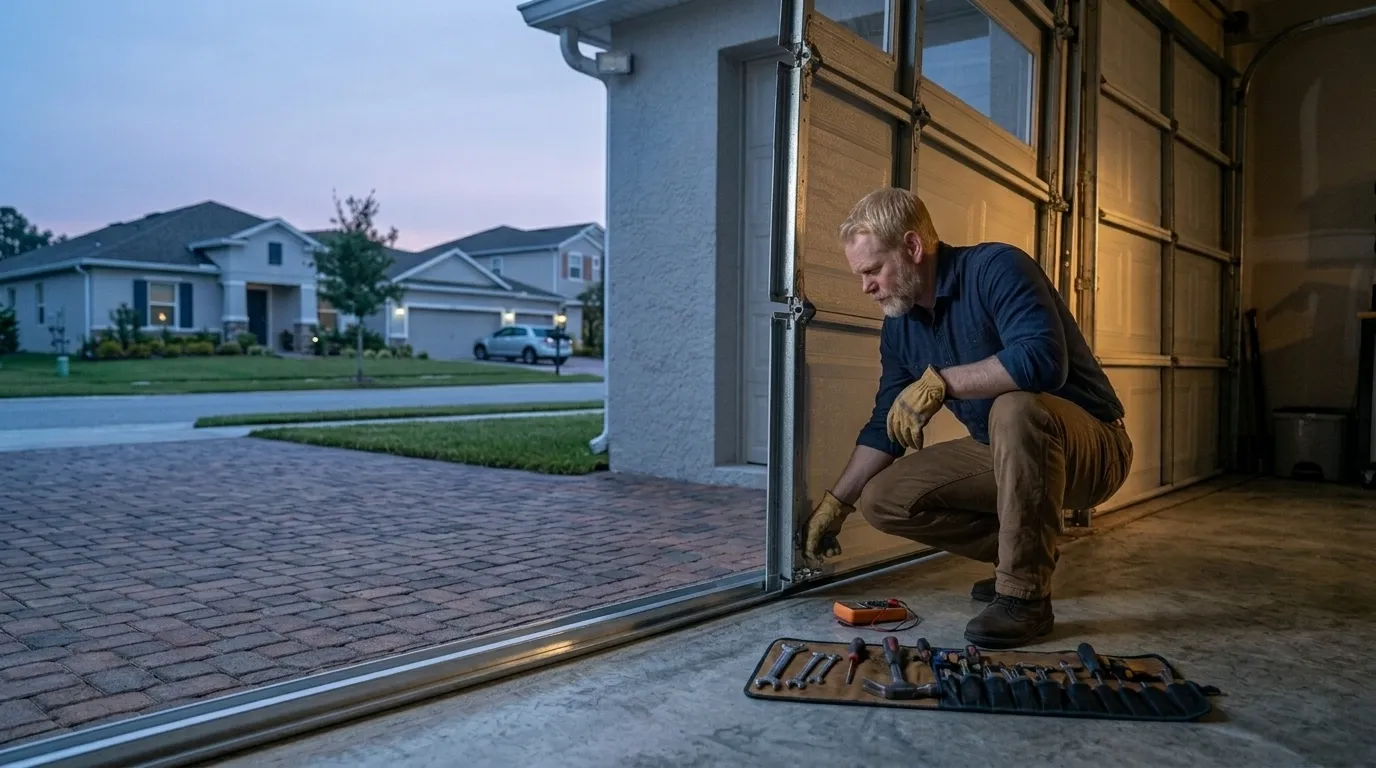
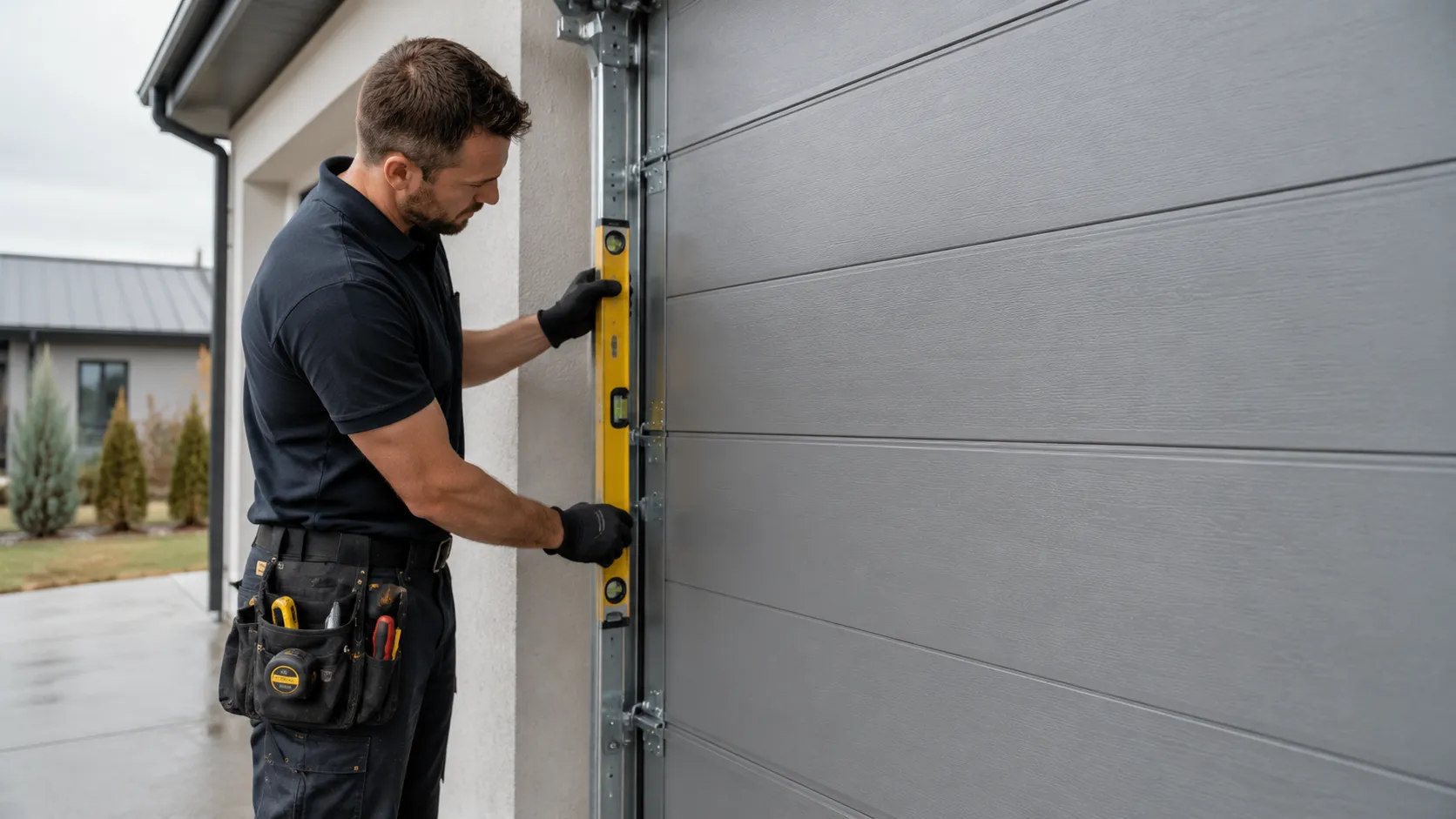
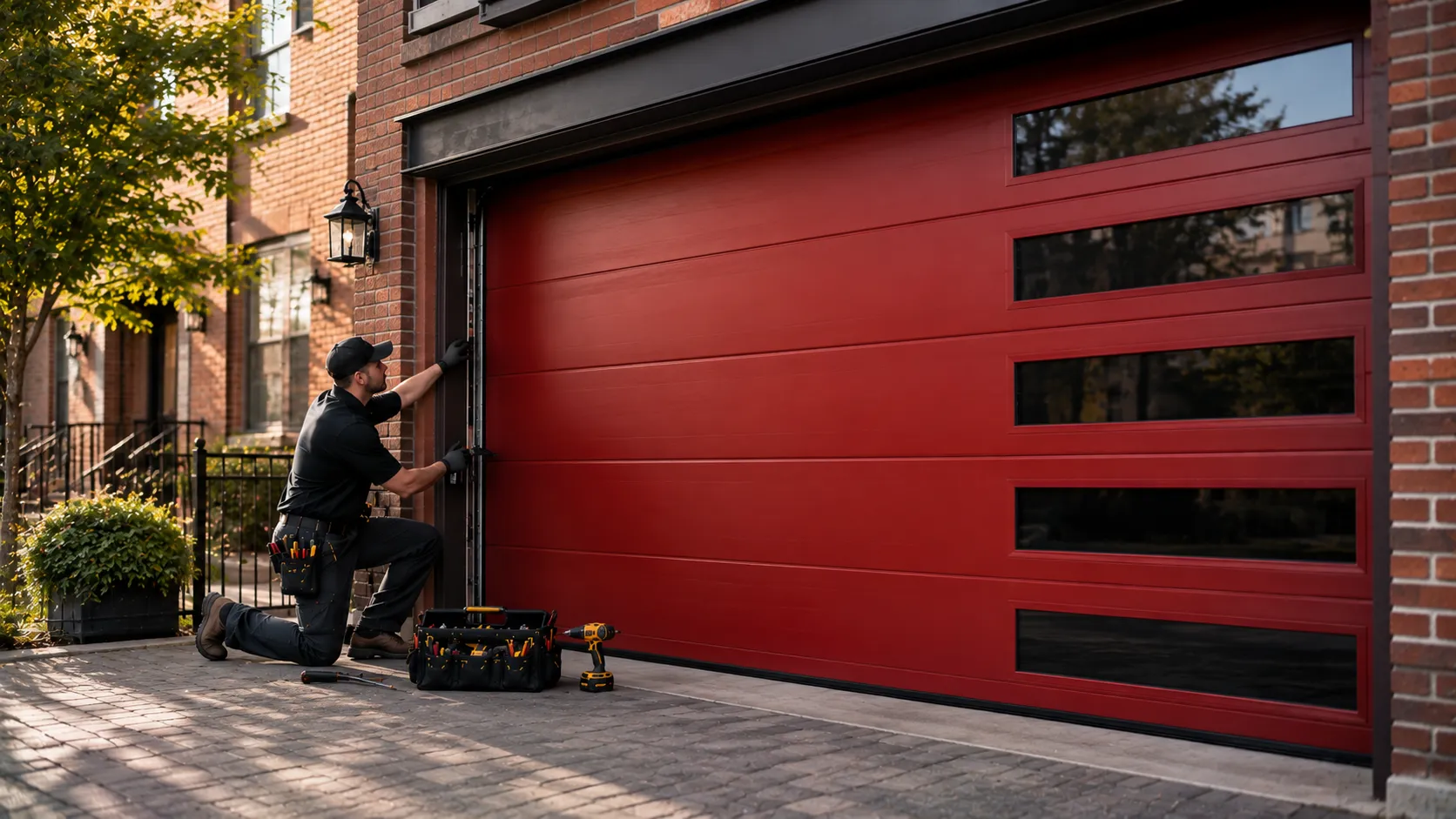
The fix is straightforward for someone who does it regularly: wind down the old spring's tension safely using winding bars, pull the broken or fatigued spring off the shaft, fit a replacement matched to the door's weight and the drum size, then check the lift cables on both sides since they carry the same load and wear on the same schedule. We finish by balancing the door - it should hold at any point when you let go of it by hand, opener disconnected.
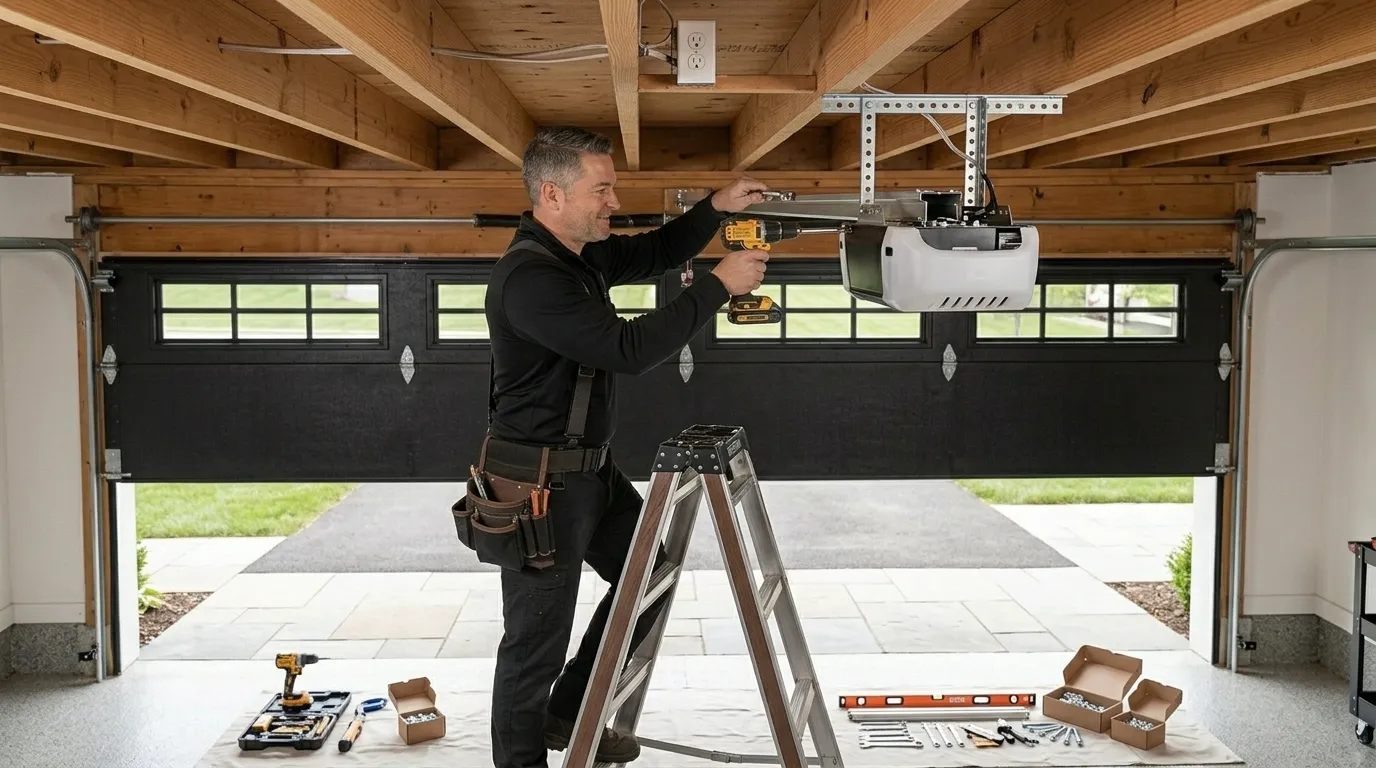
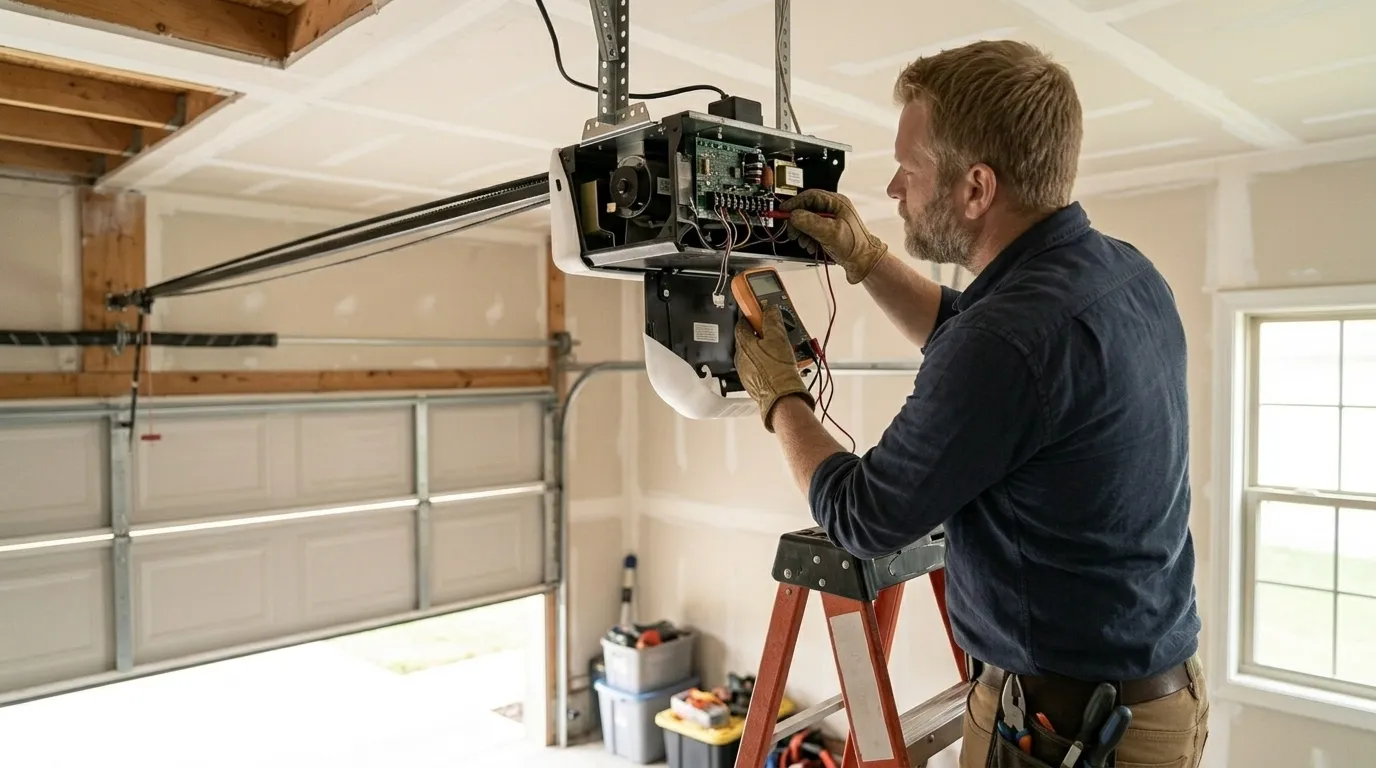
We don't touch the opener's circuit board or wiring as part of a spring job. If the opener's been straining against a broken spring for a while, that's a separate conversation.
How It Shows Up
The door won't lift past a foot or two, or the opener motor whines and stalls without moving it. Sometimes you hear a loud bang from inside the garage - that's the spring itself letting go, not the door falling. A door that's noticeably heavier on one side when you lift it by hand, or one that looks crooked in the opening, is telling you one spring has already failed while the other is still holding.
On torsion setups like the ones common on these early-90s builds, you'll also sometimes catch a gap in the coils before it breaks fully - a visible split in the wound spring on the shaft above the door. That's worth a call before it snaps, since a spring that lets go while under full tension is more likely to whip a cable or bend a track on its way out.
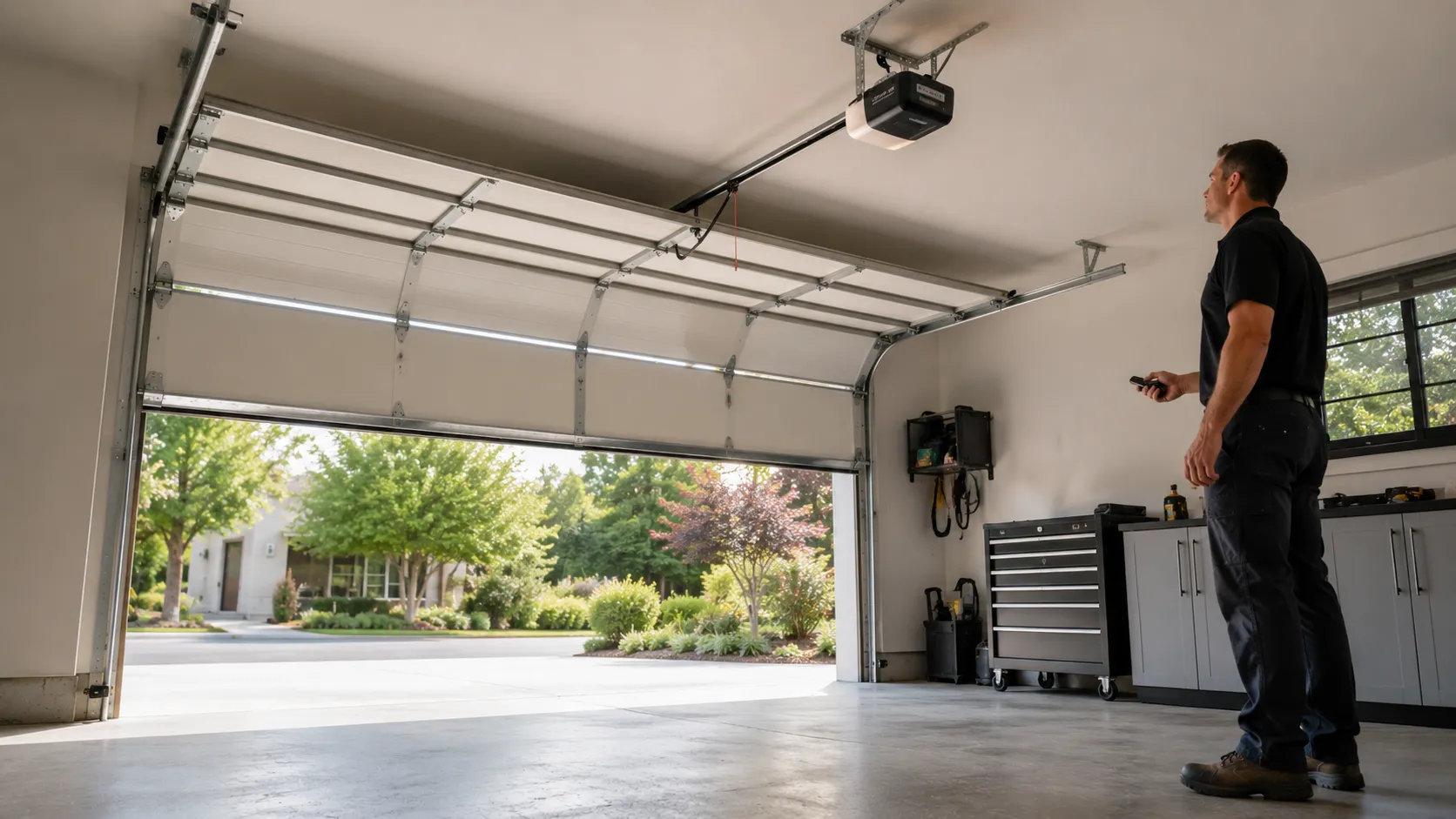
A door that reverses on its own partway through closing, with no obstruction underneath, can also point to spring failure rather than a sensor problem, since the opener is fighting an unbalanced load.
What Causes It Around Here
Point Clear sits in a mild climate with occasional freeze, so the springs here aren't fighting the deep temperature swings that snap steel in colder states. What wears them out instead is straight mileage - daily cycling, year after year, on hardware that's now approaching or past 30 years old on houses built around 1993. A torsion spring is rated for a set number of open-close cycles, and once a household's been running the door twice a day for three decades, that number adds up.
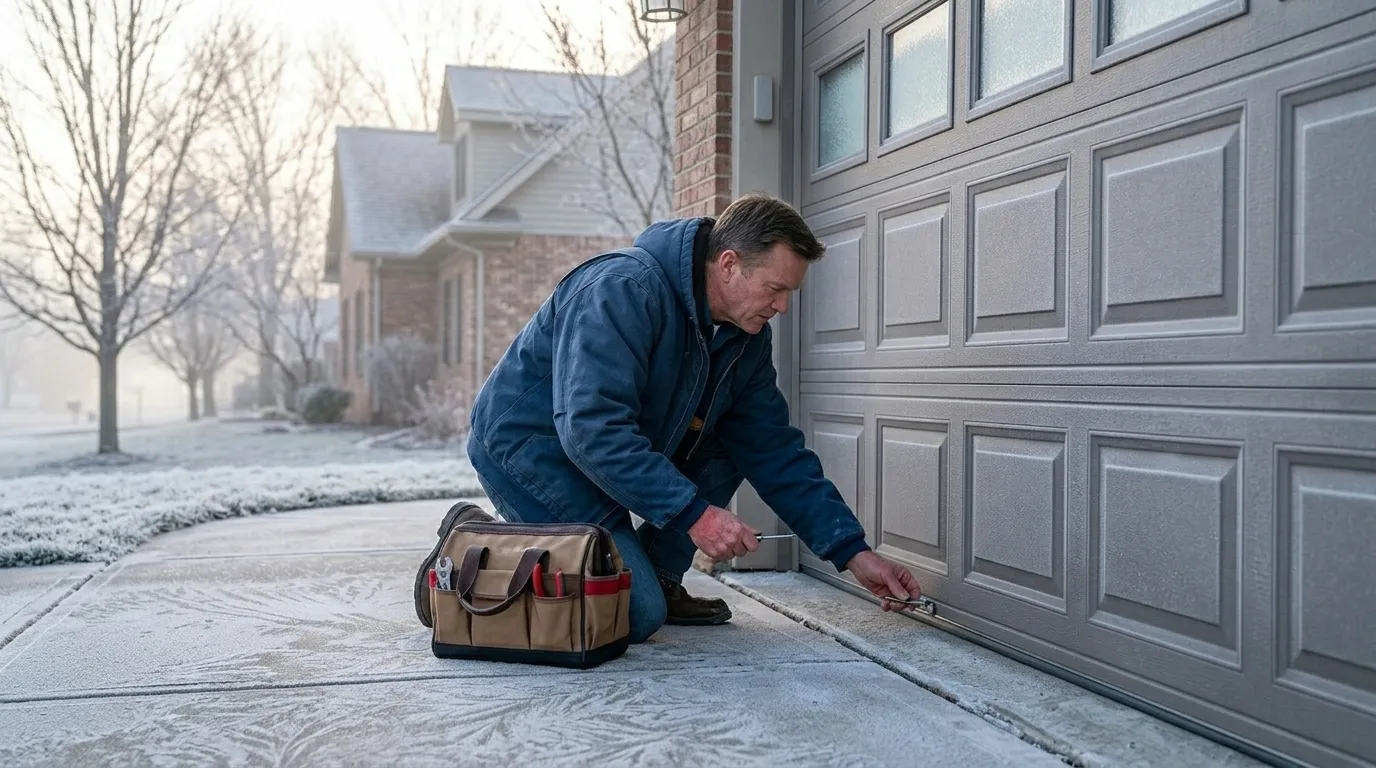
Humidity near the bay plays a role too. Coils on a door that sits in shade or gets less airflow tend to rust faster at the wind points, and rust weakens the wire before it ever shows on the outside. Combined with an aging original spring that was never replaced when the door itself was, that's usually the sequence: original hardware, decades of cycling, a coastal climate slowly working on the metal, and then one cold morning it finally lets go.
What It Costs
We don't have a fixed number to publish for Point Clear specifically, and pricing on a spring job depends on the door's size and weight, whether it's a single spring or a pair, and the drum and shaft setup already on the house. What we can say is that Point Clear households have a lower median income than the wider service area - $45,898 here against $60,922 across the area we cover - and we take that into account when we quote a job rather than assuming a one-size price fits every house.
A broken torsion spring is a repair, not a full door replacement, in the large majority of cases. If the tracks are bent or the door itself is at the end of its life, that changes the math, but a spring on its own is usually the cheaper problem to fix, not the expensive one.
We'll give you the number for your door before we start, once we've seen what's actually on the wall.