What the Fix Involves
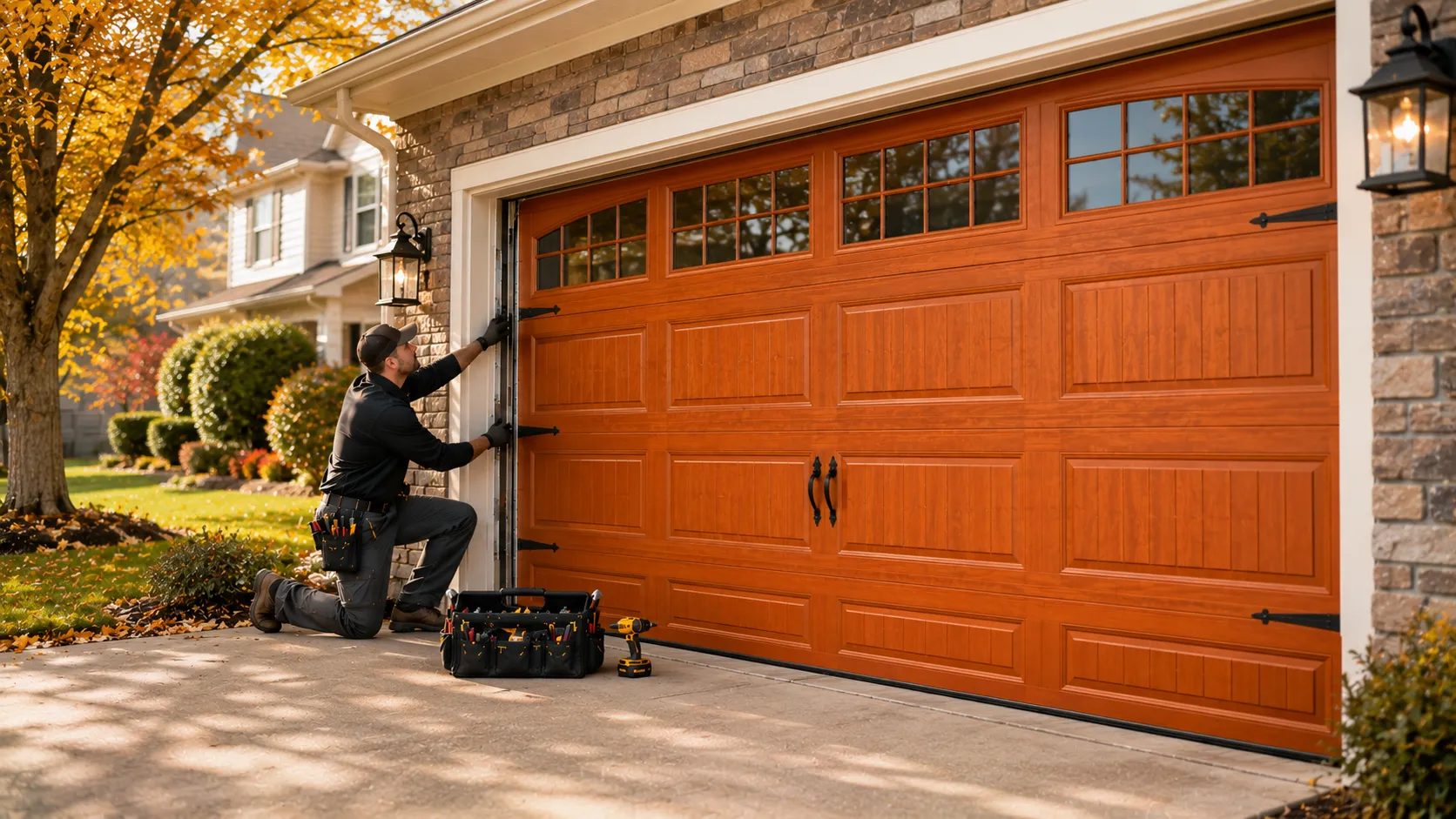
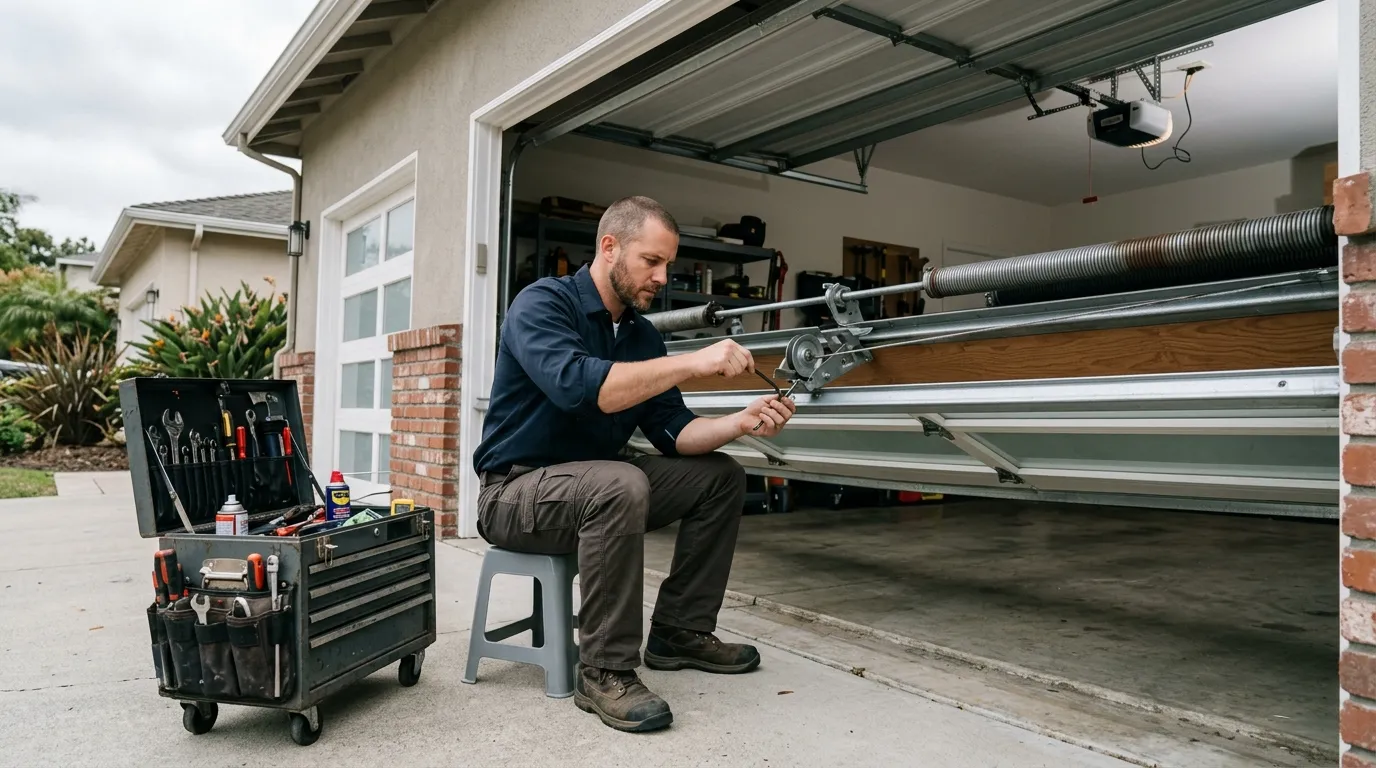
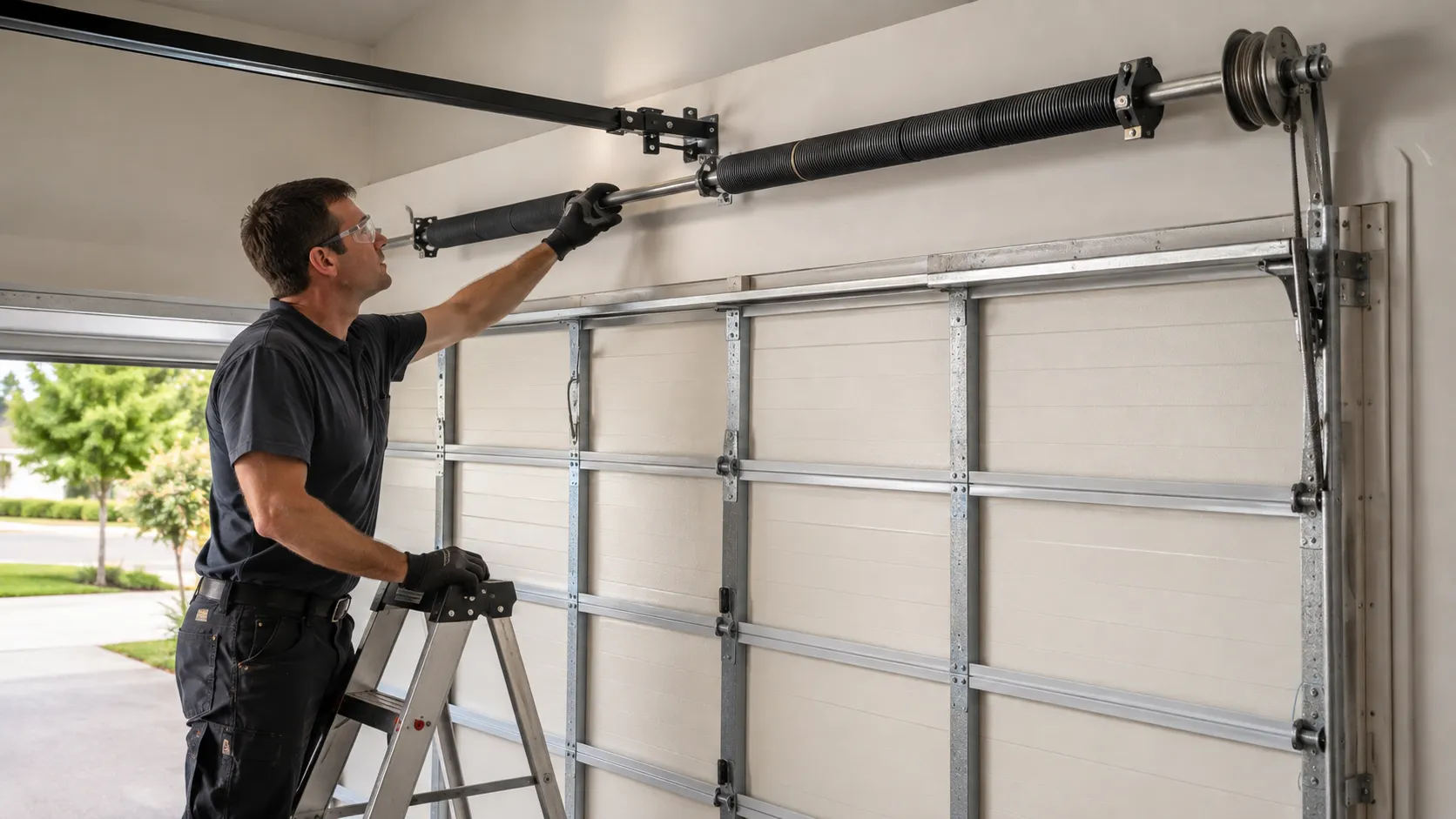
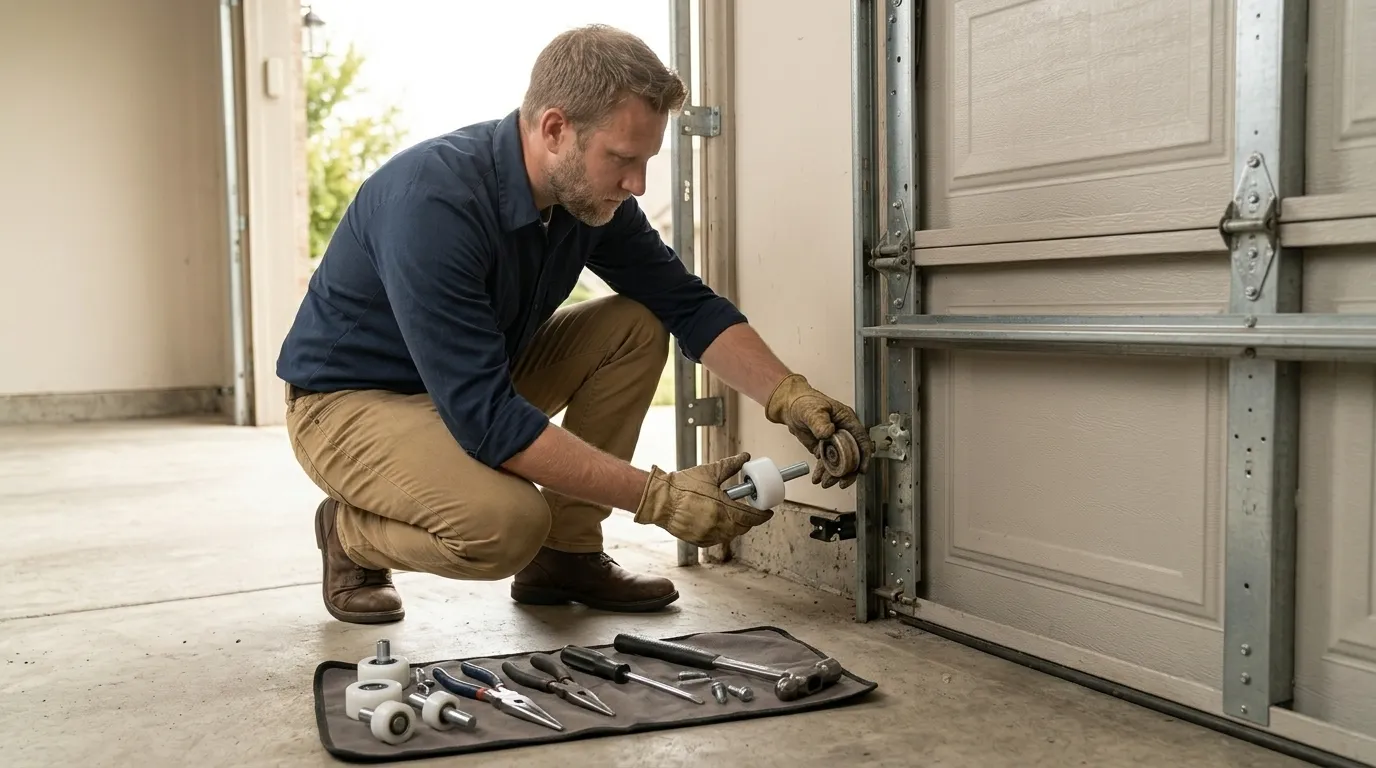
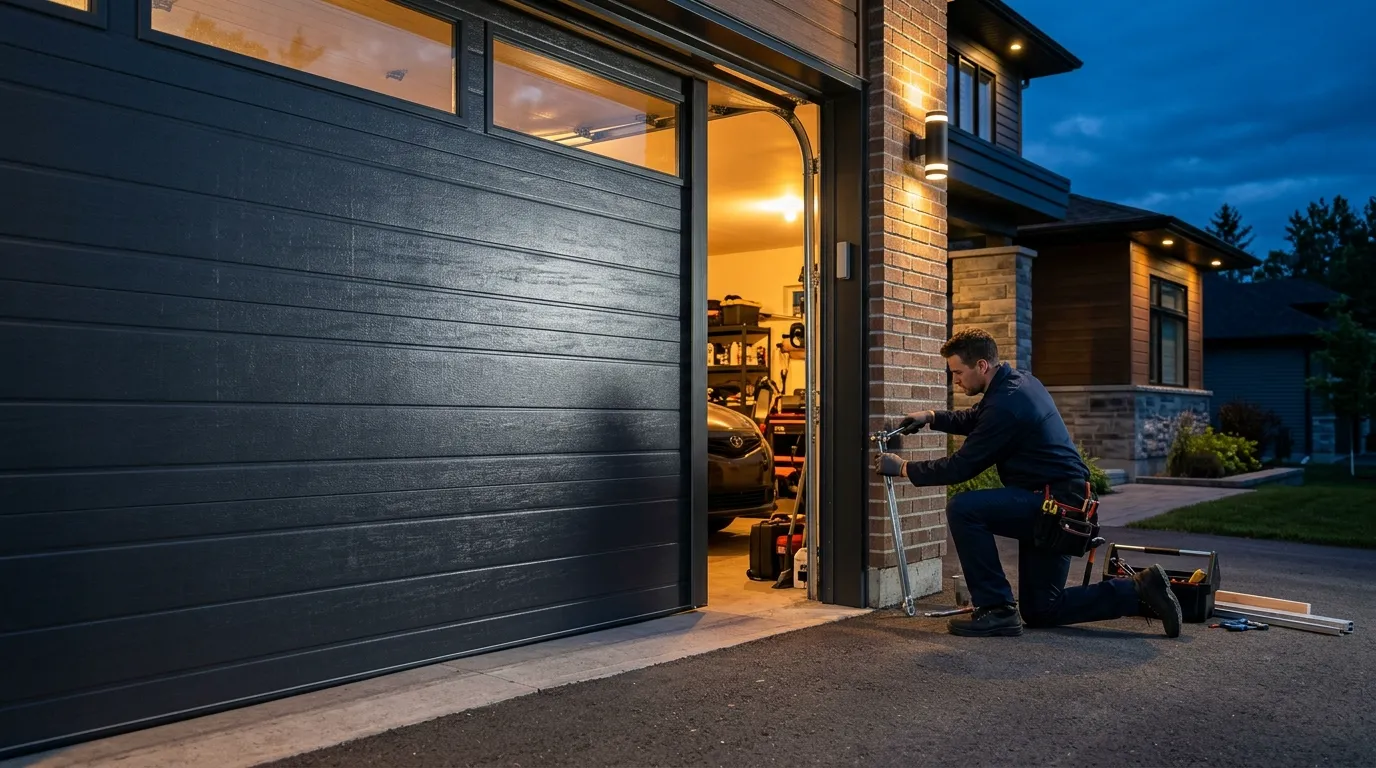
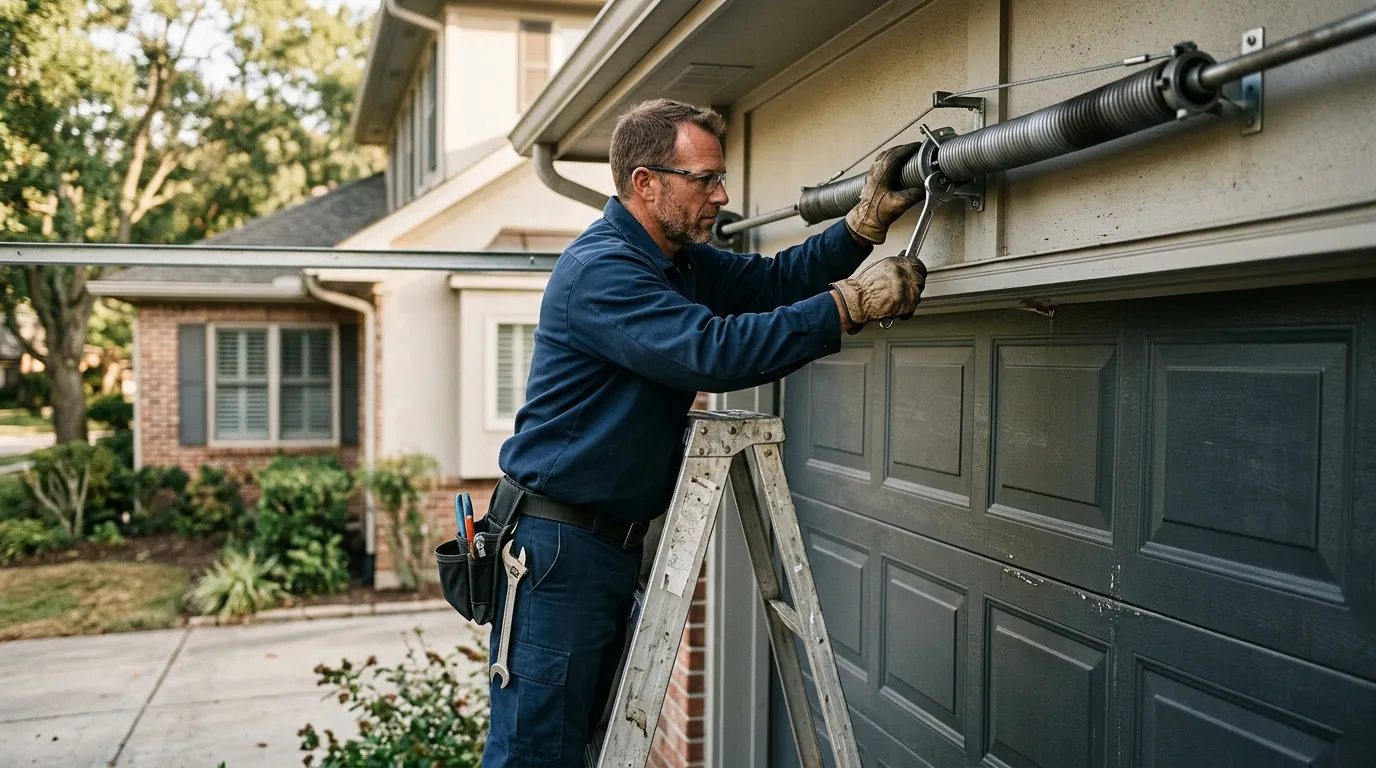
An off-track door means the rollers have jumped the track, usually on one side, and the panel is racked at an angle instead of sitting flat in the opening. The fix starts with releasing tension safely - if a spring is still loaded, you don't force the door back into the track by hand. We check the track brackets for bent metal, reseat the rollers, and true up the alignment between the two vertical rails so the door travels straight again.
Point Clear's housing stock centers on 1993, a bit newer than the 1990 median across the wider Daphne service area covered under F1. That gap matters here: doors from the early-to-mid '90s in this pocket tend to run galvanized steel tracks with sectional rollers rather than the older single-piece doors and side-mount torsion hardware you find on the oldest homes in the broader coverage area. The fix on a 1993-era track is usually a bracket realignment and roller swap, not a full hardware rebuild.
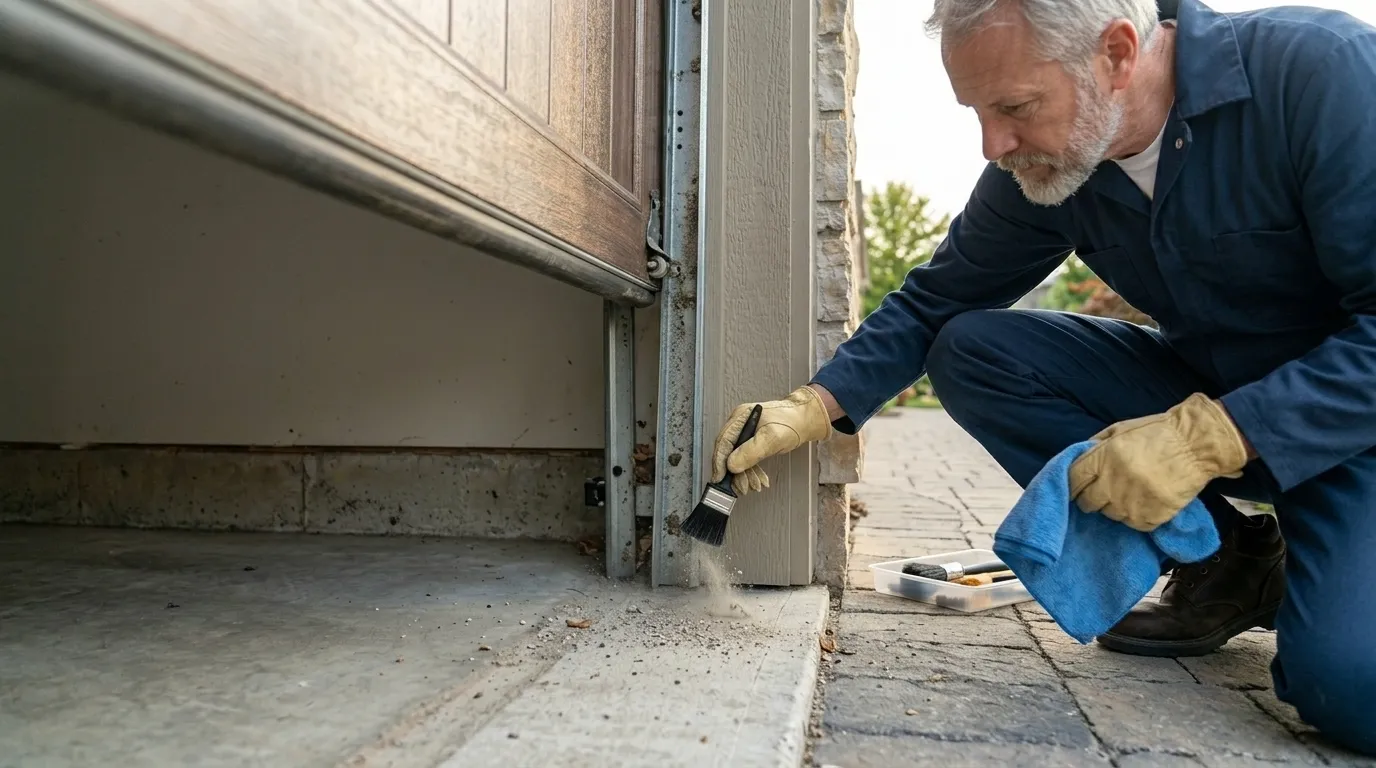
We also check the horizontal track angle where it ties into the header. On a door this age, that joint is bolted, not welded, and bolts loosen over years of vibration - that's often the root cause under a track that looks fine everywhere else.
How It Shows Up
The most common sign is a door that stutters partway through its cycle, or one that visibly leans to one side as it opens. You might hear a grinding or scraping sound instead of the usual roll, or see a gap between the roller and the track on one edge. Sometimes the door stops entirely and the opener strains against it - that's the opener trying to pull a door that physically can't travel any farther.
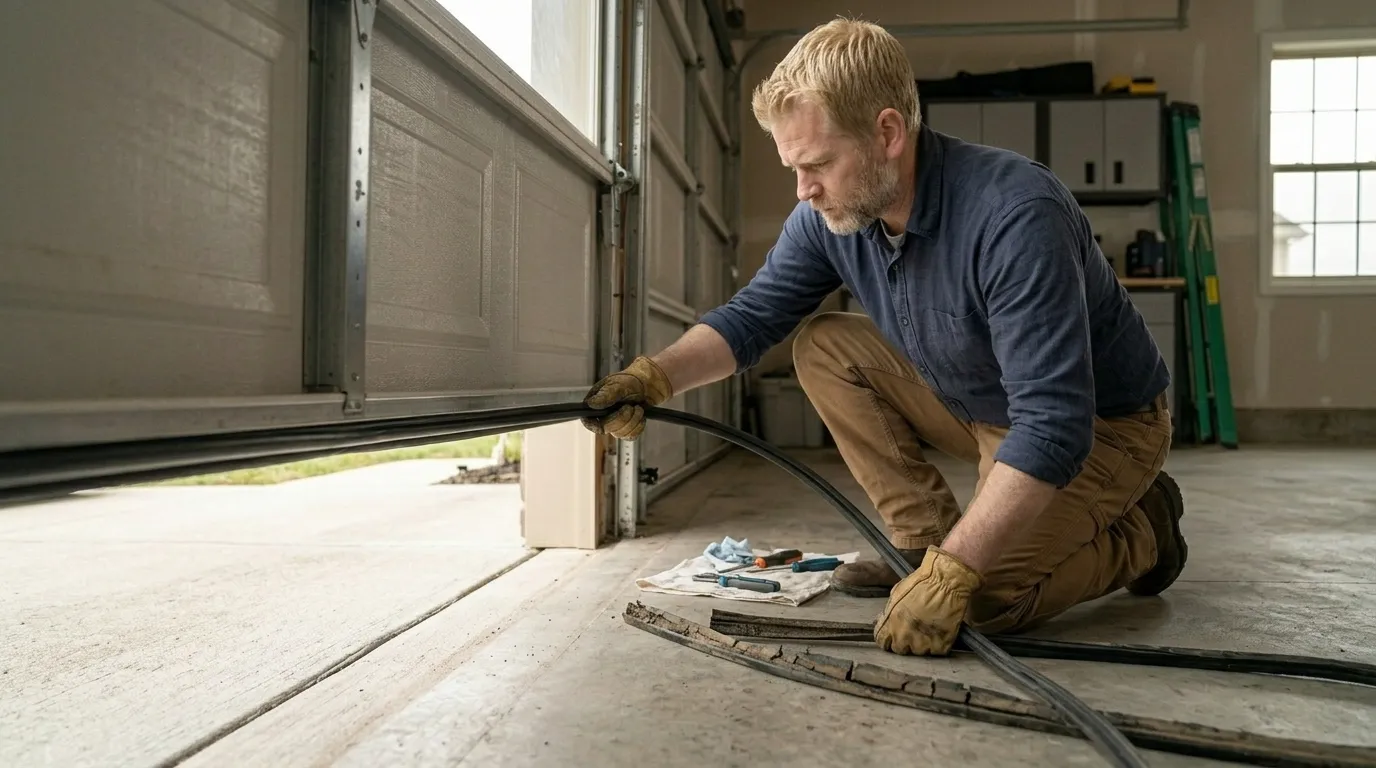
On a lighter note, some homeowners only notice it when the door won't close all the way and leaves a gap at the bottom, which lets in weather and pests. If you catch it early - a slight wobble, a new noise - the fix is smaller. Wait until the door binds hard against the track and you risk bending the rail itself, which turns a roller job into a track replacement.
What Causes It Around Here
The area sits in a mild climate band with occasional freeze, which is gentler on hardware than a hard freeze-thaw region, but it's not zero stress. Track brackets on 1993-vintage installs are bolted into wood framing, and years of humidity swings loosen those bolts gradually rather than all at once - you get a track that's a few degrees out of true long before it fails outright.
The other common cause is simple impact: something hits the door from inside or outside, knocking a roller loose. On homes built around this era, tracks are lighter-gauge steel than what you'd find on a heavier commercial-style door, so a solid bump - a car bumper, a dropped ladder - can bend the rail enough to pop the roller free. We see this more on doors that get bumped occasionally rather than ones that are heavily corroded, since the mild climate here doesn't rust hardware out the way harder climates do.
What It Costs
We don't have a set price to quote here, and that's honest rather than evasive - off-track repairs range from a straightforward roller reseat to a bent-track replacement, and the two aren't close in cost. What we can tell you: at this area's median household income of $45,898, noticeably below the $60,922 median across the wider Daphne service area, we get asked more often here whether a repair or a replacement makes more sense, and that's a fair question to ask before we start.
Generally, a simple off-track fix with no bent metal is the cheapest call we make. Bent track, bent panel, or a spring that let go at the same time pushes the job up. We'll tell you on-site which category yours falls into before doing anything.