What It Costs
The number that actually drives your bill isn't distance, it's what's behind the dent. Loxley's median build year sits around 2007, which puts most of these houses at the newer end of the region's 1963-2007 range. That means you're mostly looking at factory-finished steel sectional doors with a polystyrene or polyurethane core, not the bare steel or old wood panels you'd find in a house from the 1970s.
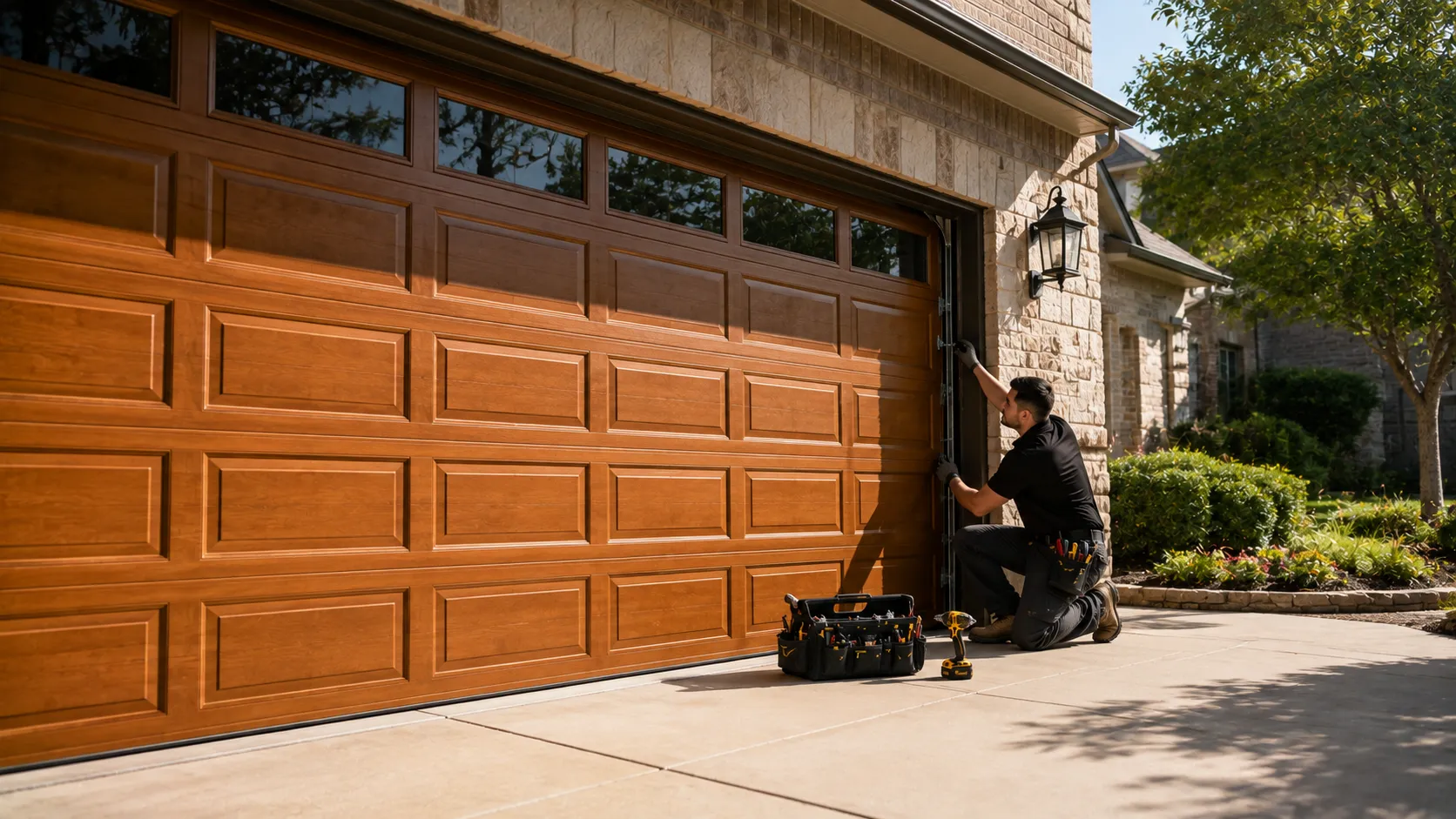
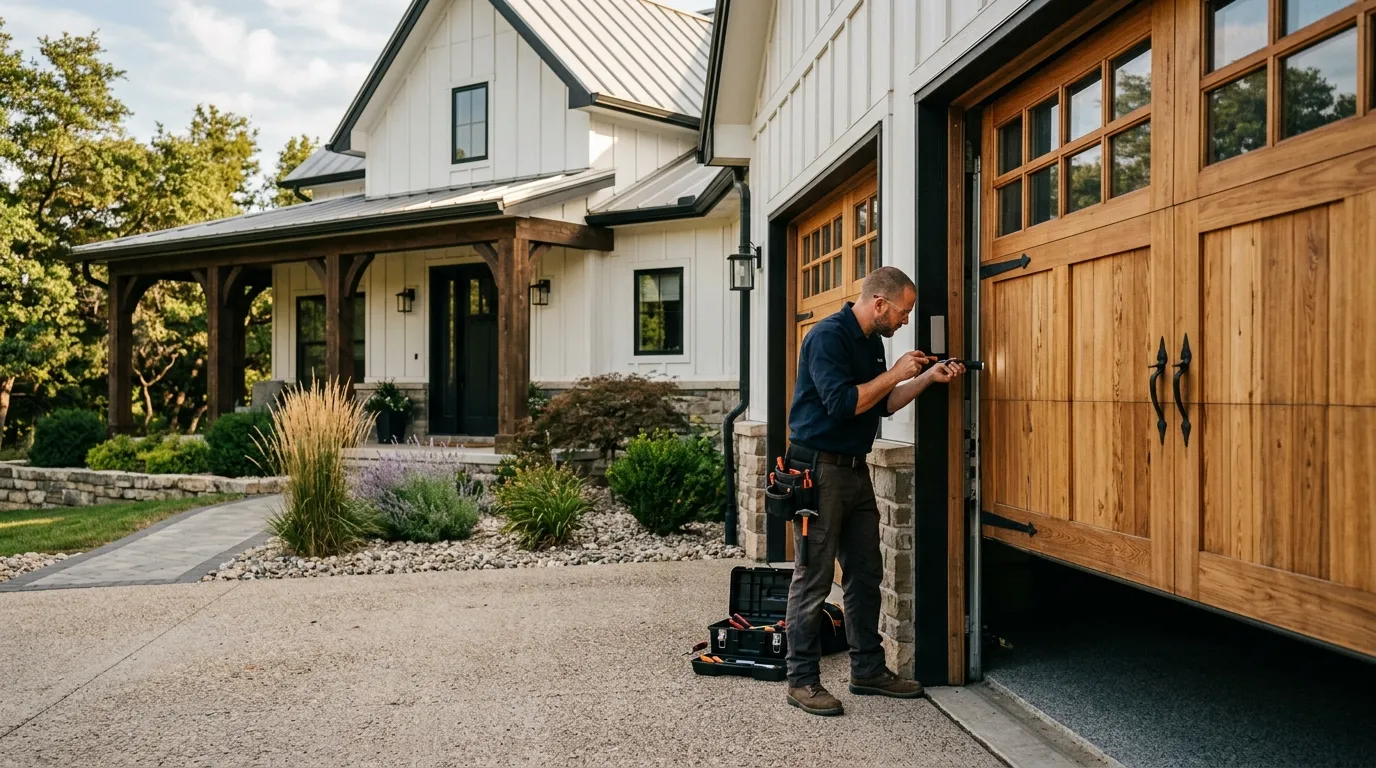
A single dented panel on a door that age is usually a straight swap - we order the matching panel from the manufacturer's current line and set it, because these doors are recent enough that the model numbers and panel widths are still in production. That's the easy case. The harder one is a door where the finish or the panel profile has been discontinued even though the door is only fifteen or so years old - some manufacturers retire a look faster than the door wears out. When that happens, matching one panel isn't always possible and you're choosing between a mismatched panel or replacing the full door. We'll tell you straight which one you're in before we order anything.
We don't have a Loxley-specific price list - the job is priced the same way any panel job is, off the door's make, panel count, and whether insulation and hardware come with it. What we can tell you is that we're driving the 9 miles out from Daphne for it, same as any other stop in the coverage area, not billing extra for a local depot we don't have out there.
Can You Do This Yourself
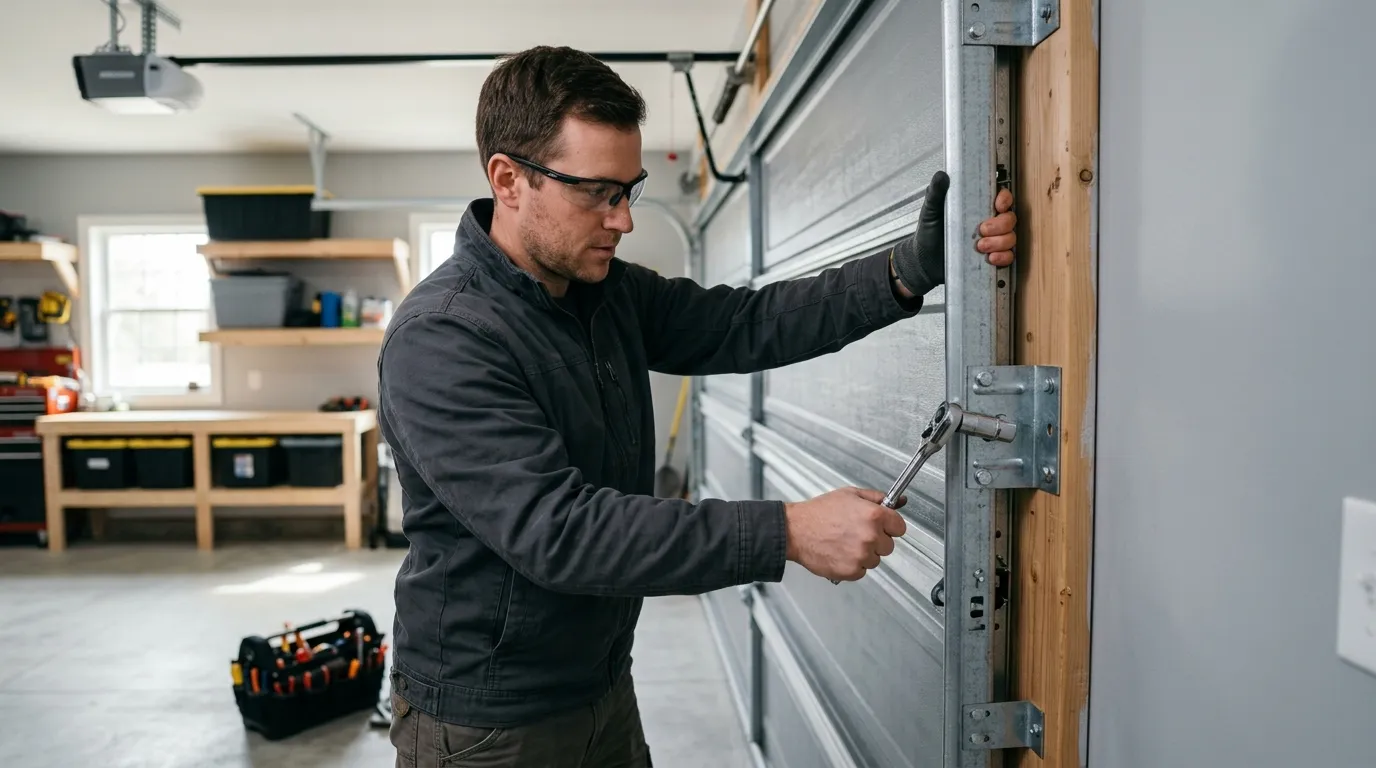
If your door is a standard-width steel sectional from the 2000s, a single panel is one of the more DIY-friendly garage door repairs, provided the damage is one panel and the track and rollers are still true. You unbolt the hinges on either side of the damaged section, slide it out, and bolt in the replacement, keeping the door supported the whole time so the section above doesn't drop on you.
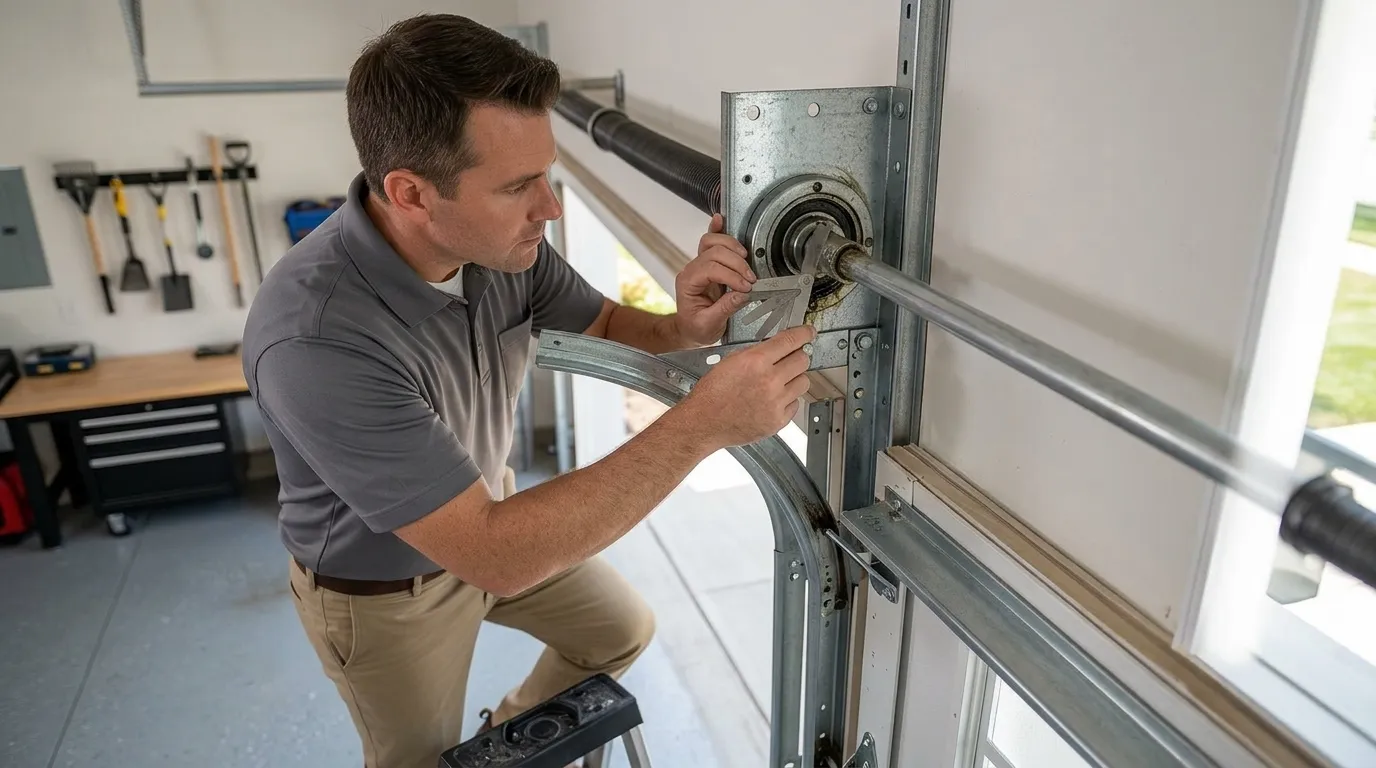
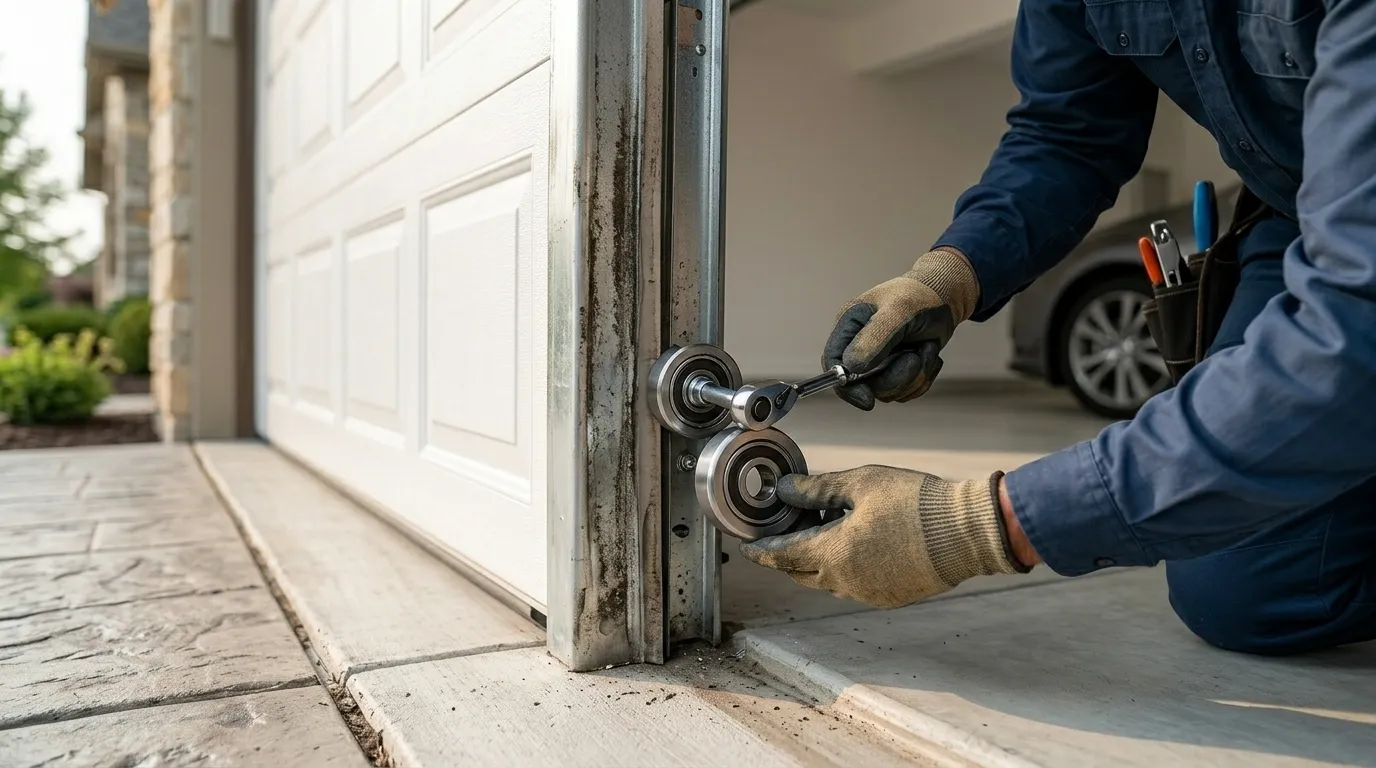
Where this goes wrong for homeowners is torque. A sectional door under spring tension isn't like swapping a car panel - the springs are still loaded even with the door down, and pulling the wrong bolt with the door mid-cycle is how people get hurt. If your panel damage came with any bend to the track or a bowed section, stop there. A door that age with the right hardware can usually be pulled back into square, but forcing a bent track back with the door still under tension is a good way to turn a panel job into a full door replacement.
What Can Go Wrong
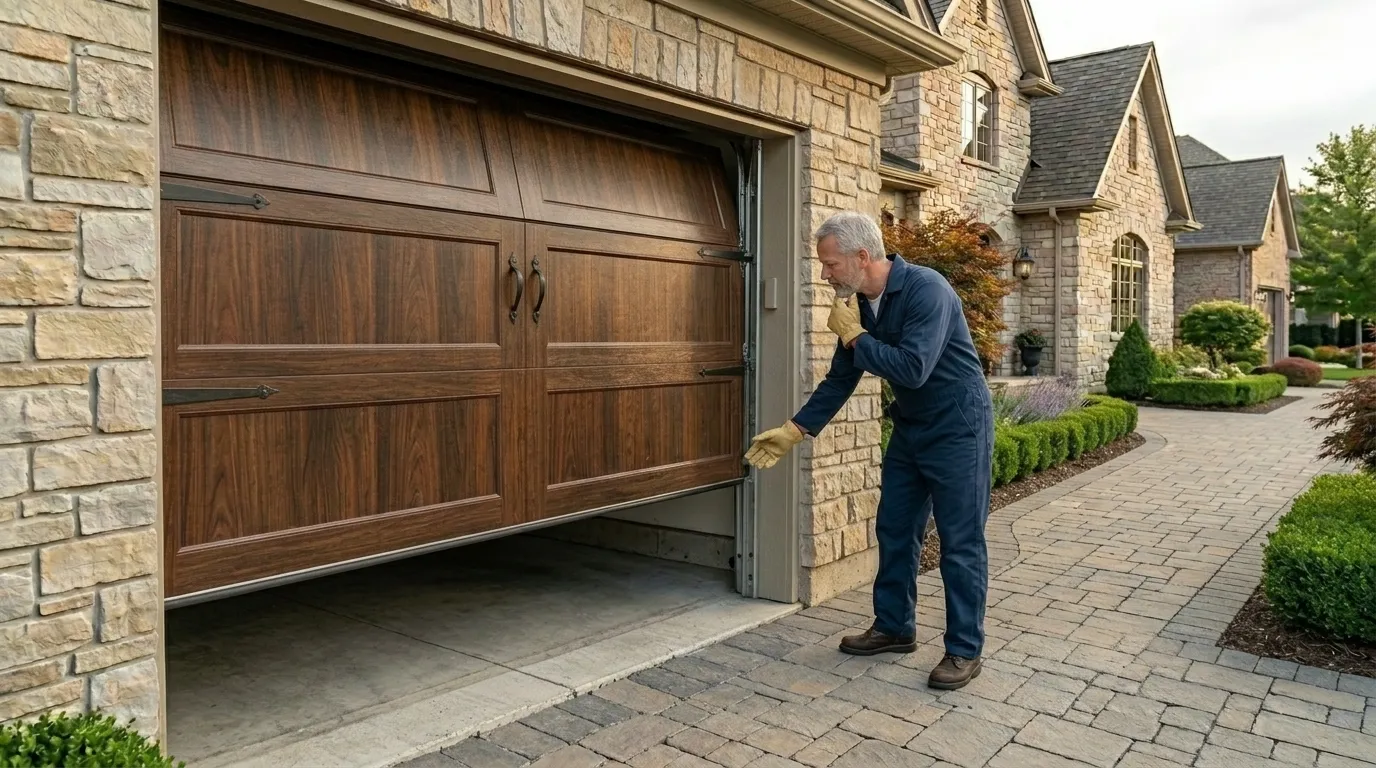
The most common fault we see on doors from this era isn't rust or rot - the housing stock is too young for that - it's impact damage: a car bumper, a trailer hitch, a basketball, something that catches one panel square and dents or creases it without touching the ones next to it. Because the mild climate here runs with only occasional freeze, panels aren't fighting the swelling and warping you'd see in a harsher band, so a clean panel swap tends to stay clean.
The complication shows up when the impact was hard enough to rack the door slightly in its frame - the new panel goes in fine but the door doesn't travel straight afterward because the track picked up a bend nobody noticed. Another one worth naming honestly: if a door has been repainted or the finish has weathered unevenly since it went in, a brand-new replacement panel from the factory almost never matches the color exactly. We'll say that before we order the part, not after it's on the door.