What It Costs
Loxley skews newer than most of the towns we cover out of Daphne - the median year built here runs around 2007, a good seventeen years past the 1990 median across the wider service area. That matters for pricing because newer construction usually means the door opening is already framed to standard height, the electrical is already run to the ceiling near the header, and there's no old wood jamb to shim or reinforce. You're not paying for extra bracket work or a header repair before the opener even goes up. What you are paying for is the unit itself, the rail length for your door size, and whether you want a chain, belt, or direct-drive. We don't have a Loxley-specific price list - pricing runs off the same sheet we use across the service area, and it depends on horsepower, drive type, and whether the old opener needs to come down first. A homeowner here with a 2000s-era two-car door is a straightforward job; a converted outbuilding or a hand-built door is not, and we'll say so on the phone before we quote anything.
Can You Do This Yourself
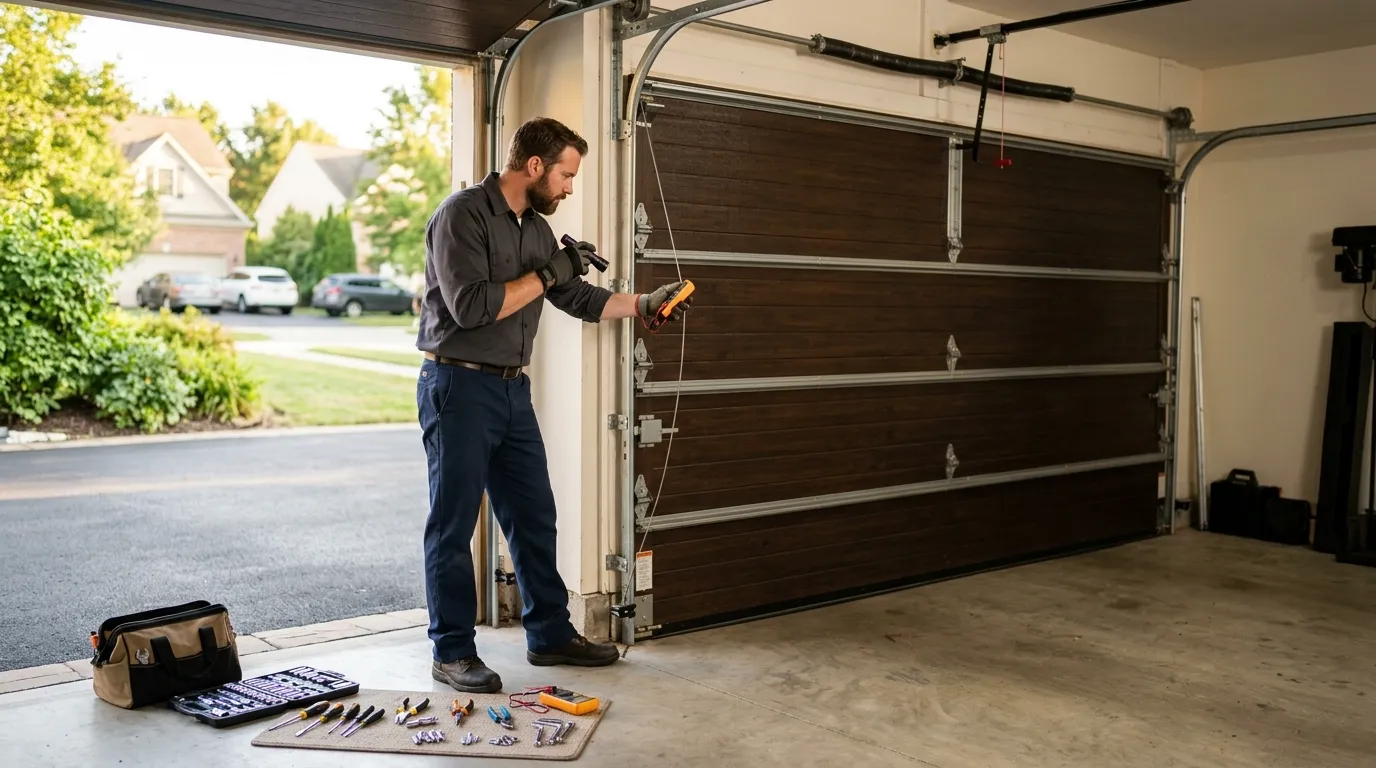
If your house was built in the 2000s, the header is almost certainly rated for a standard bracket mount and the outlet is usually already in the right spot - so the mechanical part of a DIY install is easier here than in an older Daphne-area home. What trips people up isn't the bracket, it's the safety sensors. They have to sit low, aim at each other exactly, and the door has to reverse before it touches the floor - code requires that, and a lot of box-store installs skip the alignment check. If you're comfortable on a ladder, reading a wiring diagram, and testing force settings with a piece of wood on the floor, you can do this. If the existing rail is bent, the old motor is hard-wired instead of plugged in, or you're not sure the door itself is balanced first, that's where we'd tell you to stop and call - a new opener bolted to a door with a bad spring just breaks the new opener.
What Can Go Wrong
The newer housing stock in Loxley cuts down on a lot of the problems we see on older doors elsewhere in the coverage area - rotted jambs, undersized headers, brittle wiring. But newer doesn't mean nothing goes wrong. The most common issue we run into on 2000s-era builds is a door that was never balanced right from the original build-out, so the new opener strains against a spring that's already fighting gravity. An opener will run for a while on an unbalanced door before it burns out the gears or drops the door partway. The other issue is DIY force-setting: a lot of homeowners set the down-force too high to compensate for a stiff door instead of fixing the door, which is a safety problem, not a convenience one. Our honest limit here: if the door itself is out of balance or the track is bent, we tell you that gets fixed first - installing a new opener on a bad door just moves the failure point, it doesn't remove it.