What It Costs
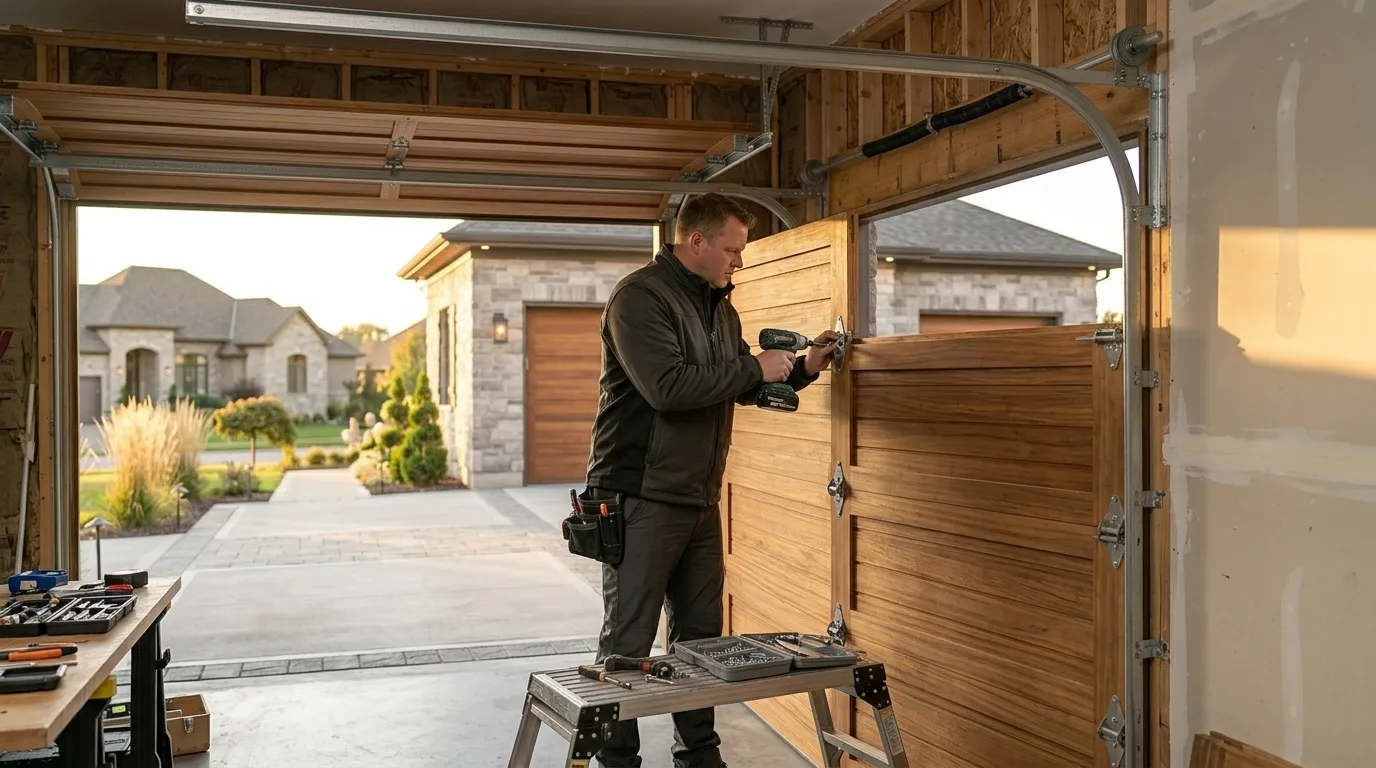
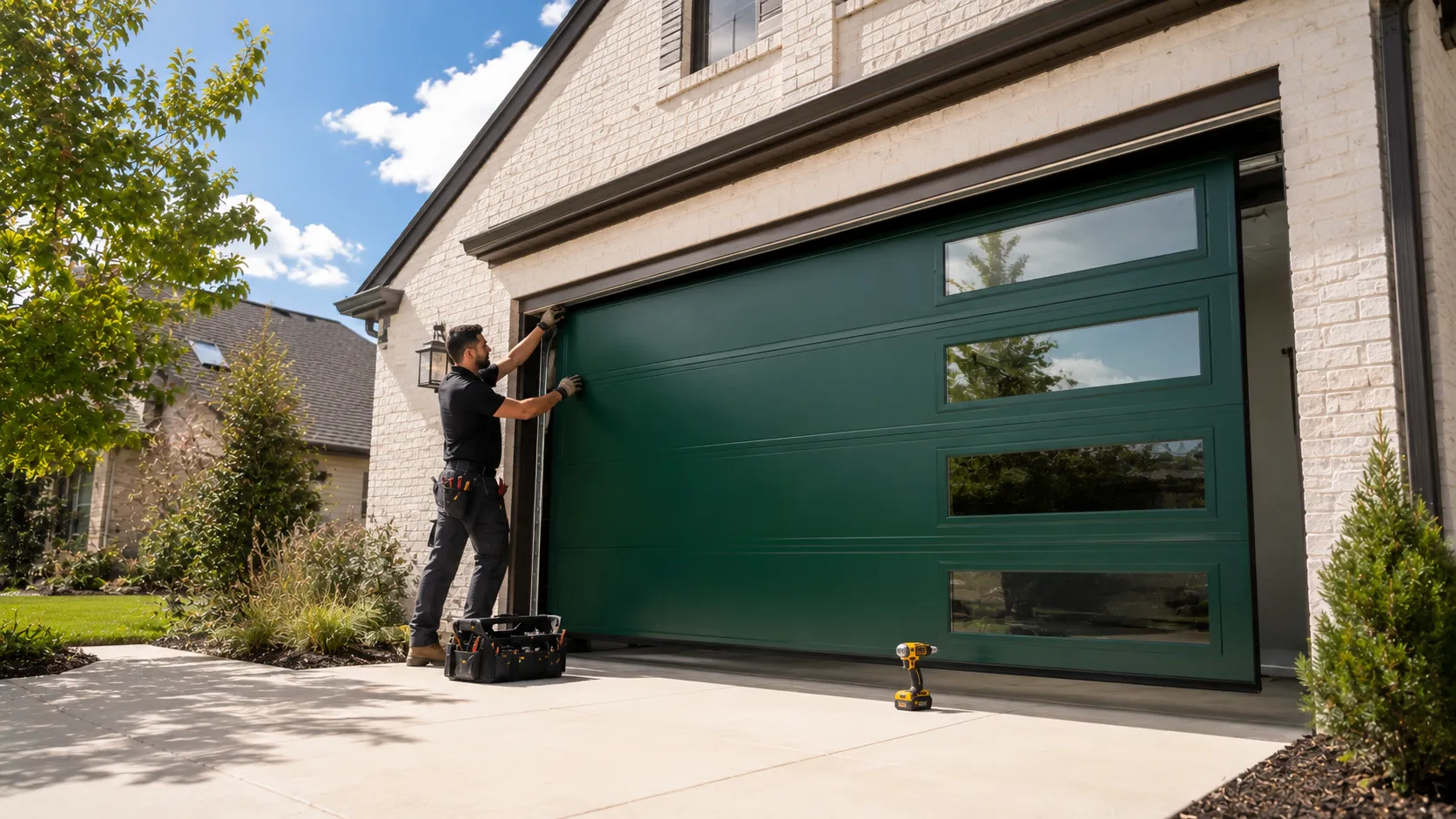
Loxley's housing stock skews newer than most of the towns we cover out of Daphne - the median build year here lands around 2007, a couple decades past the 1963-2007 range you'll find across the wider service area. That matters for cost because a 2007-era door is almost always a factory sectional steel panel on torsion springs, not the older extension-spring setups we still see in towns with 1980s and 90s stock. Torsion spring jobs and steel panel repairs have their own parts costs, and those parts are still in production, so you're not paying a premium for something obsolete.
What we can't do is quote a number without seeing the door. Spring size, panel count, and whether the opener is original all move the price. A single broken torsion spring on a standard double door is a different job than a bent track or a header sensor failure, and Loxley's newer builds tend to have the rolling-code openers and photo-eye sensors that came standard by the early 2000s - which usually means fewer of the odd, discontinued-part surprises that show up in older housing stock nearby. We'll give you a firm number on site, not over the phone.
We travel from Daphne, about 9 miles out, and that trip doesn't add a surprise line item to your invoice - it's already folded into how we price the call.
Can You Do This Yourself
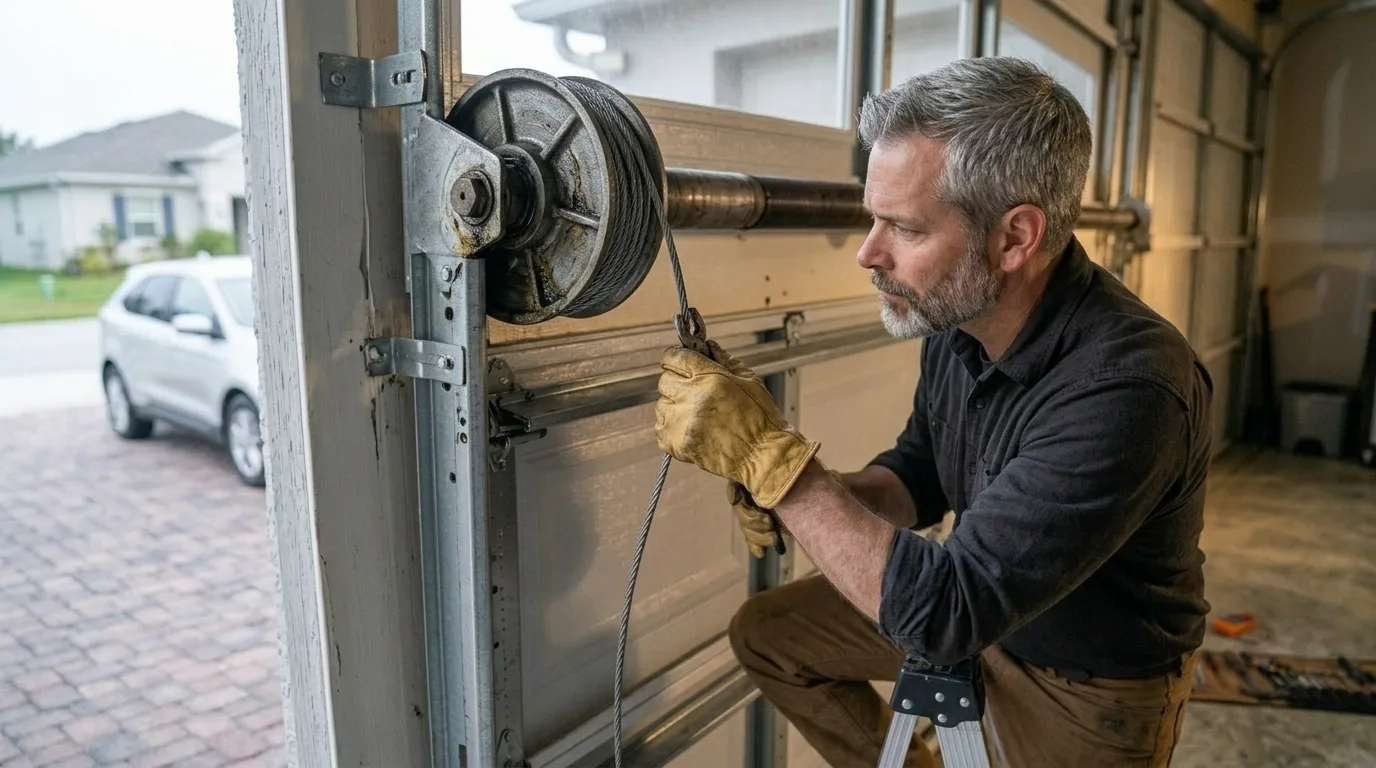
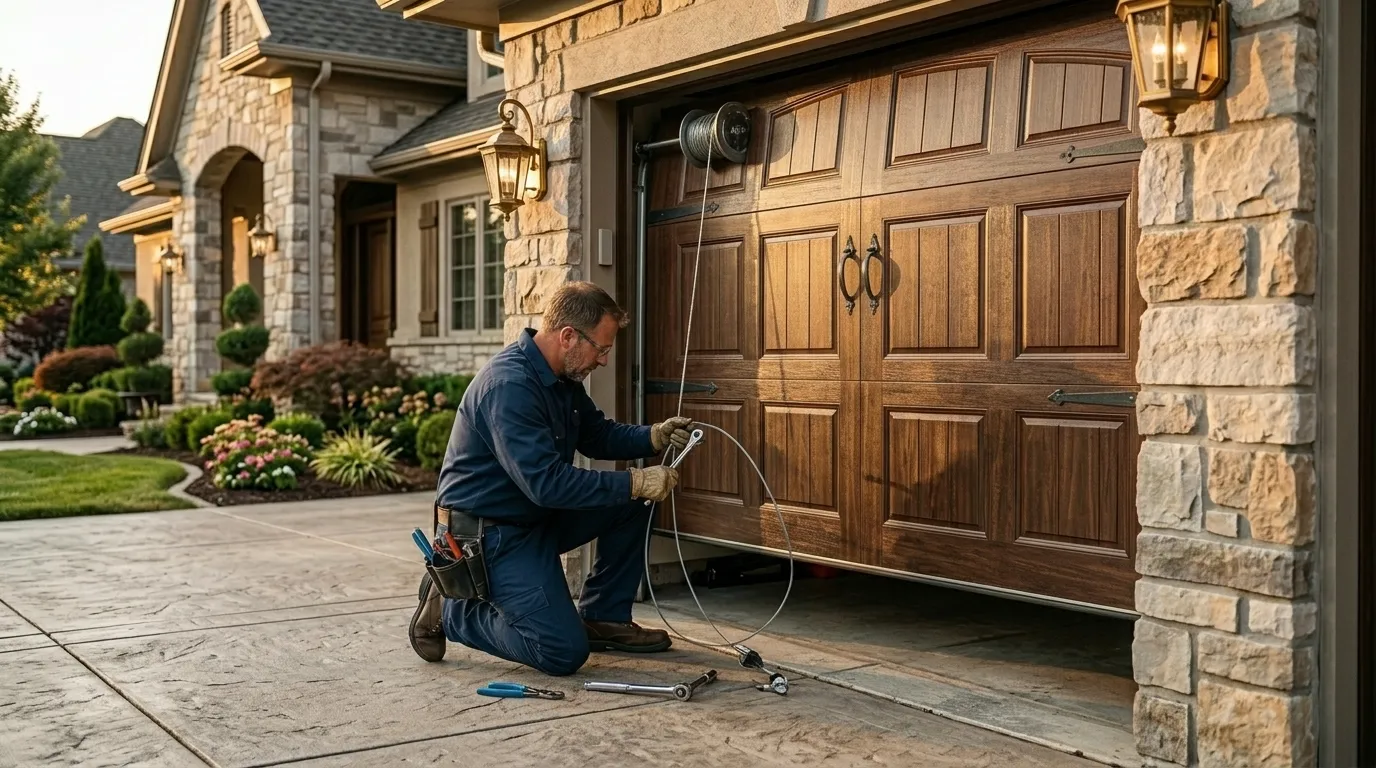
With a 2007-median build year, most Loxley garage doors are still running original or first-replacement torsion spring systems and mid-2000s chain or belt-drive openers. Torsion springs are wound under real tension and they are not a DIY repair - the injuries from a spring that lets go while you're adjusting it are serious, and this isn't a job we'll walk you through over the phone.
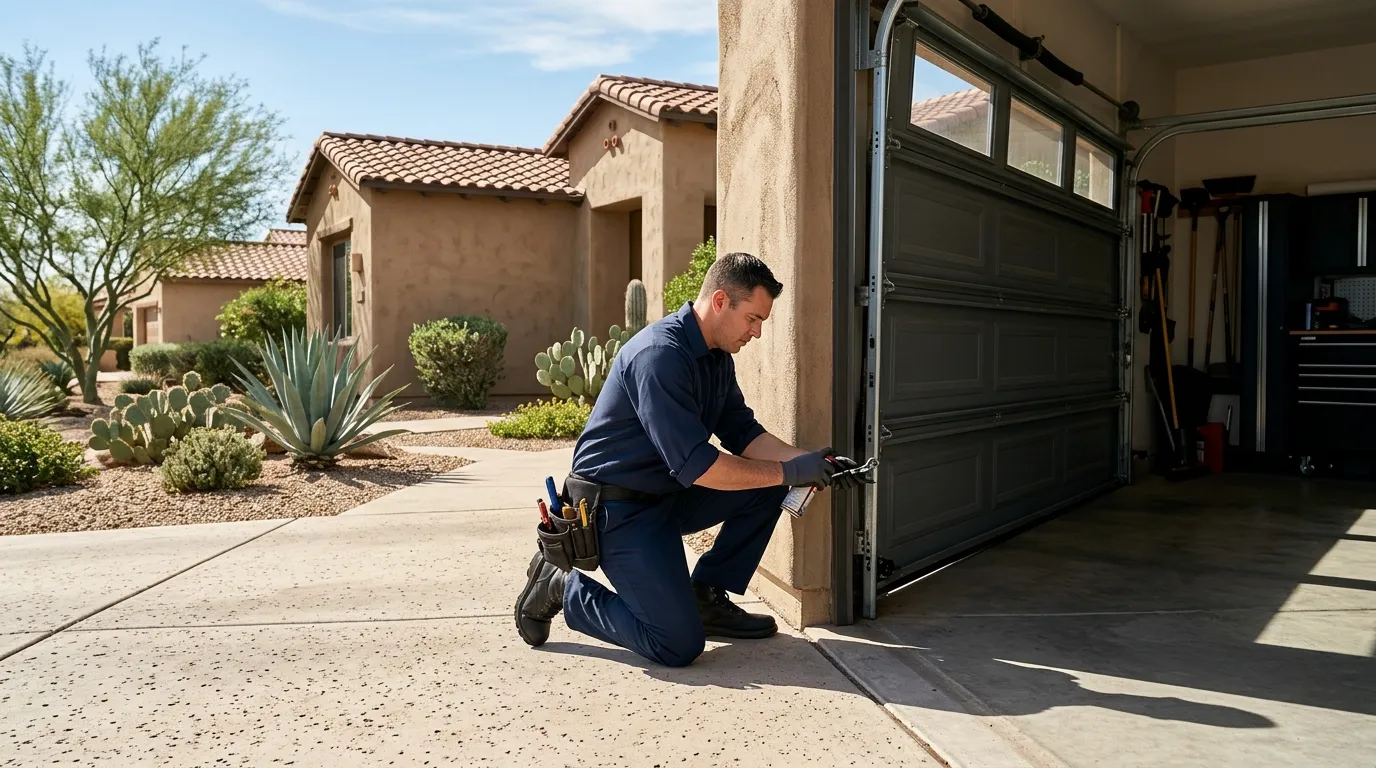
What you can handle yourself: tightening loose hardware on tracks and hinges, lubricating rollers, replacing worn weatherstripping at the bottom of the door, and testing the photo-eye sensors by wiping the lenses clean. If your opener's remote stopped working, check the batteries before you call anyone - it sounds obvious, but it's the most common no-charge fix we run into.
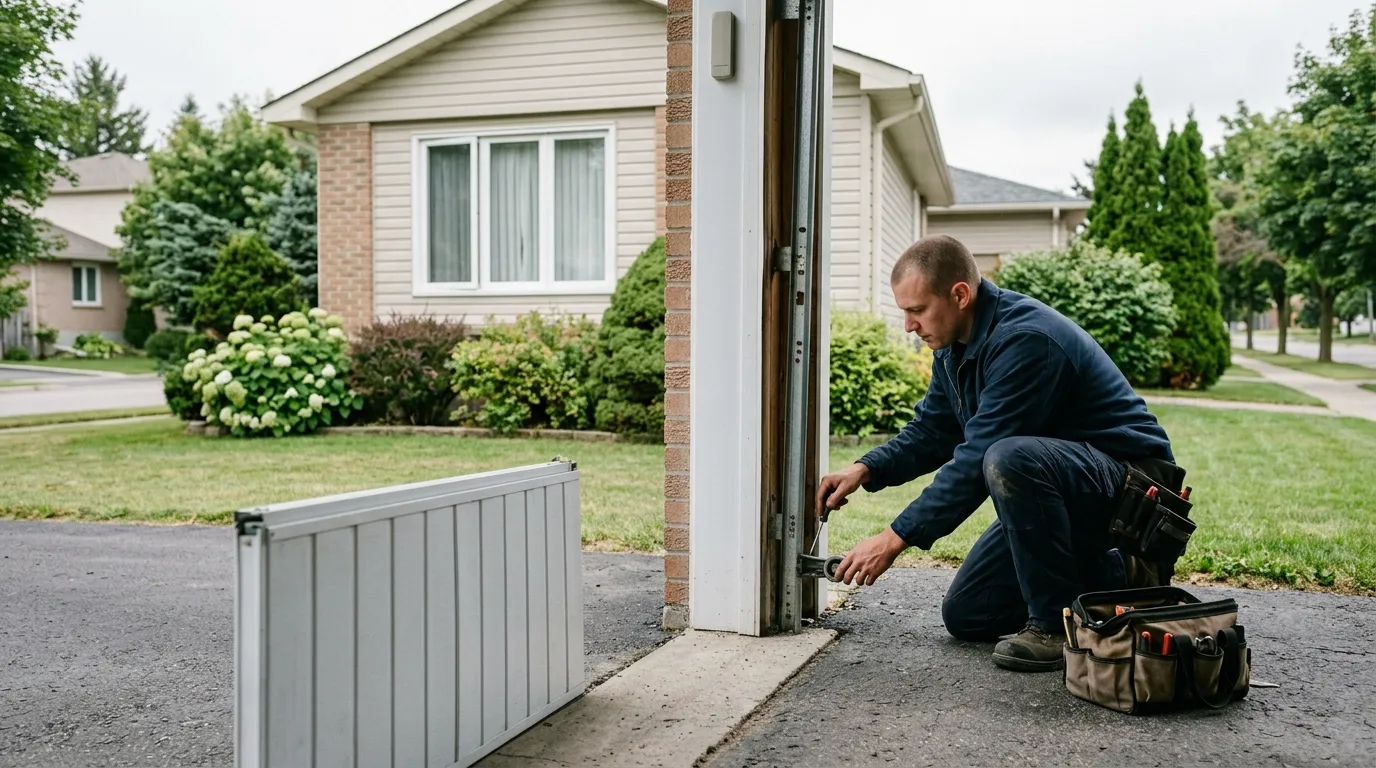
What you shouldn't touch: springs, cables under tension, and anything involving the torsion bar over the door. If a panel is dented or the door is off its track, leave it alone until someone looks at it - trying to force a door back onto bent track usually turns a repair into a full-track replacement.
What Can Go Wrong
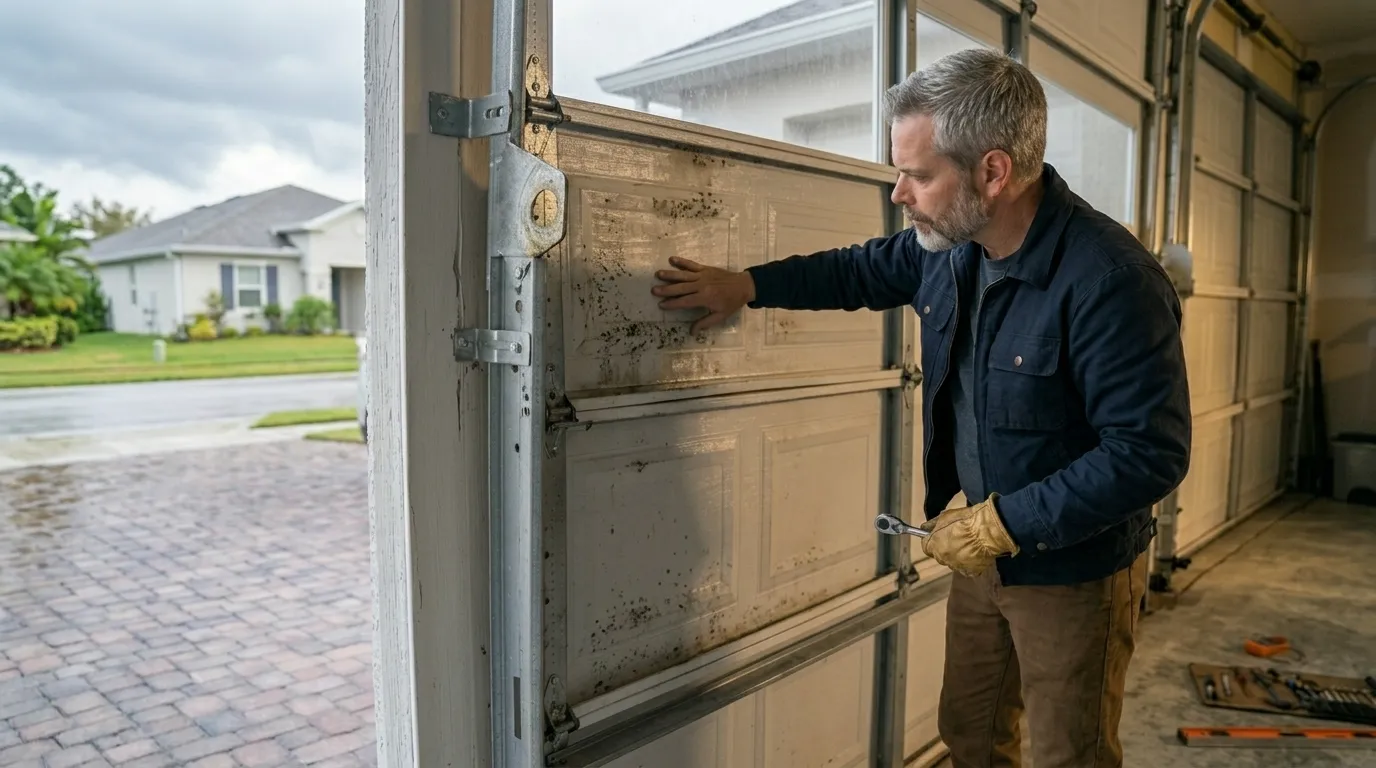
The Gulf Coast climate band here runs mild with occasional freeze, which is easier on hardware than a hard winter but not maintenance-free. Humidity and coastal air still work on unprotected steel and on spring coils that don't get lubricated, and doors that sit closed for long stretches (a second garage, a workshop bay) are the ones we find seized up or rusted at the hinges when someone finally opens them.
Because Loxley's stock is newer - 2007 median versus the 1963-2007 spread across the wider area - the failures we see less of here are the ones tied to old extension-spring setups and pre-1993 openers without safety sensors. What we see more of are opener board failures, worn drive belts, and photo-eye sensors knocked out of alignment, which is typical for a fleet of doors in their second decade.
One limitation worth saying plainly: if a door's springs, opener, and tracks are all near end of life at once, patching one part often isn't worth it. Past a certain point, replacing the whole door and opener together costs less over time than repairing piece by piece, and we'll tell you when a job has hit that line instead of running up a repair bill on a door that's done.