How Local Conditions Play In
Daphne's housing stock runs from 1963 to 2007, with the median build year landing right around 1990. Across the fourteen named areas that make up this service territory, most of what went up came out of that 1980s-90s wave of construction. That matters because doors and openers from that era share a lot of the same bones: steel sectional panels, extension-spring setups on some of the earlier builds, torsion conversions on the later ones, and openers that were state-of-the-art for 1988 but are long past parts support now.
The climate here is mild with occasional freeze, not the kind of swing that cracks concrete slabs or seizes hardware overnight. That's a point in your favor. A door built in 1985 in a place with hard winters would likely have rusted-through tracks and pitted springs by now. Here, the same door often has clean hardware under a layer of dust and pollen, just worn from three decades of cycles rather than corroded from weather. That difference is the whole reason age alone doesn't tell you whether a door is done - it tells you what to look for, and where.
What to Check
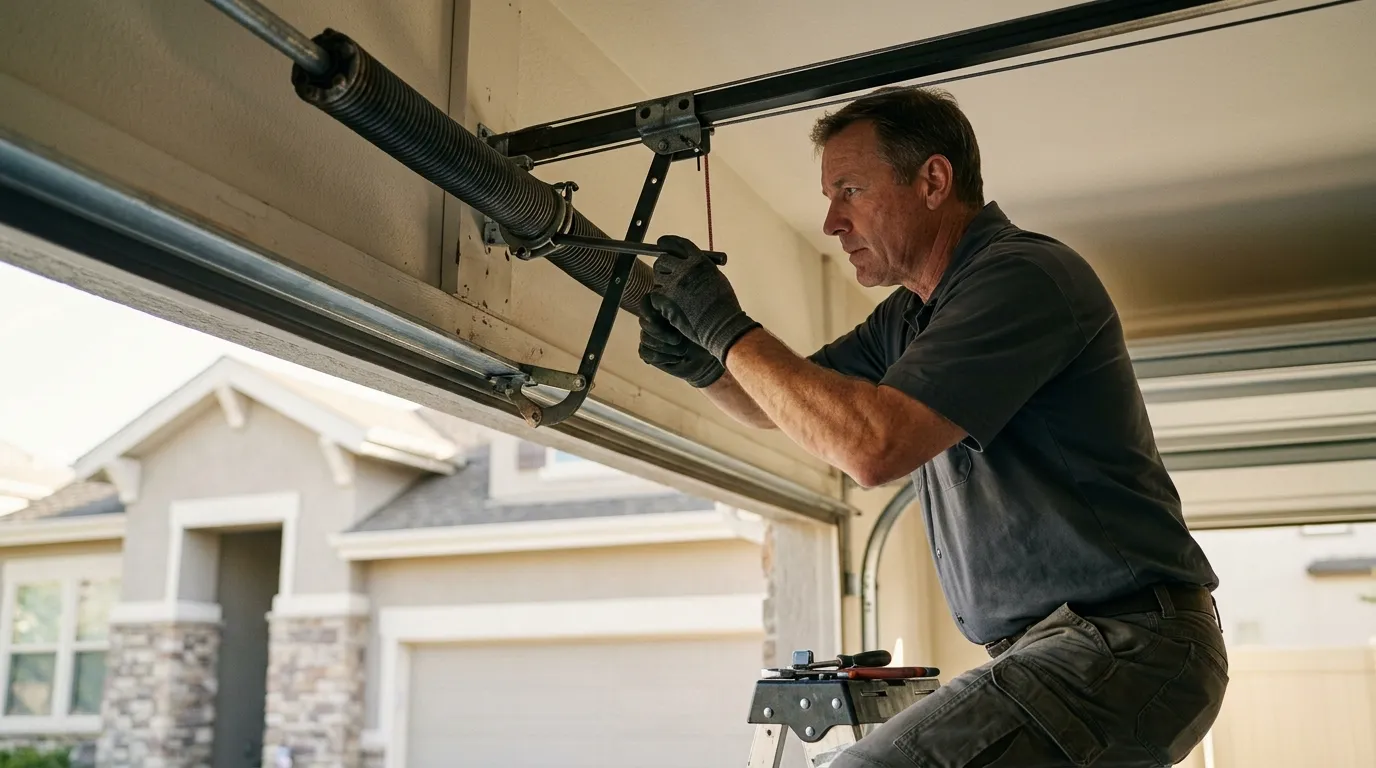
Start with the springs. If your house was built in the 1980s or 90s window that covers most of this area, there's a decent chance you're on the original torsion spring or a first replacement, and springs have a cycle life that doesn't care how mild the weather's been. Look for a visible gap in the coil, which means it's already broken and the opener has been doing the spring's job.
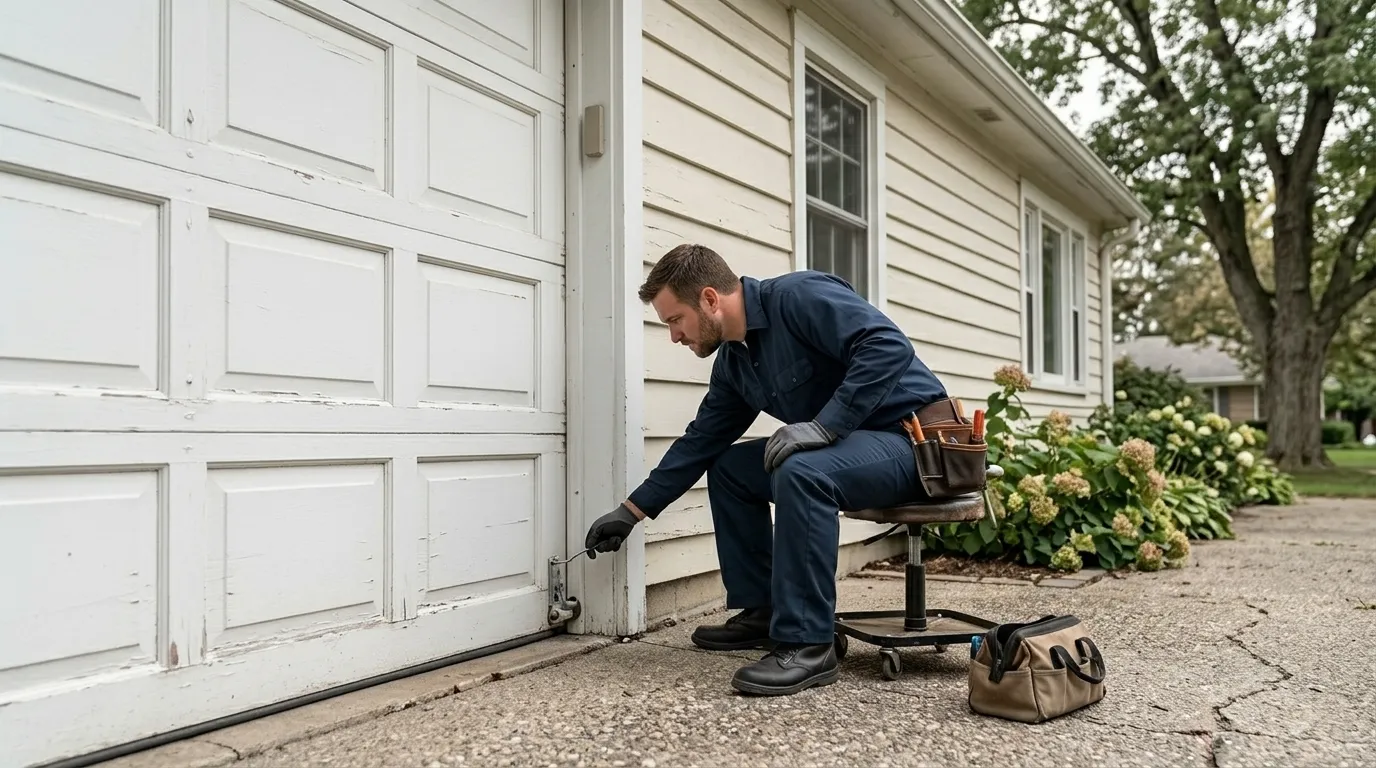
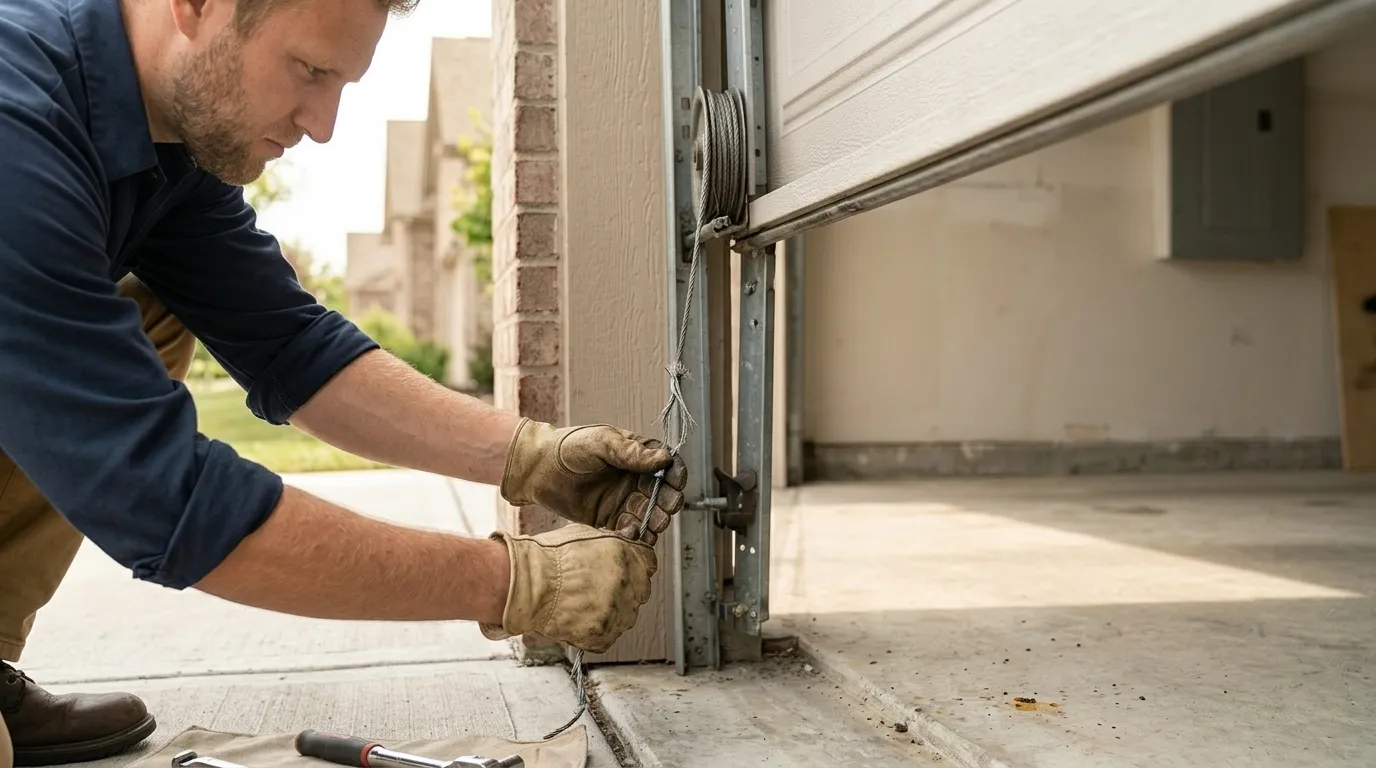
Next, the track and rollers. On houses from that era, steel rollers were standard, not the nylon ones sold today. Steel rollers wear the track itself, so if you see grooving or the door rattles hard going up, that's the track and rollers wearing together, not just one part failing.
Check the panels for rust at the bottom seam. Mild, some-freeze climates don't push rust the way harder winters do, so if you're seeing real corrosion on a Daphne door, it usually means water's been sitting - a drainage or grading issue, not just age.
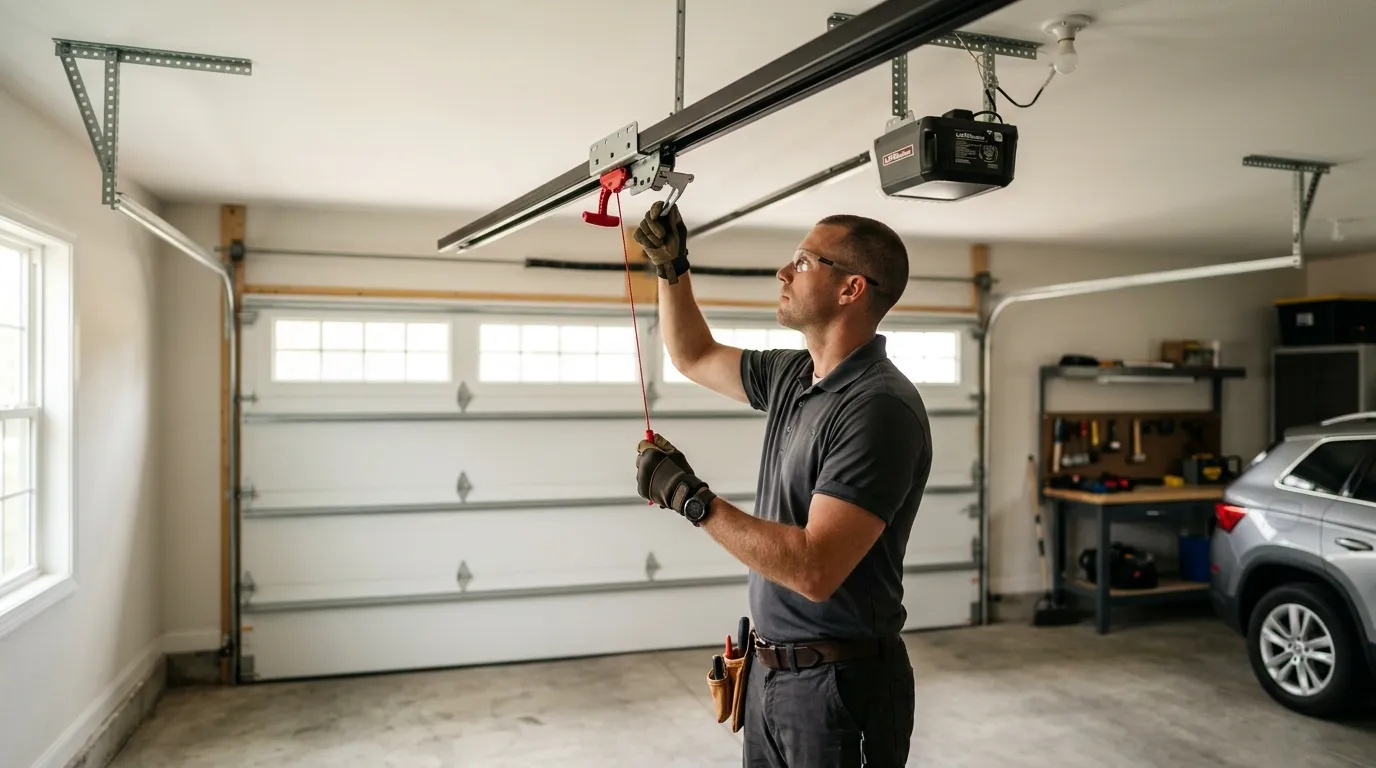
Last, the opener's logic board and motor. If it's original to a 1990s build, the gears are almost certainly plastic and worn thin by now.
When to Get Help
If the door won't move and you hear a hum from the opener, stop trying it and call - that's almost always a broken spring under load, and forcing the opener to fight it can burn out the motor on top of the spring job you already needed.
If it's just noisy or slow, that's not an emergency. Rollers and hinges are a scheduled visit, not a same-day one, and we'll say so plainly rather than upsell it as urgent.
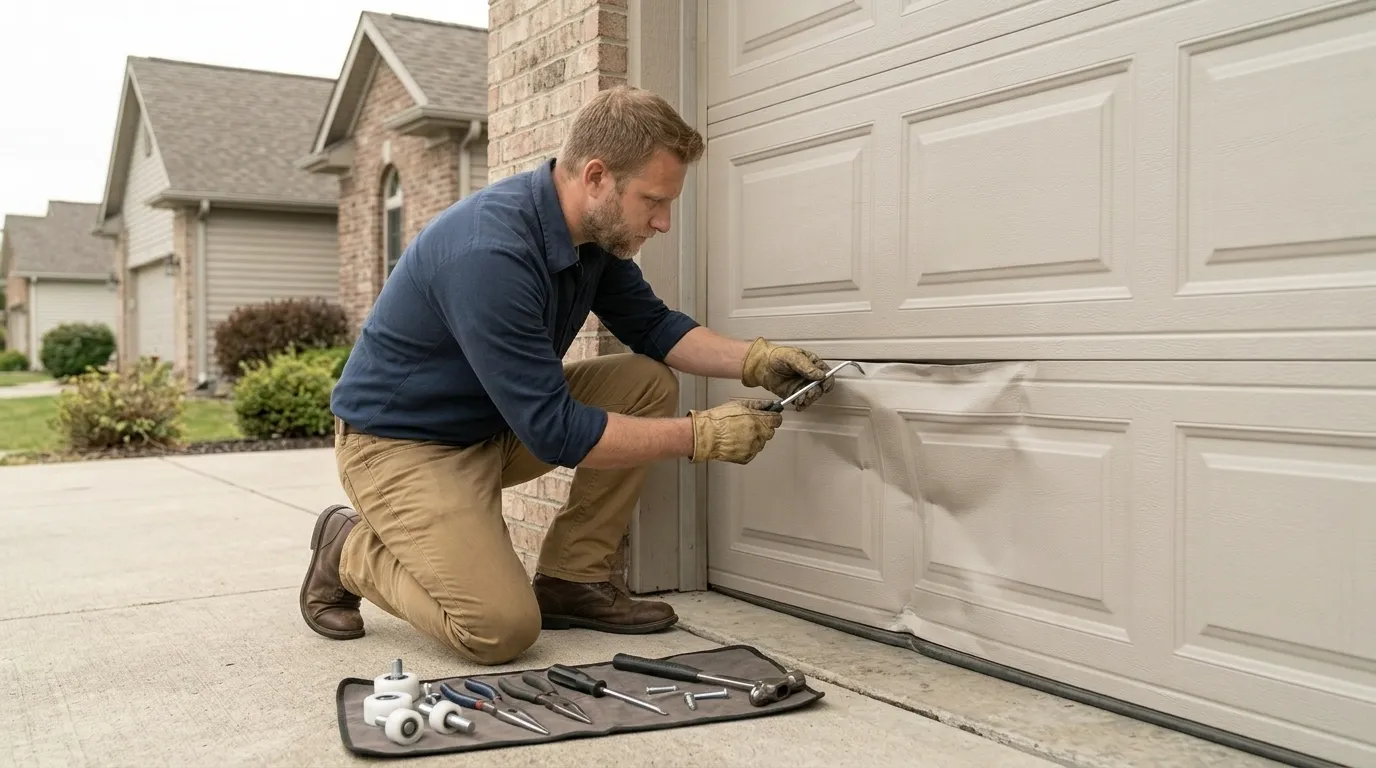
One limitation worth knowing up front: on doors from the older end of this area's build range, matching panels for a partial section replacement isn't always possible - some of those profiles aren't made anymore, and a full panel swap or new door is the honest fix, not a patch. We'll tell you that on the phone before we come out, not after.