How Local Conditions Play In
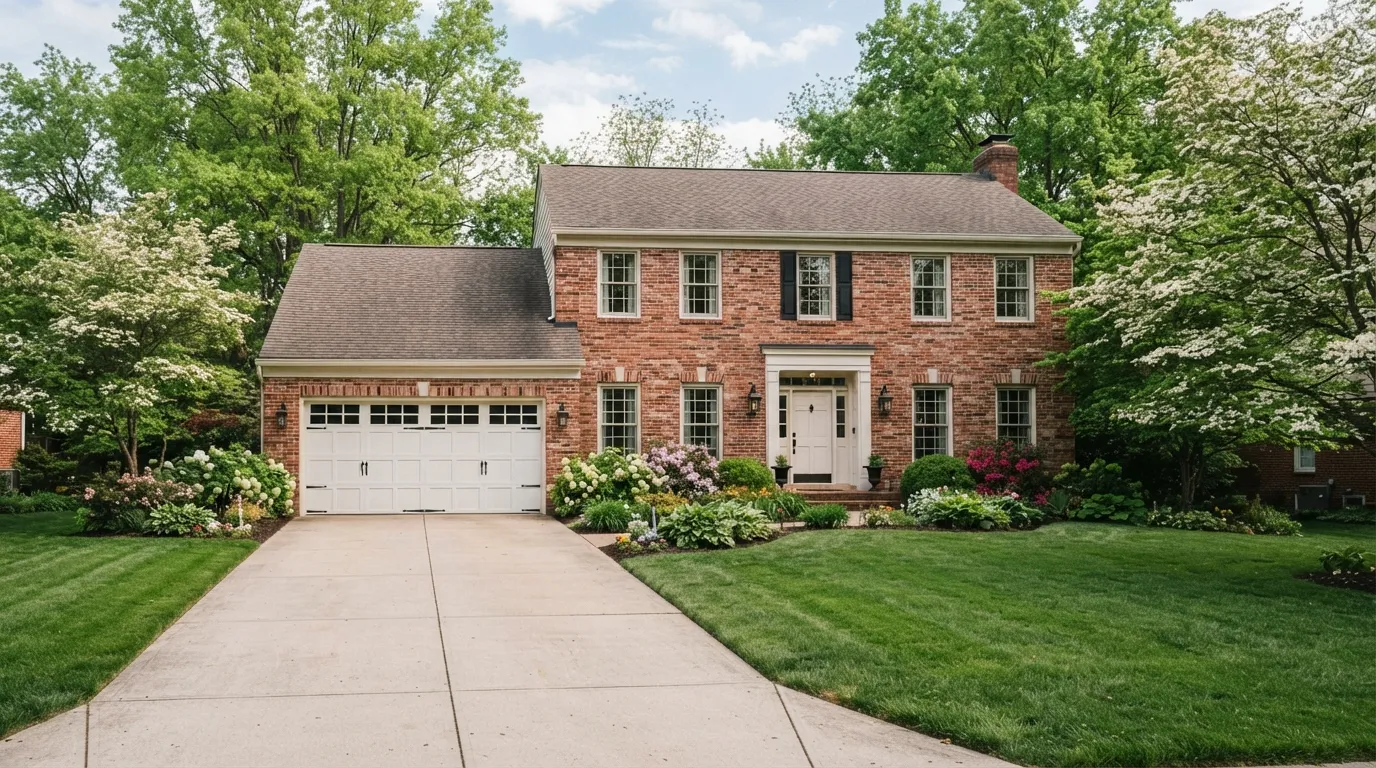
Most houses in our service area went up between 1963 and 2007, with the bulk of that stock dating to the 1980s and 90s. That matters more than people think. A door and opener installed on a house built in that window is old enough to have worn springs and gummed-up rollers, but the hardware itself is usually still the standard sizes and mounts from that era, so parts aren't hard to source.
The climate here runs mild with an occasional freeze - not the kind of winter that heaves a slab or splits a panel, but cold enough a few mornings a year to stiffen grease on tracks and rollers that sit in an unheated garage. Combine that with a house built in, say, 1988 and you get springs that were never rated for 35+ years of cycling in swings between humid summer heat and the odd cold snap. That's the pattern we see over and over across this stock, not a fluke on one street.
What to Check
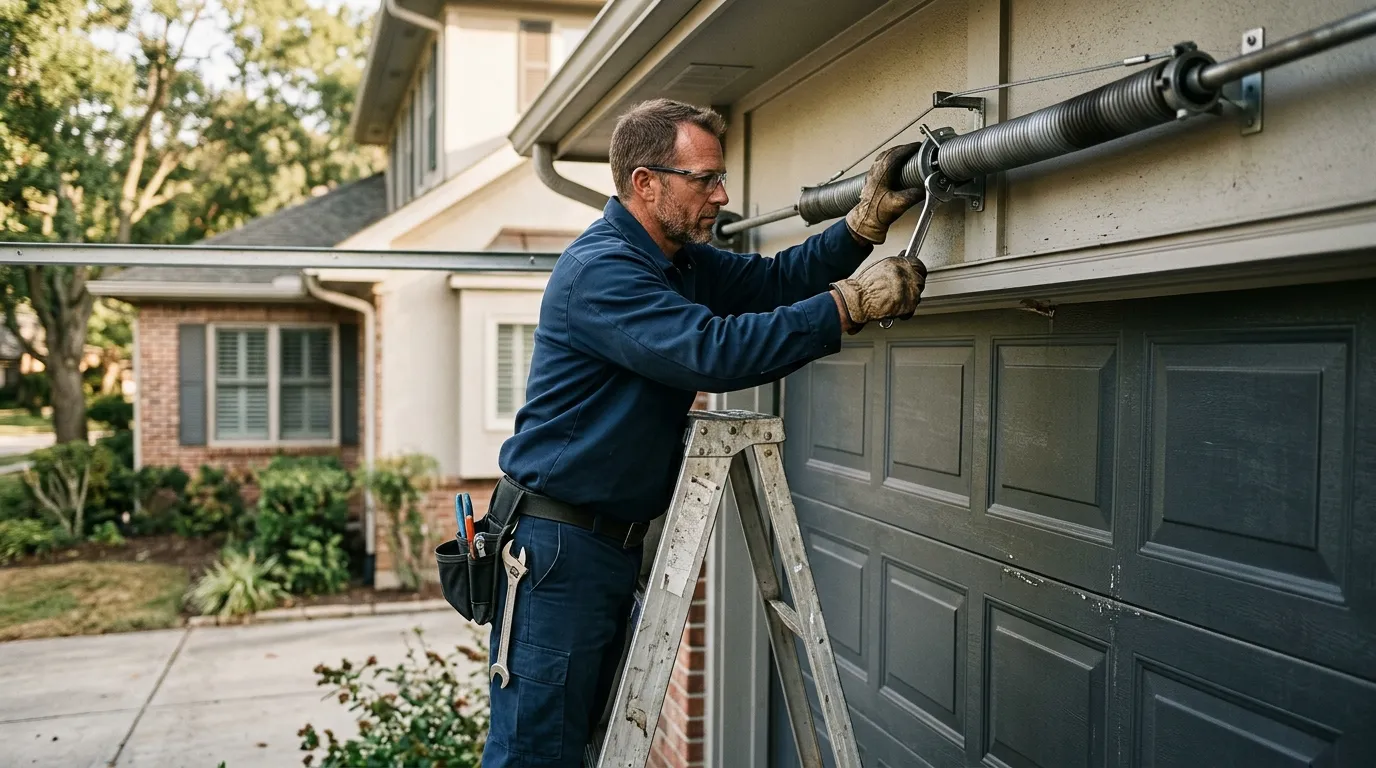
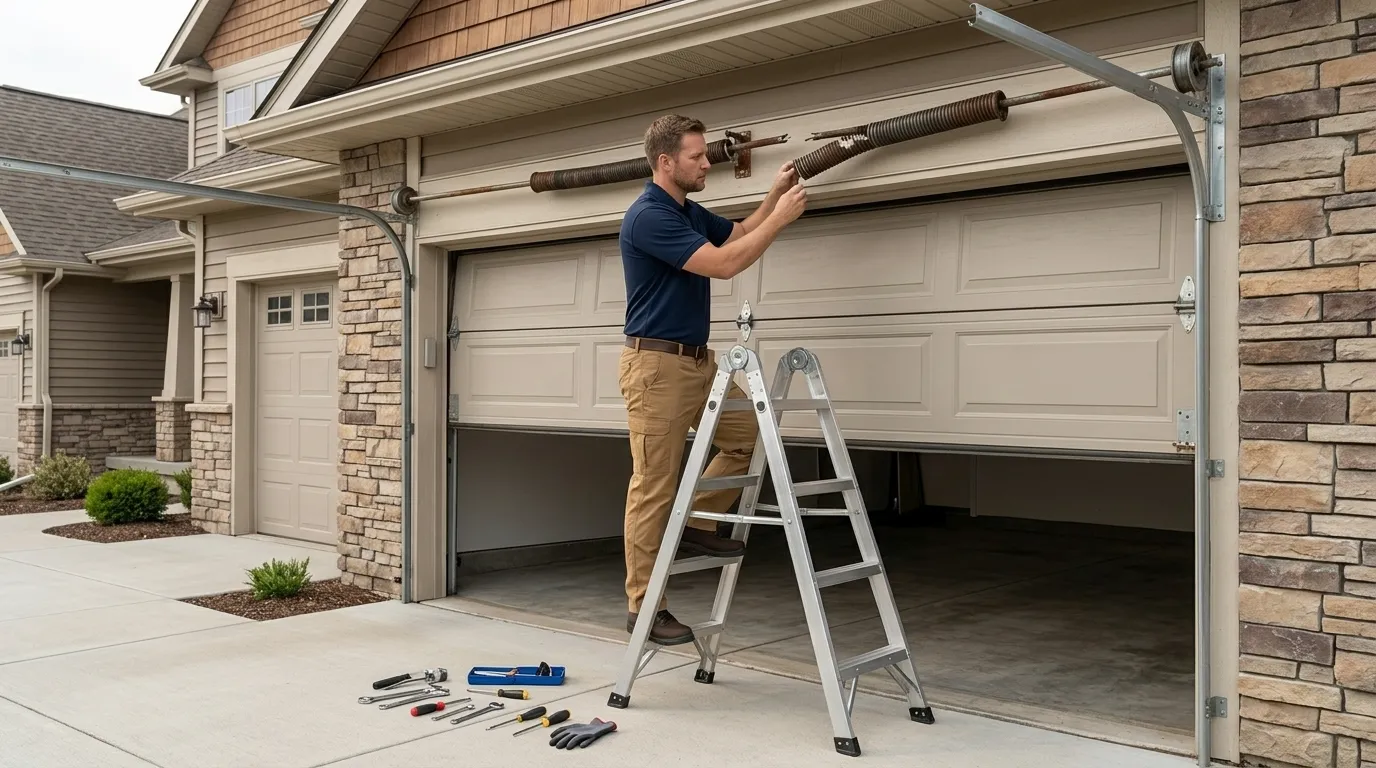
Start with the spring. On houses from this 1963-2007 build window, a torsion spring or pair of extension springs sized for the original door weight is now well past its rated cycle count on most of the older end of that range. Rust on the coils, gaps between coils when the door is down, or a door that feels heavy to lift by hand are signs it's near the end.
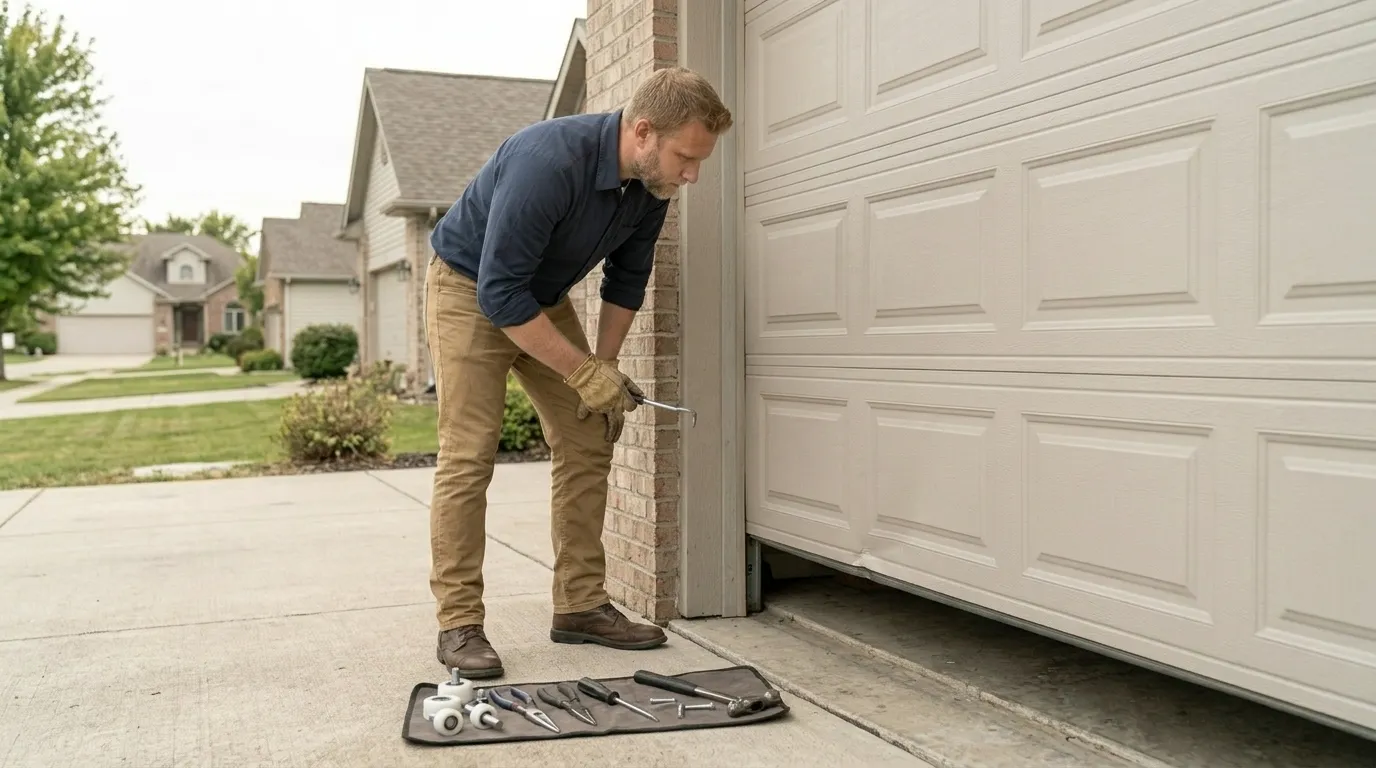
Next, the track and rollers. In our mild-with-occasional-freeze climate, grease doesn't dry out the way it does somewhere with real winters, but it does pick up dust and pollen and turn gummy, especially on doors that haven't been serviced since they were installed. A rough, grinding sound on the way up usually means rollers, not the opener.
Last, check the weatherstripping at the bottom panel. Original stripping from a 1980s or 90s install has usually hardened and cracked by now, and on the handful of freeze mornings we get each winter, a gap there is where cold air and water actually get in.
When to Get Help
If a door won't budge, don't force it or keep hitting the wall button - a stuck torsion spring under tension is not a DIY fix, full stop. That's true on any house in this area, whatever decade it was built.
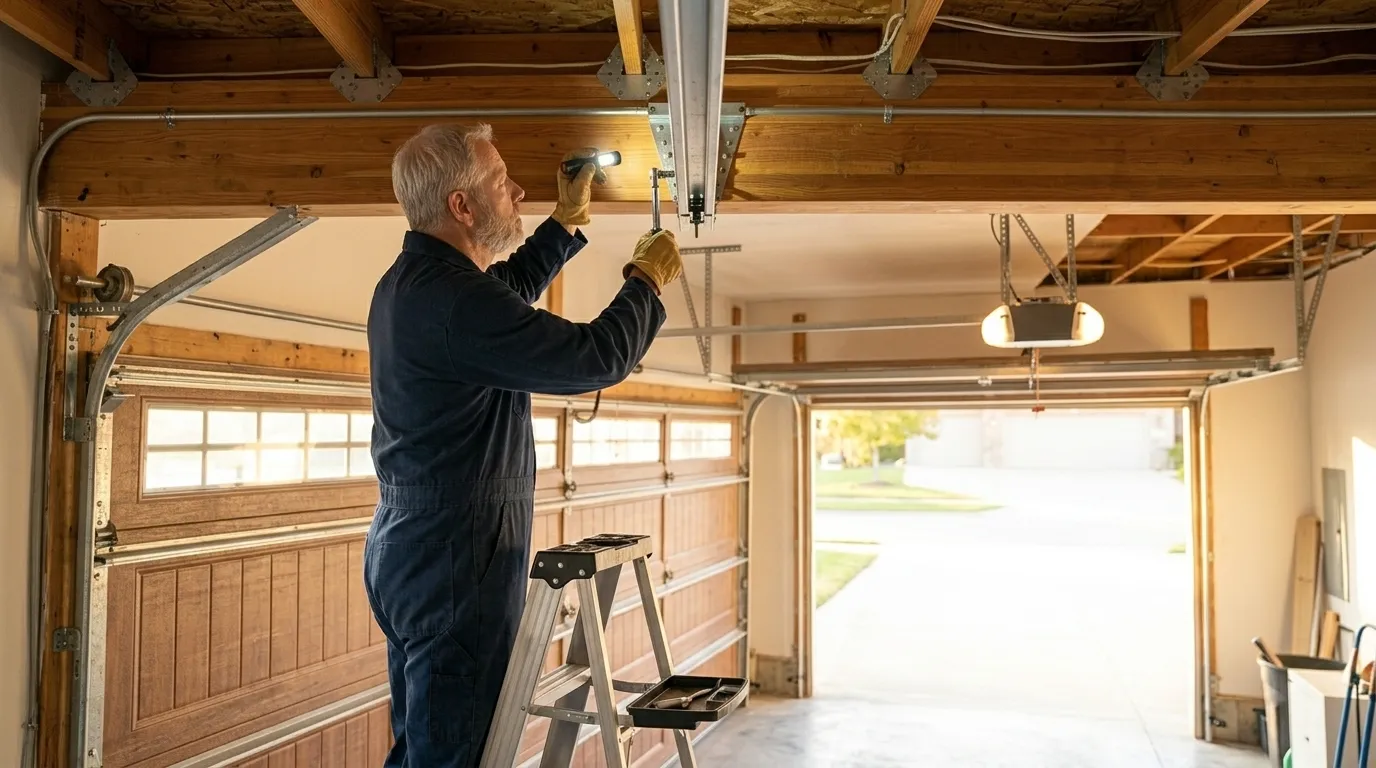
If your door is original to a house built in the early part of our 1963-2007 range, get the opener looked at before it fails outright. Circuit boards and logic units from that era are the parts most likely to be discontinued, and once one goes, sourcing a compatible replacement can take longer than we'd like to tell a customer standing in their driveway.
Honest limitation: we don't stock every legacy opener board for doors from the early end of that build window, and on some of those jobs, replacing the opener outright is faster and cheaper than waiting on a special-order part. We'll tell you straight which situation you're in before we start any work.