How Local Conditions Play In
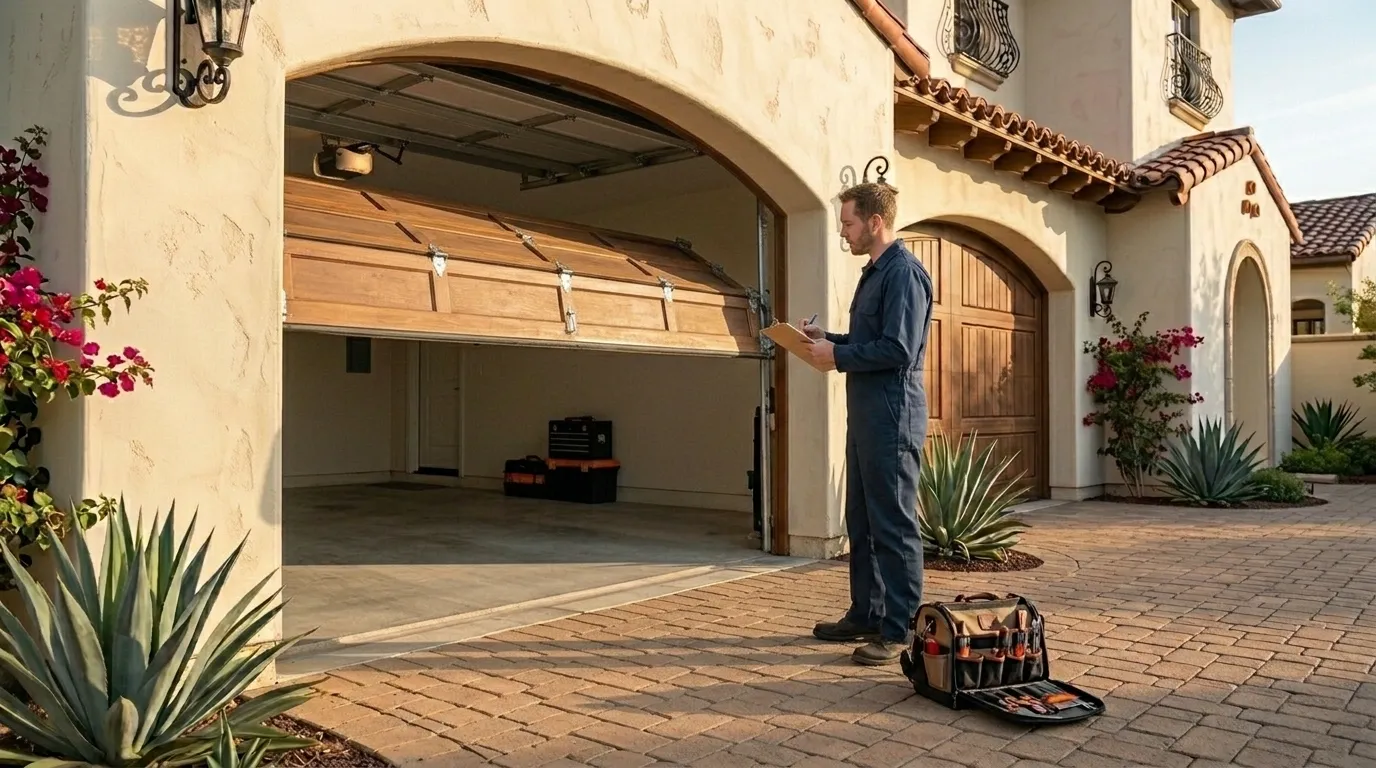
Daphne's housing stock runs 1963 to 2007, with the median build year sitting right around 1990, and most of it clustered in that 1980s-to-90s window across the fourteen or so named areas we cover between here and Spanish Fort, Fairhope, and Loxley. That matters for noise because a door built in 1988 has hardware that's now 35+ years old, and torsion springs are rated by cycle count, not calendar years - a spring that's been through 10,000 open-close cycles sounds different failing than one that's six months old.
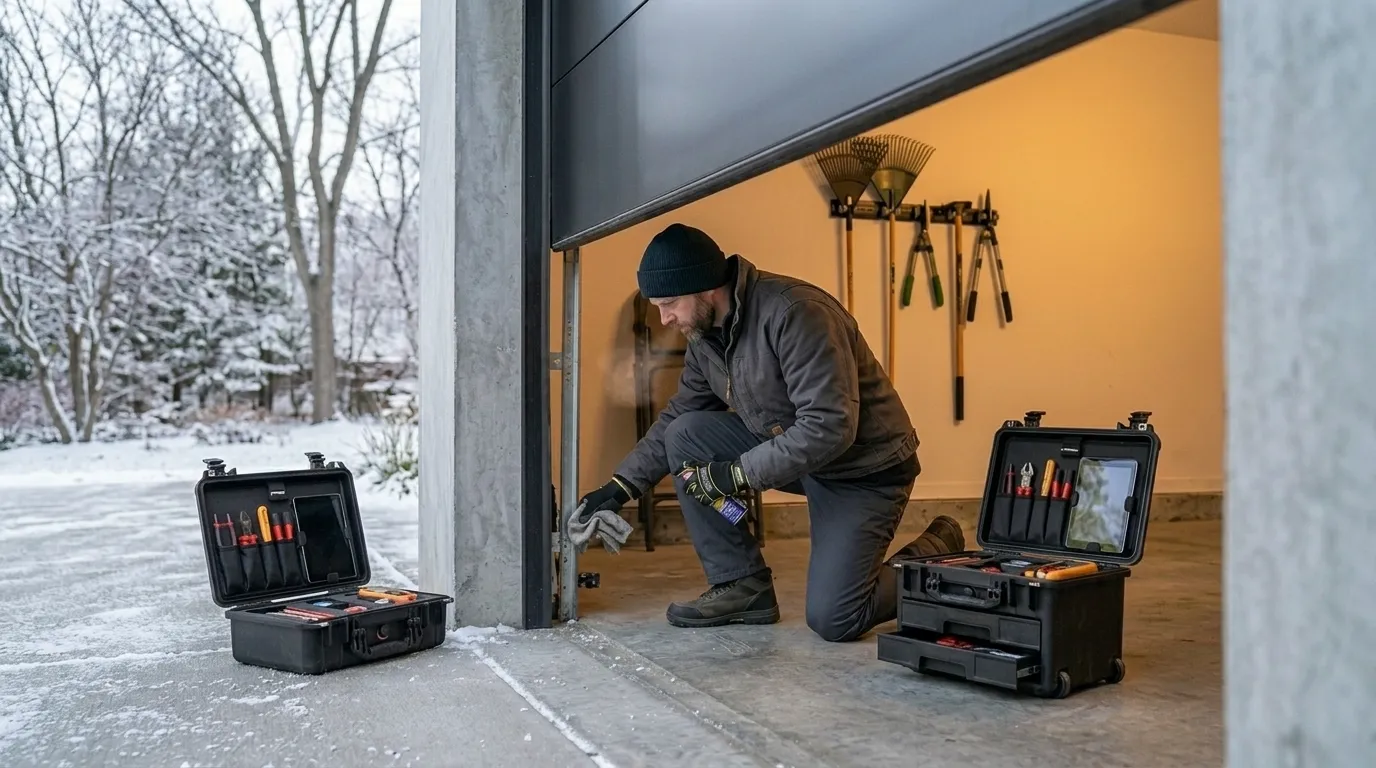
The climate here is mild with occasional freeze, not the deep-freeze cold that snaps steel outright. What it does instead is let condensation sit in tracks and on springs during damp mornings, then dry out, then get damp again. That cycle doesn't crack anything fast - it just strips lubricant and lets surface rust start on rollers and spring coils years before a homeowner in a drier climate would see it. So a squeal in a Daphne garage in month one of a cold snap is often rust-on-metal friction, not a part about to snap. A grinding sound after months of that same squeal being ignored is a different story.
What to Check
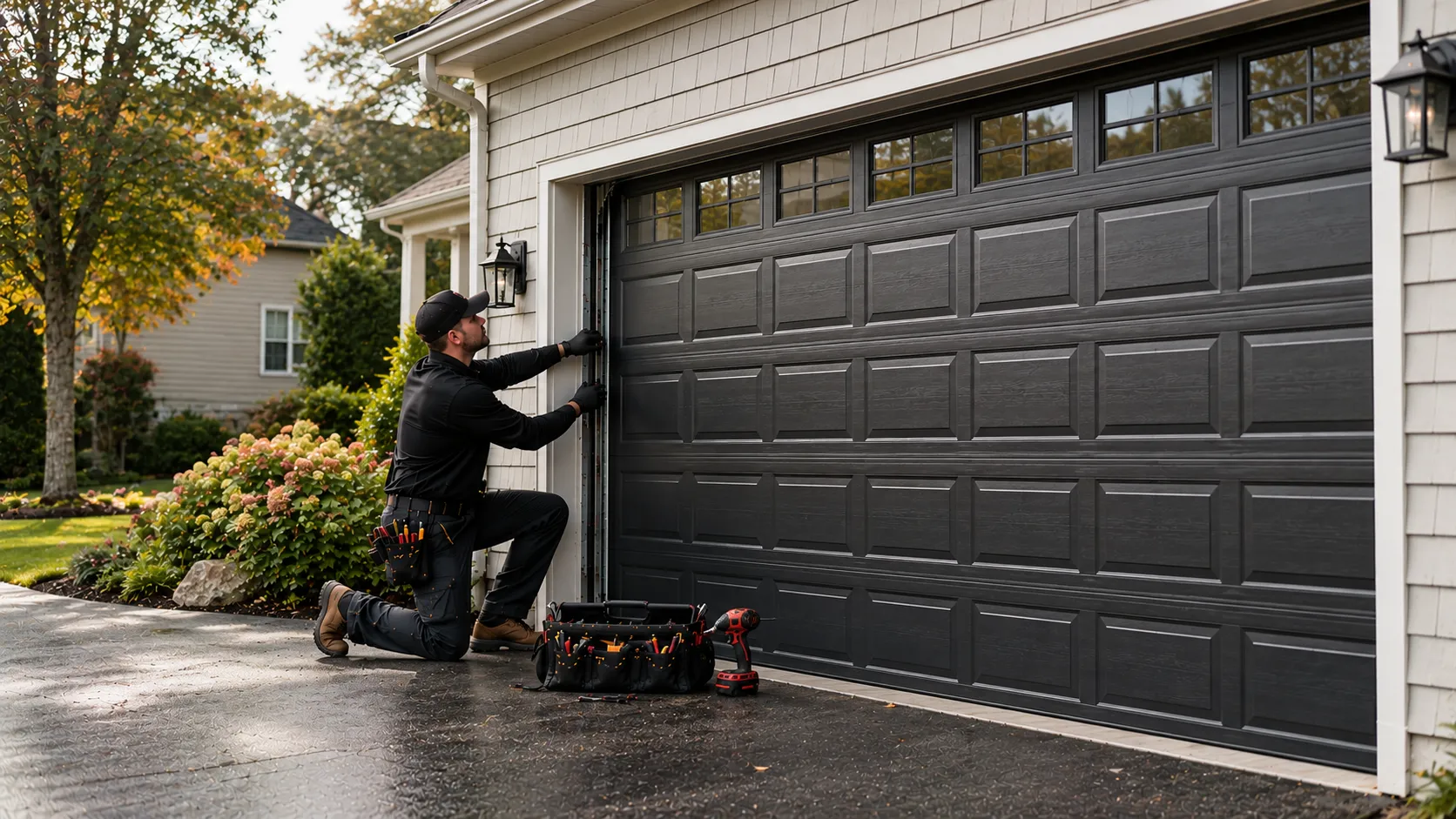
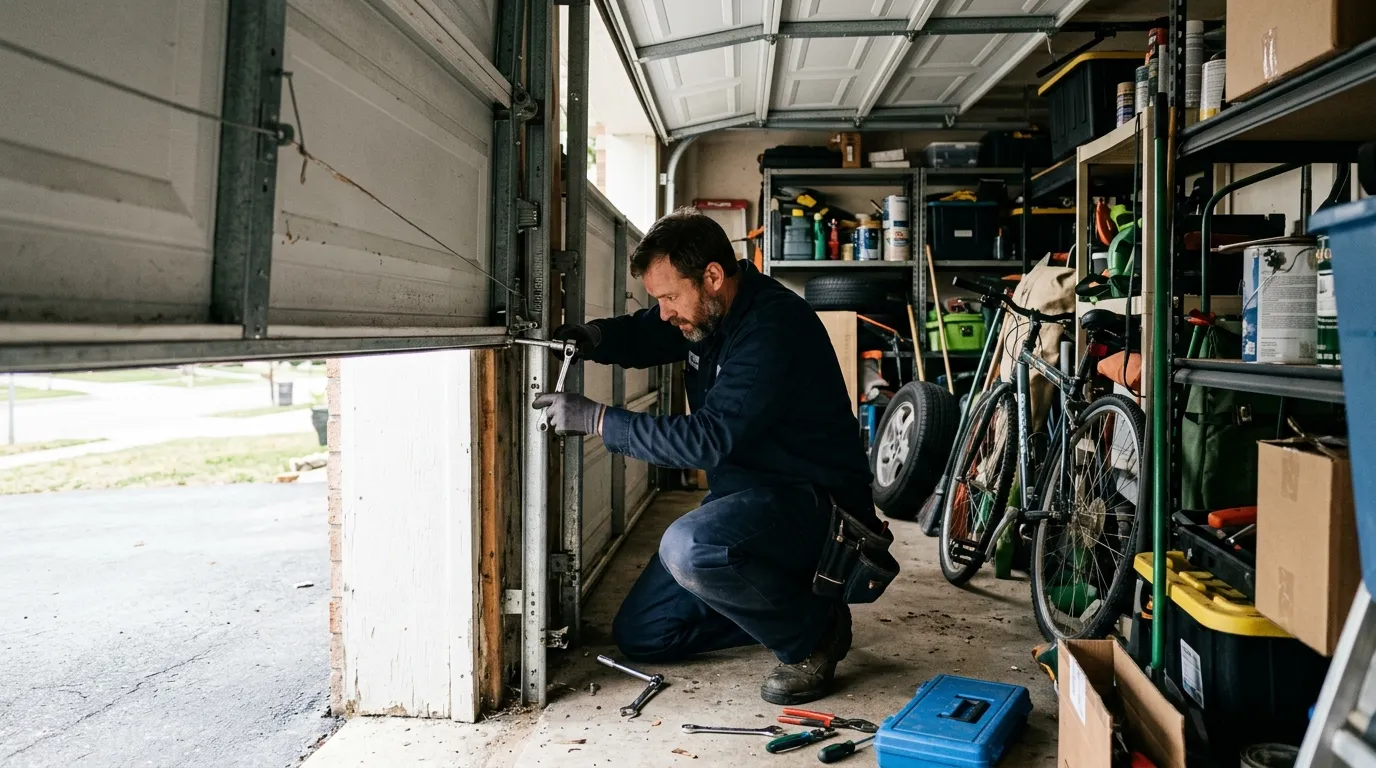
Start by placing where the sound happens in the door's travel. A squeak that repeats every foot or two, in rhythm with the door moving, is almost always a roller - either a worn nylon roller or a steel one that's lost its bearing grease. On 1980s-90s Daphne builds, steel rollers on the original hardware are common, and steel-on-steel with no lubricant left is a loud, specific squeal.
A loud bang or a visible sag in the door when it's open is spring territory - don't touch it, that's stored tension that can hurt you. A rhythmic thump as the door moves usually means a bent track section or a hinge pulling loose from the panel, both common once a door's original hardware crosses the 30-year mark, which a lot of Daphne's 1963-2007 stock now has.
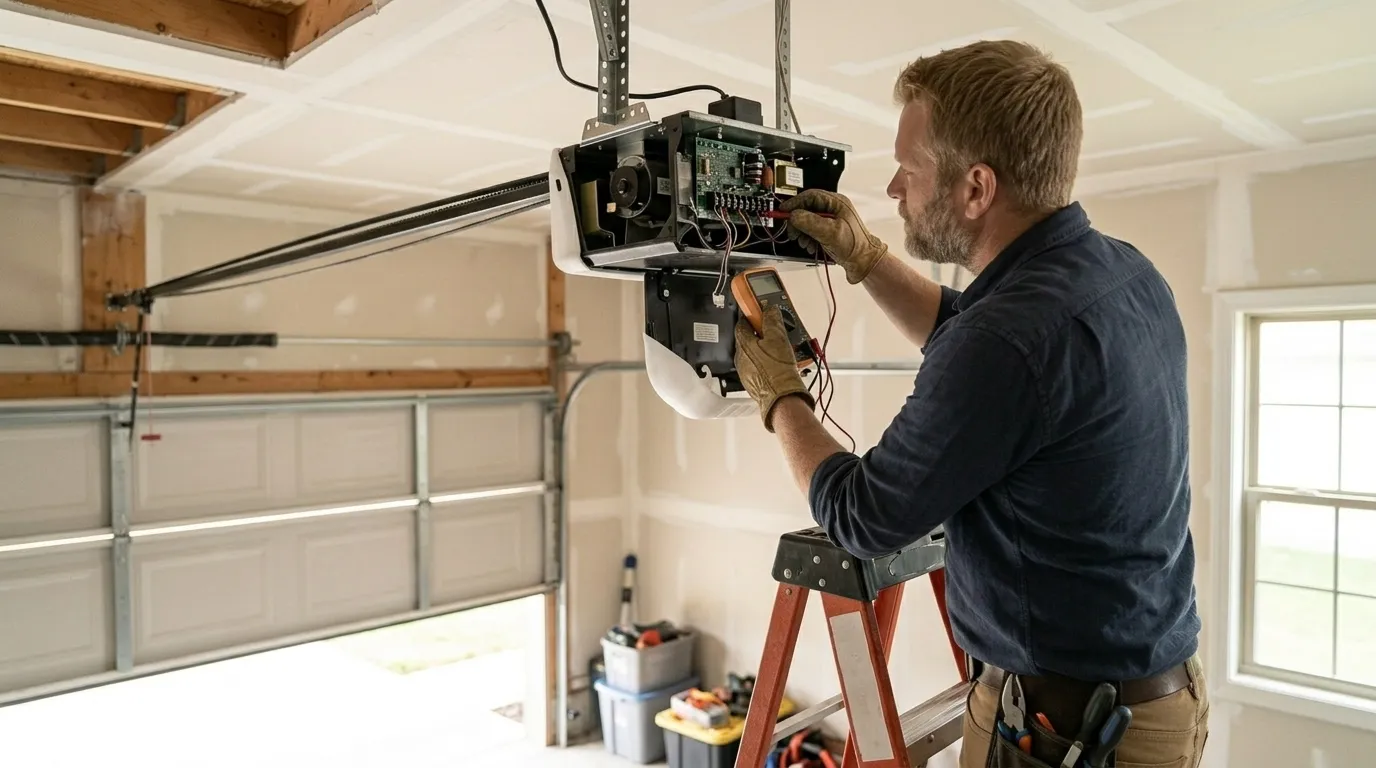
Grinding from the opener itself, versus the door, points to the motor unit or the gear inside it - check whether the noise follows the door's travel or comes from the box on the ceiling regardless of where the door is. That distinction alone tells you whether you're looking at a $20 part or a full opener swap.
When to Get Help
Call before you touch anything if the noise is a bang, a sudden sag, or a cable that looks frayed - that's spring or cable tension, and it's not a homeowner fix regardless of how simple it looks. Same goes for grinding that gets worse week over week; that's usually a bearing or gear that's past lubrication and heading toward a full stop, and running it longer just turns a part swap into a bigger job.
If it's a mild, consistent squeak on a door that's opening and closing normally, you can try a garage-door-specific lubricant on the rollers and hinges first - not WD-40, which strips grease rather than adding it. If that doesn't quiet it down within a week, the noise is coming from somewhere lubricant can't reach, which usually means a worn part, not a dry one.
Given how much of Daphne's housing sits in that 1980s-90s band, we see the same handful of failure points over and over: rollers, spring fatigue, and track alignment. If your door is in that age range and making a new sound, it's worth a look before it makes a worse one.