How Long It Takes
Most houses in Spanish Fort went up around 1999, which puts the neighborhood squarely in the steel sectional door era rather than the older wood or aluminum panel doors you'll still find on some of the pre-1980s stock elsewhere in the wider service area. That matters for a panel job because steel sectional doors from this period use standardized panel heights and common hinge spacing, so we're usually not waiting on a specialty cut.
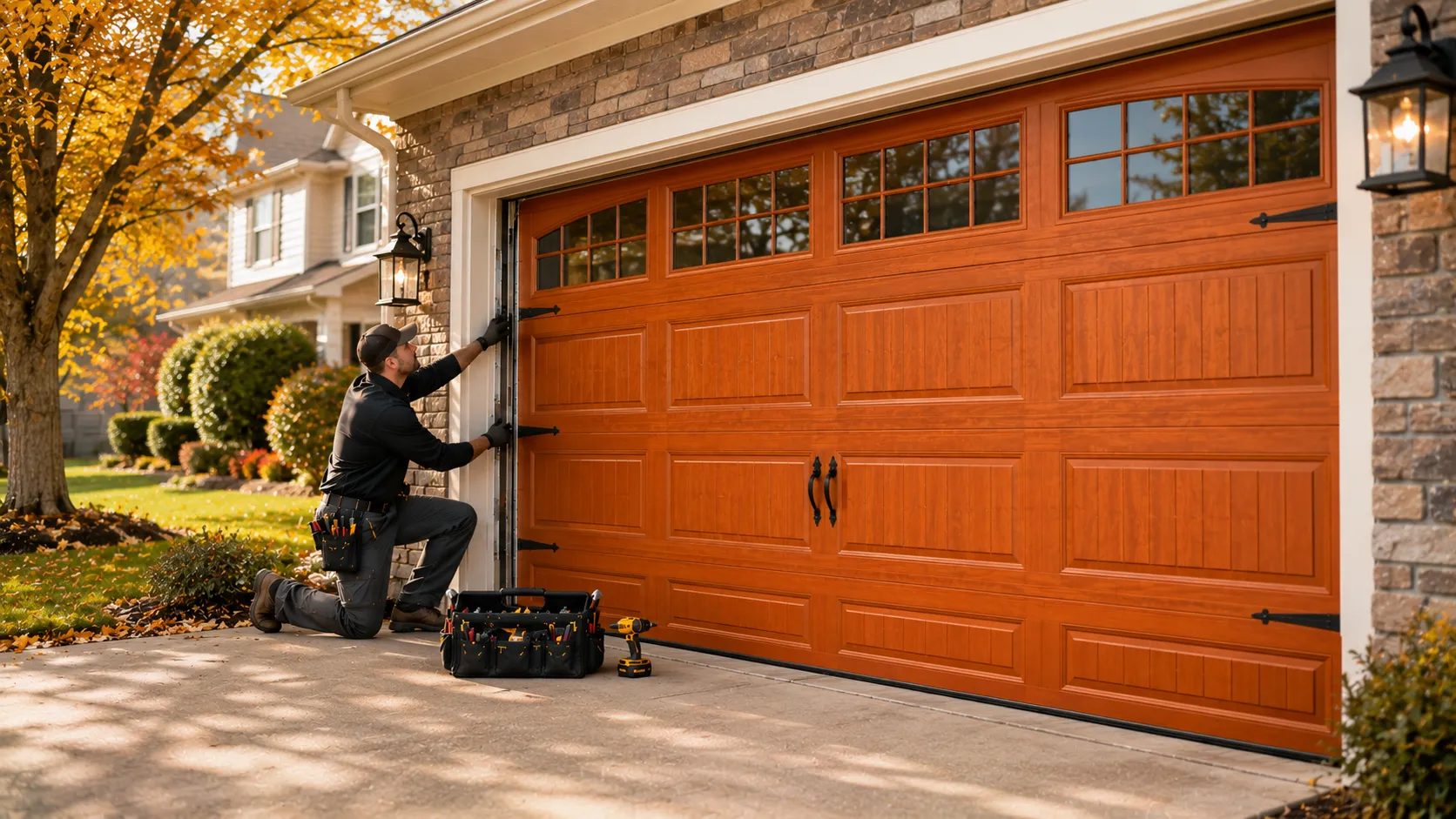
A single dented or cracked panel on a door this age is typically a same-visit swap once we've confirmed the door's width and panel count on site - we come out from Daphne, which is about 7 miles, so travel isn't the bottleneck. What can slow things down is color and texture matching. If the door has faded over 20-plus years of Gulf Coast sun, the replacement panel may not be an exact match to the rest of the door even if it's the right manufacturer profile, and we'll tell you that up front rather than after the job.
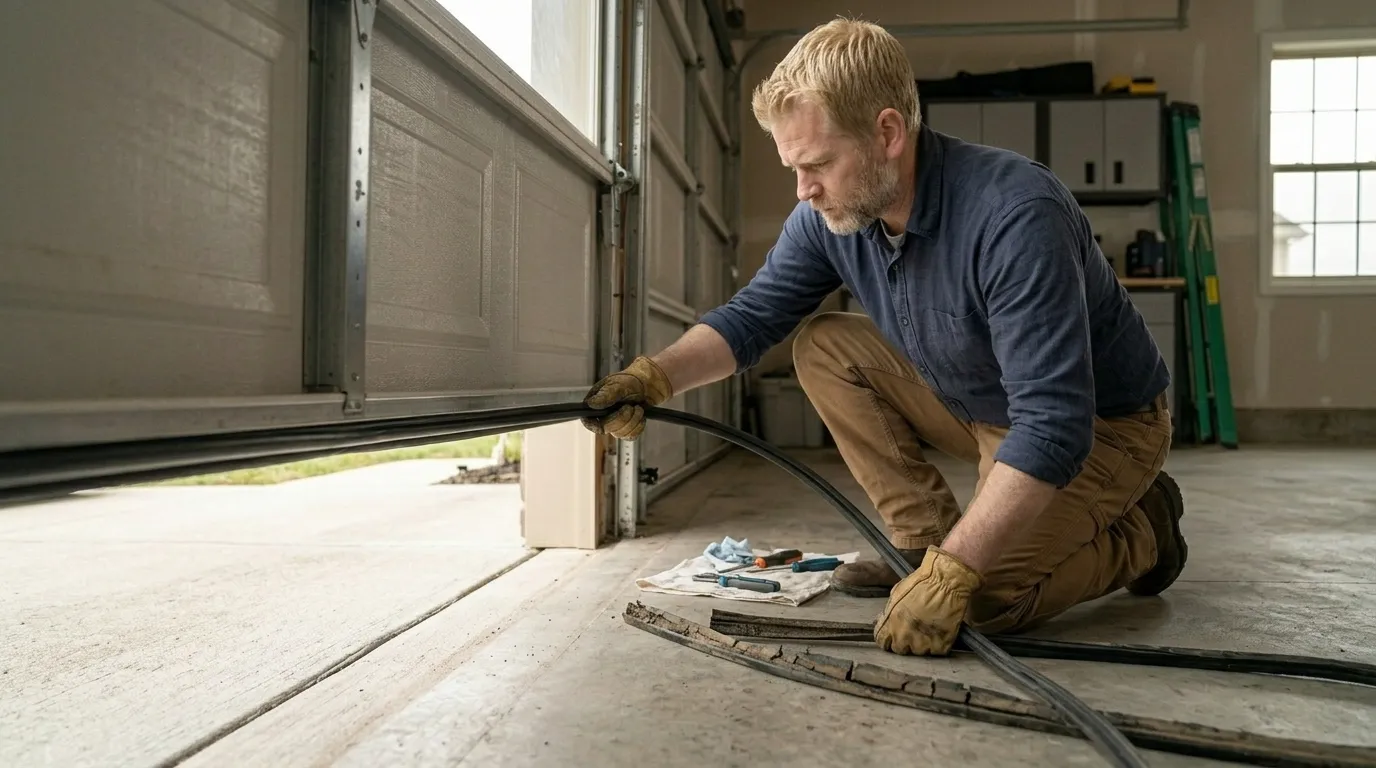
Multi-panel damage, like from a backed-into door, takes longer because we're ordering more than one section and need to confirm the track and spring setup can still handle the reassembled weight distribution. That's a return trip, not a same-day fix.
What Can Go Wrong
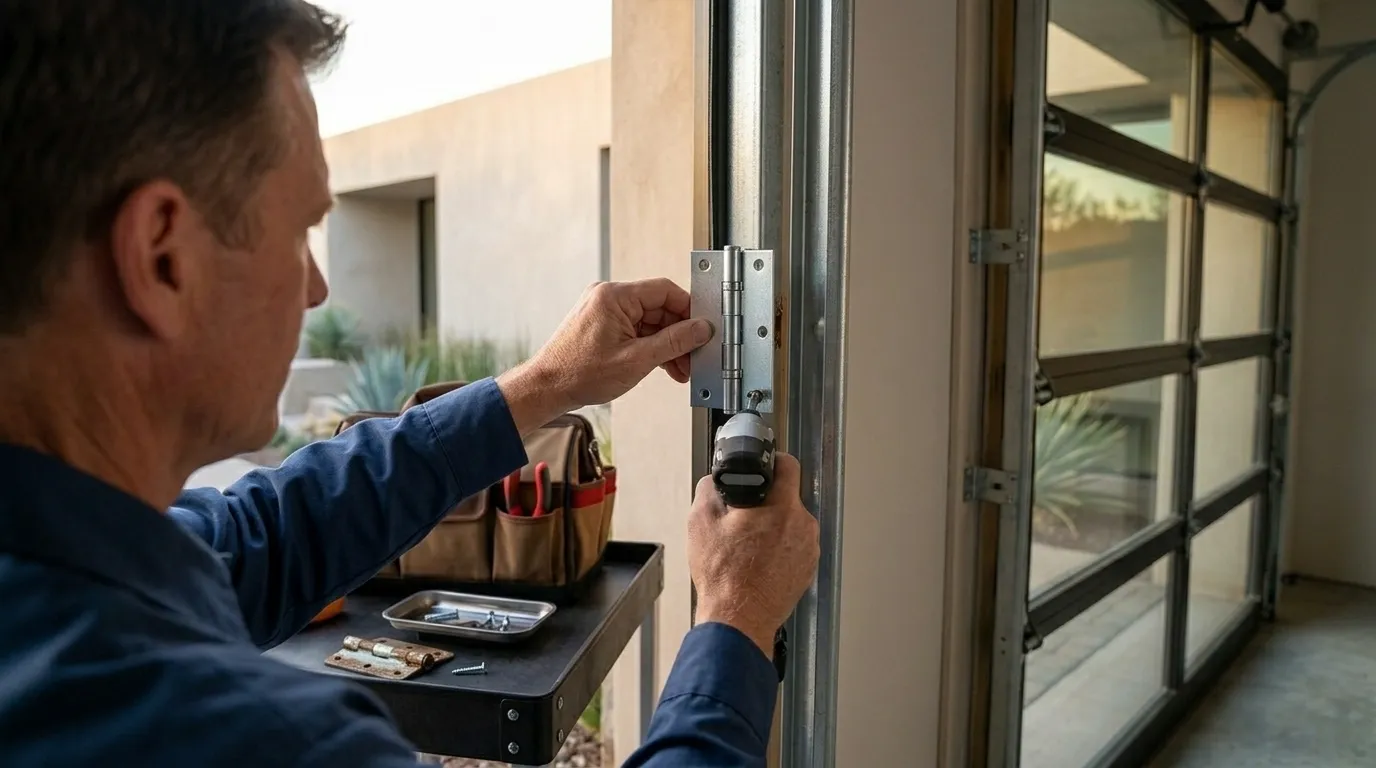
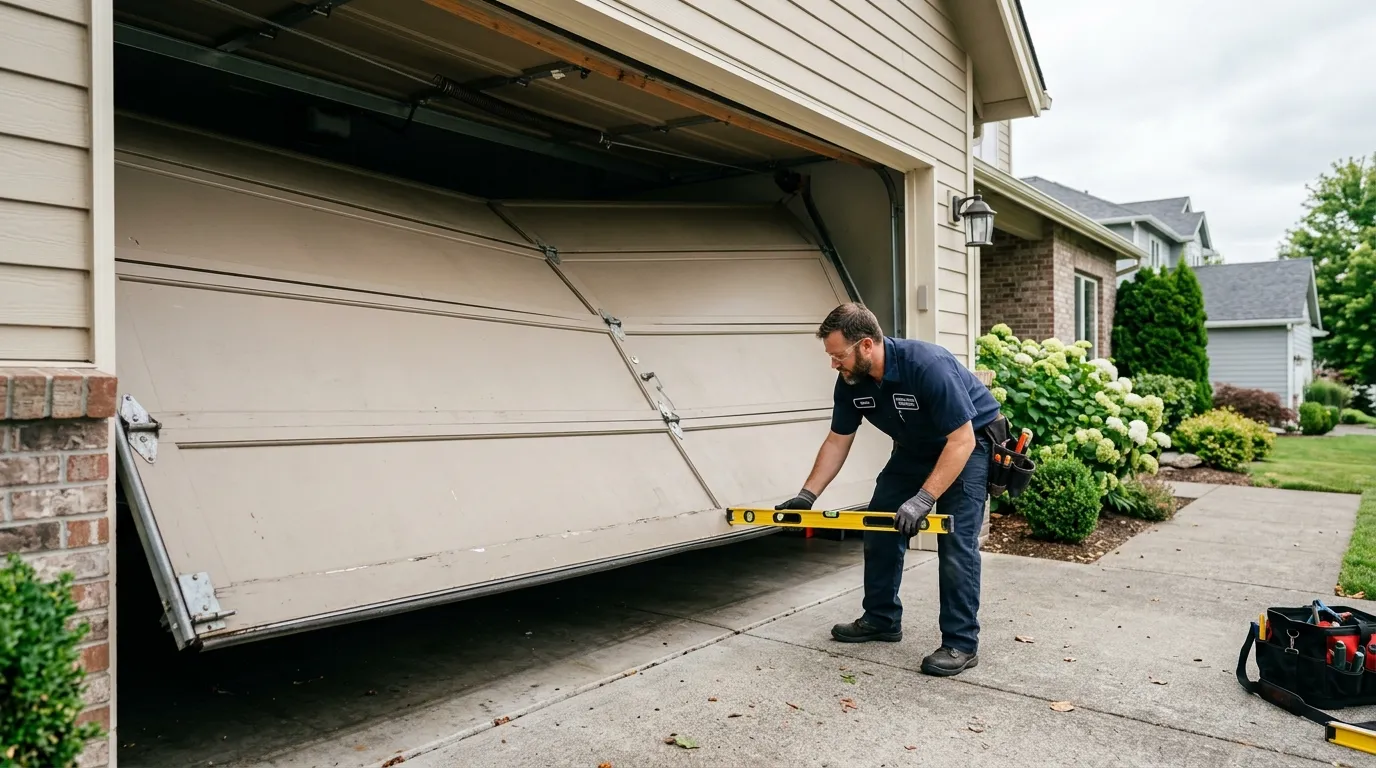
Doors built to the late-1990s standard for this area were sized for the openers and spring systems common at the time. When a panel gets replaced but the door was already sagging on one side, swapping the panel alone doesn't fix the underlying issue - the new panel just shows you the sag more clearly because it's the one piece that's straight.
We also see cases where a homeowner wants to replace one damaged panel on a door that's otherwise held up fine for over two decades, and the panel profile has been discontinued by the manufacturer. Steel door lines get redesigned, and a panel style common in 1999 construction isn't always still in production. When that happens, we'll say so rather than force a mismatched panel onto the door.
The mild coastal climate here means rust at panel seams and bottom sections is more common than cracking from freeze-thaw, which is a bigger issue further inland. If a panel is failing from rust rather than an impact, the panel next to it is often close behind, so a single-panel swap on a rust-driven failure is sometimes a short-term fix.
What It Costs
We don't have a set price to quote here, and panel cost depends on door width, panel material, and whether the profile is still in production versus needing a close-match order. What we can tell you is that a door built to the common late-1990s steel sectional standard found across much of Spanish Fort is usually the more affordable case to match, compared with an older wood or custom-panel door.
Given the area's median household income sits well above the wider service area average, we still price the job the same way we would anywhere else we cover - by door size, panel count, and hardware condition, not by neighborhood. If the sag or rust turns out to run deeper than the one panel, we'll walk you through whether a panel swap still makes sense or whether the door's closer to end of life, since patching a door that's failing structurally usually costs more over time than replacing it once.