How Long It Takes
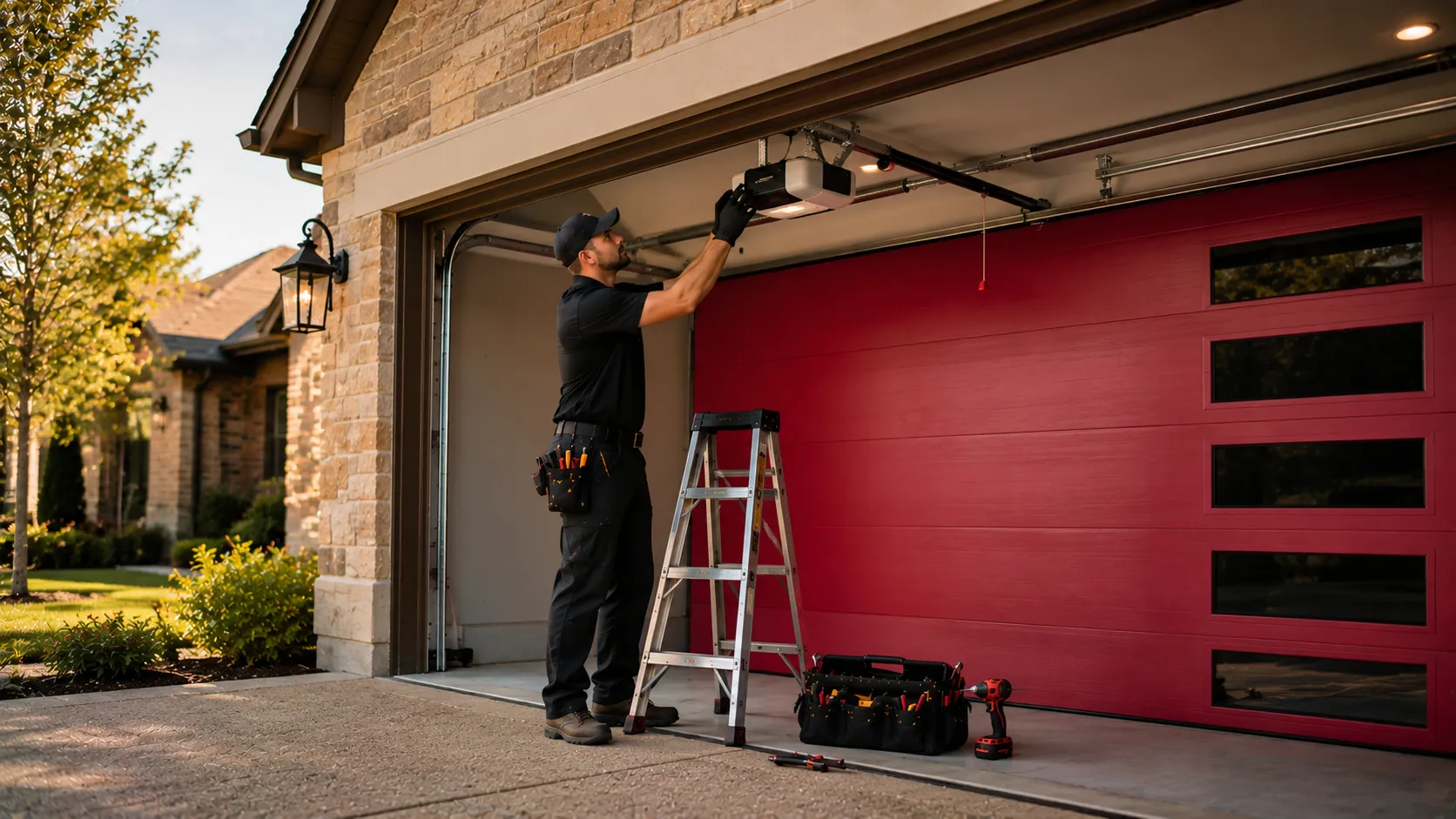
The fault we see most in Spanish Fort isn't the seized-up torsion spring you'd expect in an older neighborhood - it's an extension spring stretched past its limit, or a plastic opener gear stripped from years of daily use. That tracks with the build era here: the median Spanish Fort house went up in 1999, a decade newer than the median across Daphne Garage Door Pros's wider coverage area (1990). Newer construction here means lighter-gauge steel doors on extension-spring setups rather than the heavier torsion hardware common in pre-1980 housing elsewhere in the service area.
We run the 7 miles from Daphne to reach Spanish Fort, so travel isn't the bottleneck - diagnosis and parts availability usually are. A snapped extension spring or a cable off its drum is a same-visit fix once we're on site, since those parts are common stock. An opener with a burned-out circuit board takes longer, because board replacements aren't something we carry on the truck for every model. If your door won't move at all and the opener light is flashing, that's almost always a photo-eye or board issue, and we'll tell you honestly on the phone whether it's a same-day job or a return trip.
What Can Go Wrong
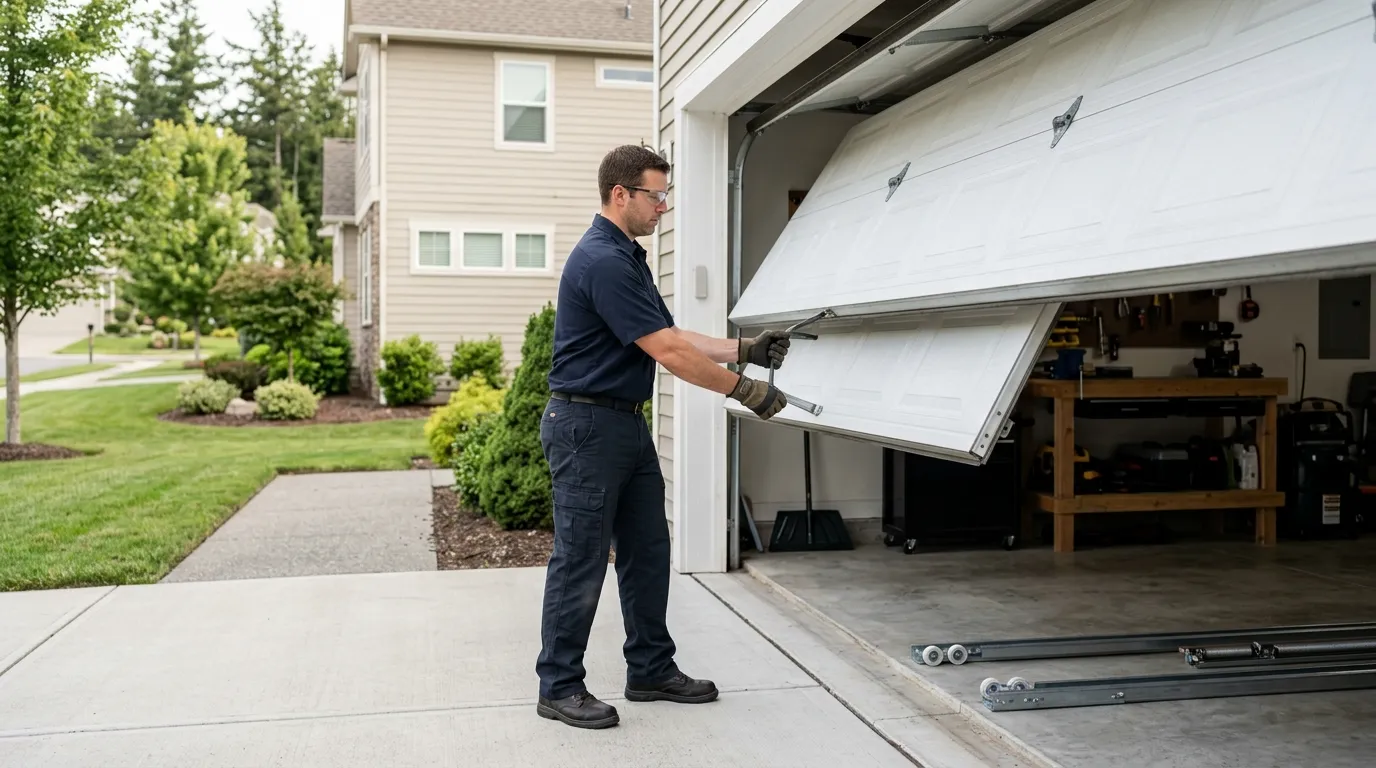
Extension springs on 1990s-2000s construction wear differently than torsion springs on older doors - they stretch and fray rather than fatigue and snap clean, which means you often get warning signs (a door that closes crooked, a louder-than-usual bang at the top of the cycle) before full failure. Worn cables on these same setups are the other common call, especially where the door gets used more than once a day.
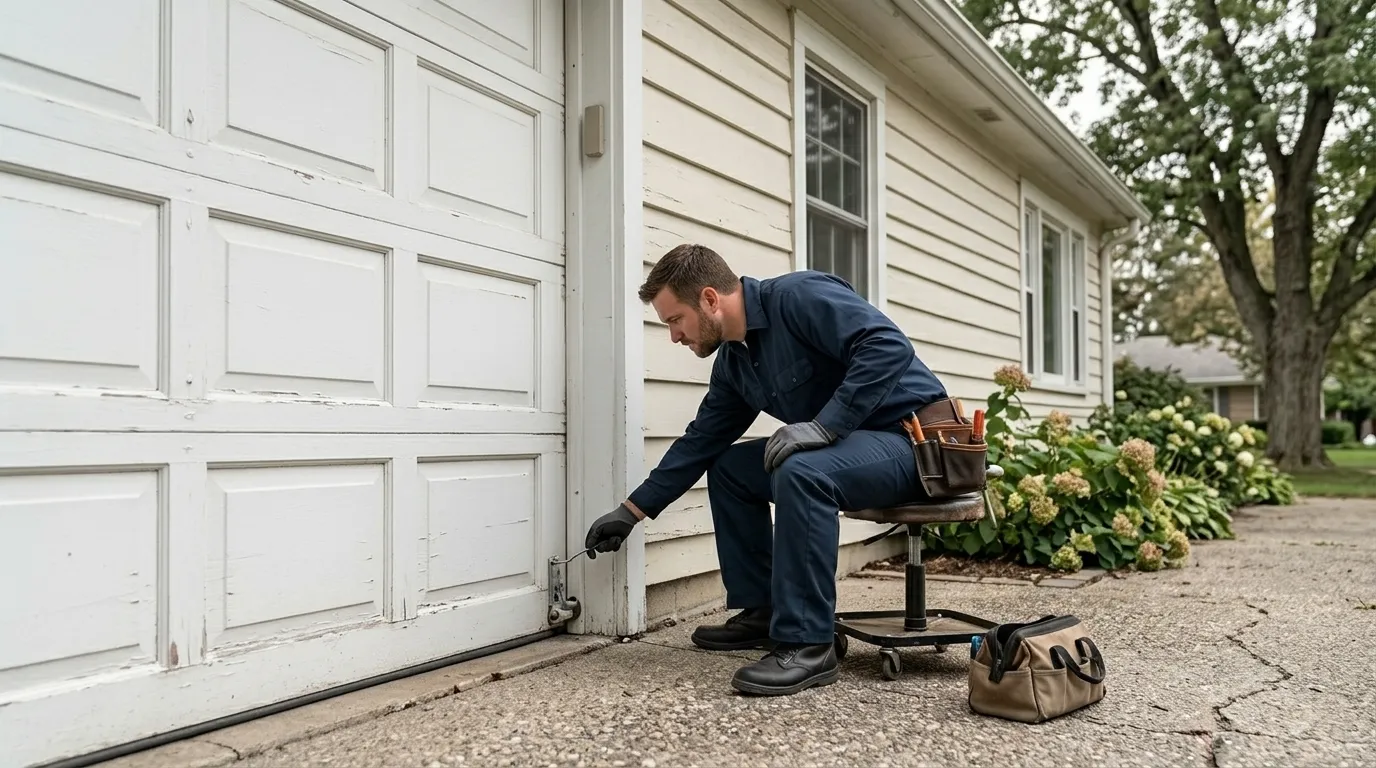
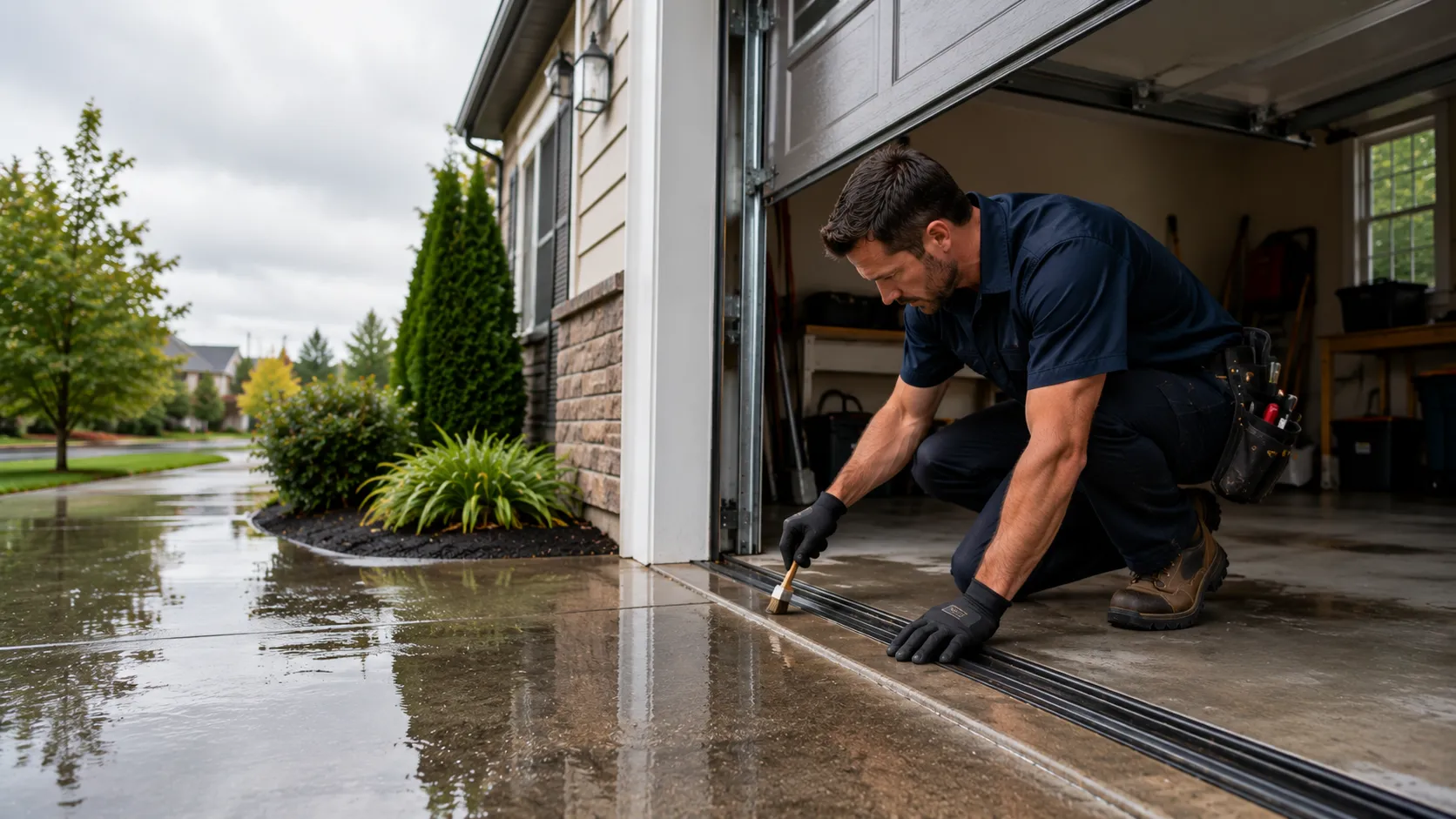
Alabama's mild climate with occasional freeze events doesn't crack concrete slabs the way harder freeze-thaw regions do, but it does stiffen grease in older rollers during the rare cold snap, which can bind a track just enough to strip a gear the next time the opener tries to force it. We also see photo-eye sensors knocked out of alignment - a plastic bracket problem, not a wiring problem, and an easy one to rule out before assuming the opener board is dead.
What we don't see much of here: the seized one-piece doors and side-mounted torsion hardware that show up on the older end of the service area's housing stock. Spanish Fort's newer builds mostly skip that problem entirely.
What It Costs
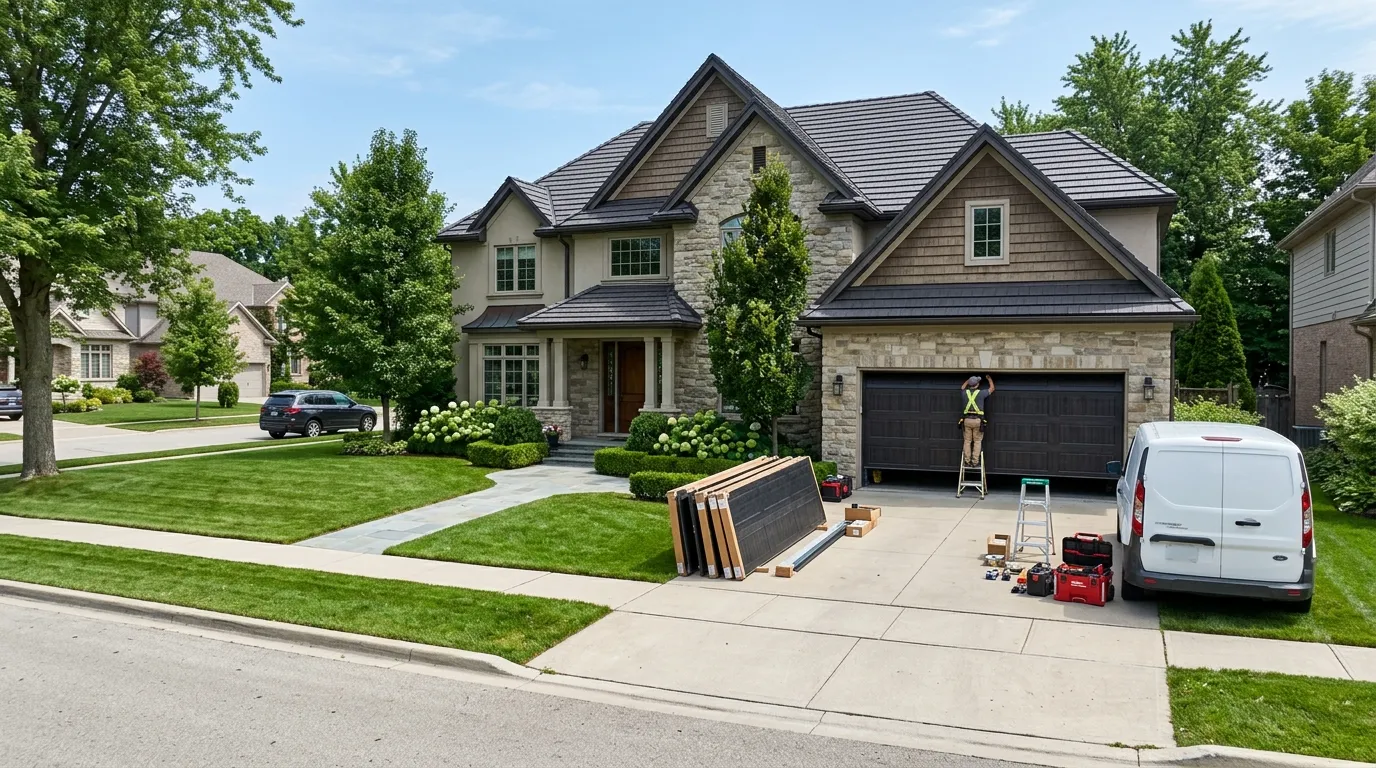
We don't quote a flat number here because the fix depends on what's actually broken - a stretched extension spring costs less than a stripped opener gear, which costs less than a board that has to be ordered. What we can say is that Spanish Fort's median household income of $101,574 runs well above the $60,922 median across the wider service area, and that gap shows up in what homeowners here tend to choose: more requests for full opener replacement instead of a patch repair, more requests for insulated steel panels instead of the cheapest matching panel.
Neither choice is wrong. A patch repair on a 1999-era door with otherwise sound hardware is usually the better spend. Full replacement makes more sense once you're replacing the second or third component in two years, or once the door itself is original to a house built in the earliest years of that 1990s-2000s window. We'll tell you which situation you're in before we start, not after.